From ARPANET to Internet The Cold War Connection
Cold War Context
A World Divided
After World War II, the global landscape shifted dramatically. Two major powers emerged with conflicting ideologies: the United States, championing democracy and capitalism, and the Soviet Union, promoting communism. This wasn't a traditional conflict with active battlefields. Instead, it was a
Cold War
noun
A state of geopolitical tension after World War II between powers in the Eastern Bloc (the Soviet Union and its satellite states) and powers in the Western Bloc (the United States, its NATO allies and others).
This period was defined by an intense rivalry that played out through proxy wars, espionage, and a relentless race for technological and military superiority.
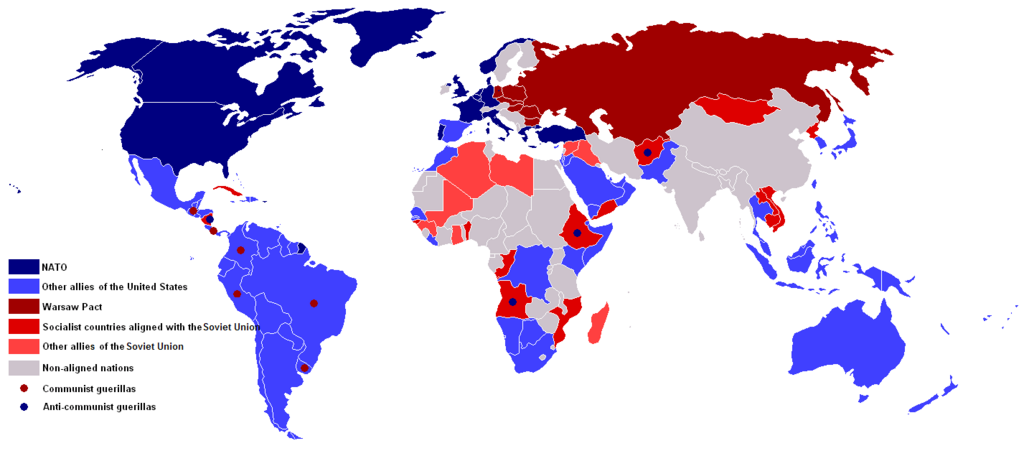
The world was split into two camps. The U.S. and its allies formed the North Atlantic Treaty Organization (NATO), a pact of mutual defense. In response, the Soviet Union and its satellite states in Eastern Europe created the Warsaw Pact. This standoff created a constant, simmering tension, where each side watched the other's every move, always preparing for a potential conflict that could escalate at any moment.
The Technology Arms Race
This constant state of alert fueled an unprecedented surge in technological innovation. Both superpowers poured vast resources into science and engineering, believing that the nation with the technological edge would have the ultimate advantage. The most visible arena for this competition was the Space Race.
In 1957, the world was stunned when the Soviet Union launched Sputnik, the first artificial satellite, into orbit. This small, beeping sphere was a massive propaganda victory for the Soviets and a shocking wake-up call for the United States. It suggested the USSR might be ahead in missile technology, a terrifying prospect in the nuclear age.
In response, the U.S. government created the Advanced Research Projects Agency (ARPA) in 1958. Its mission was simple but ambitious: to prevent technological surprises and ensure U.S. military technology was more advanced than any potential enemy's.
This fear of falling behind drove innovation, particularly in communications. Military planners faced a frightening scenario: what would happen in a nuclear attack? A single strike could destroy central command centers, cutting off communication lines and leaving the military unable to coordinate a response. The existing telephone network was centralized and vulnerable.
A new kind of network was needed—one that was decentralized and could withstand damage. If one part of the network was knocked out, messages could simply be rerouted through another part. This military requirement for a resilient, survivable communication system was the seed from which ARPANET, the forerunner to the modern internet, would grow.
What were the two primary superpowers with conflicting ideologies that emerged after World War II, setting the stage for the Cold War?
In response to the formation of the North Atlantic Treaty Organization (NATO), the Soviet Union and its Eastern European allies formed a rival military alliance known as what?
The intense pressure of the Cold War, driven by a fear of mutual destruction, inadvertently set the stage for a technology that would one day connect the world.