From AI to Agentic AI
Introduction to Artificial Intelligence
What Is Artificial Intelligence?
Artificial intelligence is a branch of computer science focused on creating systems that can perform tasks that typically require human intelligence. This includes things like learning from experience, solving problems, understanding language, and recognizing patterns in images or sounds.
Think of it as a broad field, not a single technology. It’s an umbrella term that covers many different approaches and techniques, all aimed at making machines smarter and more capable. At its core, AI is about enabling computers to mimic cognitive functions we associate with human minds.
Artificial Intelligence (AI)
noun
The theory and development of computer systems able to perform tasks that normally require human intelligence.
Some AI systems are designed for one specific task, like playing chess or identifying spam emails. Others are being developed with the goal of more general intelligence, but for now, most AI you interact with is highly specialized.
A Brief History
The idea of creating intelligent machines has been around for centuries, but the formal field of AI research began in the mid-1950s. Early efforts were exciting and optimistic, focusing on logic and problem-solving.
One of the first major approaches was the expert system. These were programs designed to mimic the decision-making ability of a human expert in a specific domain, like diagnosing medical conditions. They operated on a set of hand-crafted rules. For example, a rule might be: IF the patient has a fever AND a cough, THEN they might have the flu.
These systems were useful but brittle. They couldn't handle situations outside their pre-programmed rules and were very time-consuming to build and update. This and other limitations led to periods of reduced funding and interest known as "AI winters."
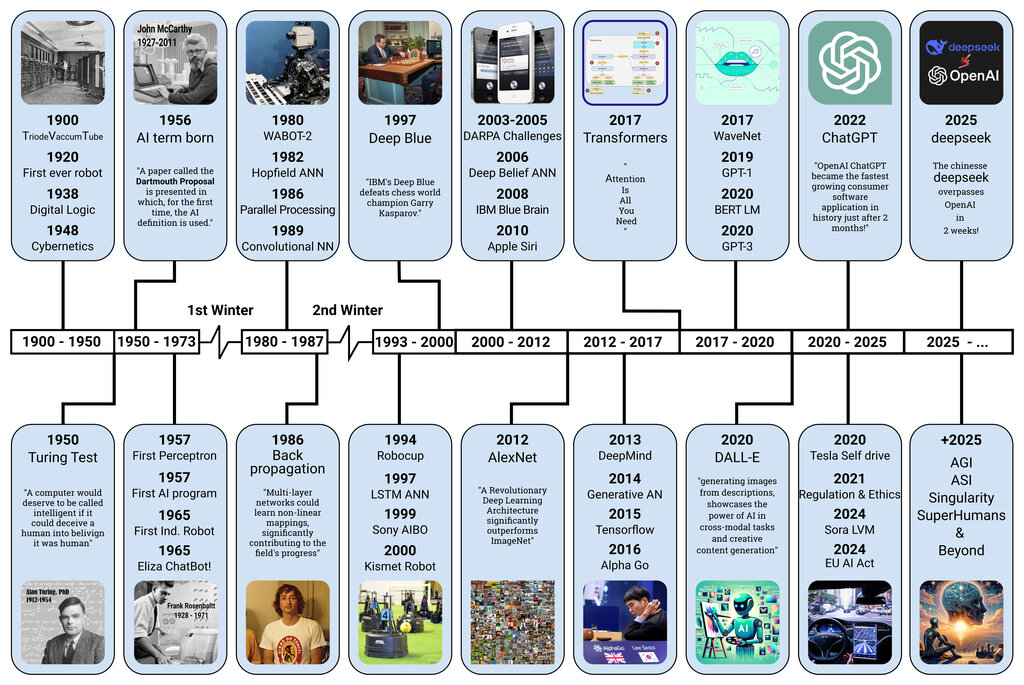
The field saw a resurgence with the rise of more powerful computers and, most importantly, the availability of vast amounts of data. This paved the way for a new approach that would come to dominate the field.
Learning from Data
Instead of manually programming rules, researchers began creating systems that could learn rules on their own by analyzing data. This approach is called machine learning.
Machine Learning (ML)
noun
A subfield of AI where computer algorithms are used to learn from data and make predictions or decisions without being explicitly programmed for the task.
A key technique within machine learning is the use of neural networks. Inspired by the structure of the human brain, these networks consist of layers of interconnected nodes, or "neurons." Each neuron processes information and passes it to the next layer. By adjusting the connections between these neurons based on data, the network can learn to recognize complex patterns.
When a neural network has many layers, it's referred to as deep learning. This depth allows the system to learn intricate features from massive datasets, making it incredibly powerful for tasks like image recognition and natural language processing.
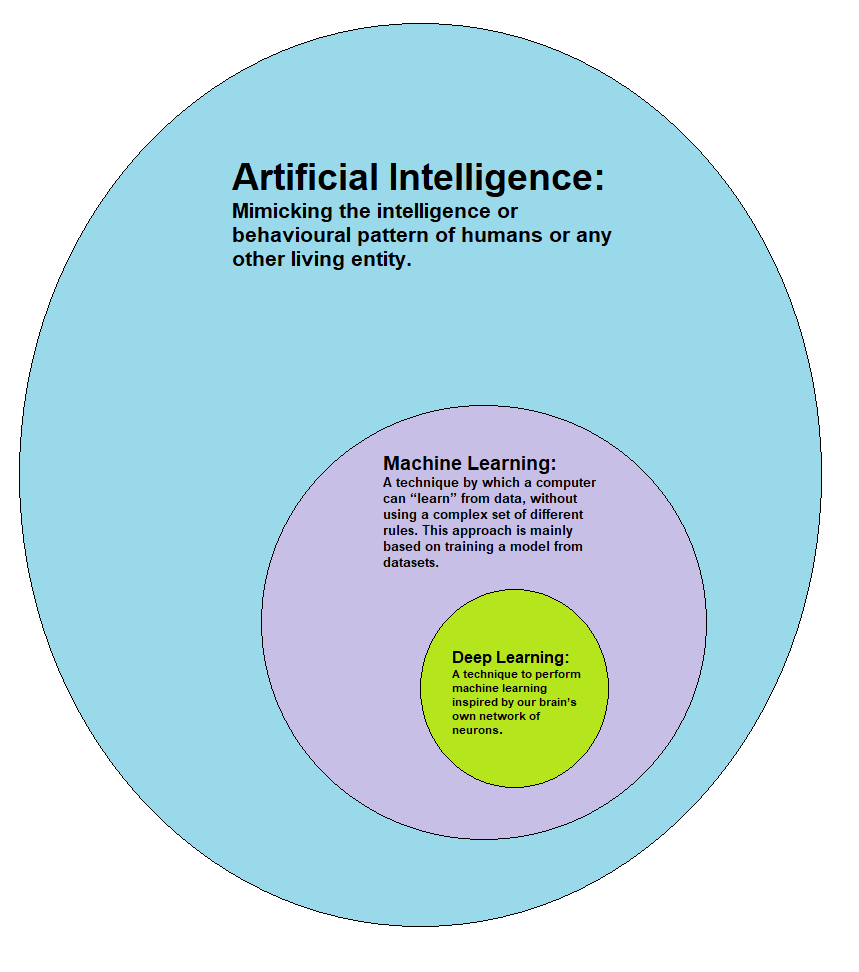
This shift from rule-based systems to data-driven learning models marks the most significant evolution in AI's history. It’s the engine behind most of the AI advancements we see today, from voice assistants to personalized recommendations.
What is the core concept of Artificial Intelligence (AI)?
What was the main limitation of early "expert systems" that led to the rise of machine learning?
These foundational concepts form the bedrock of modern artificial intelligence. Understanding how they relate to each other is the first step in grasping the power and potential of AI.