Frog Dissection Anatomy
Frog External Anatomy
A Frog's First Defense
A frog's skin is much more than just a simple covering. It's a multifunctional organ that's essential for survival. Unlike the dry, scaly skin of reptiles, a frog's skin is thin, moist, and permeable, meaning it allows liquids and gases to pass through. This feature is critical for a process called cutaneous respiration, where the frog breathes directly through its skin, absorbing oxygen from the water or air.
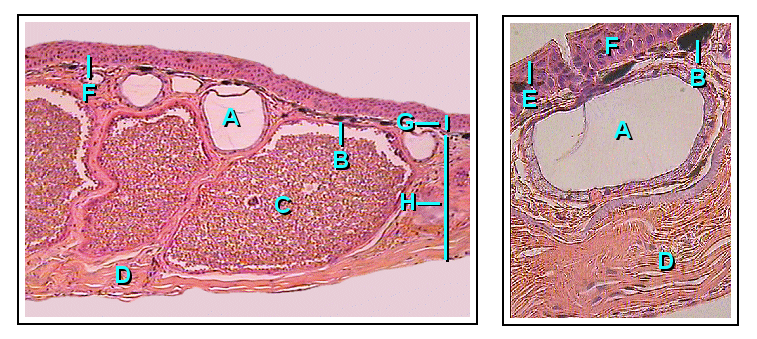
To keep the skin from drying out, specialized mucus glands secrete a slimy coating. This same coating makes frogs slippery and difficult for predators to grab. Many frogs also have granular glands that produce toxic substances, providing a powerful defense against being eaten.
The skin's coloration is another key survival tool. Many species have colors and patterns that allow them to blend in with their surroundings, a strategy known as camouflage. Others sport bright, vibrant colors that serve as a warning to predators that they are poisonous. This is called aposematism.
Built for Action
A frog's body is built for explosive movement. The most noticeable features are its powerful hind limbs, which are much larger and more muscular than its forelimbs. These legs are designed for jumping and swimming. The long bones of the lower leg are fused, creating a strong, rigid structure for pushing off, while the feet are often webbed to provide more surface area for propelling through water.
The fusion of the tibia and fibula bones in the lower hind leg forms a single bone called the tibiofibula. This adds strength and reduces weight for powerful jumps.
The forelimbs are shorter and less powerful. They are primarily used to prop up the front of the body when the frog is at rest and to absorb the impact of landing after a jump. A frog's forelimbs have four toes, while the hind limbs have five.
A Head for Survival
A frog's head is packed with sensory organs that help it navigate its world and find food. The large, bulging eyes are positioned high on the head, giving the frog a wide field of vision. This placement allows it to see predators and prey while most of its body remains submerged in water.
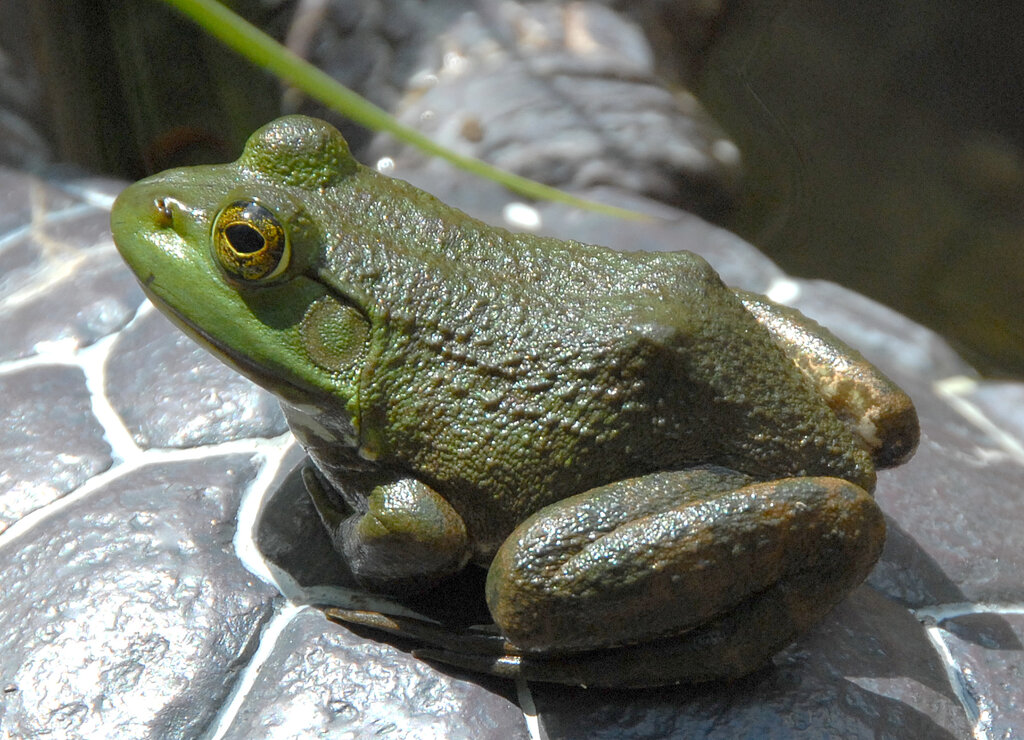
Frogs have a special third eyelid that helps protect the eye underwater and keep it moist on land.
Nictitating membrane
noun
A transparent or translucent third eyelid present in some animals that can be drawn across the eye for protection and to moisten it while maintaining visibility.
Just behind each eye is a circular patch of skin that functions as an eardrum. This structure picks up sound vibrations from the air or water and transmits them to the inner ear.
Tympanic membrane
noun
A membrane forming part of the organ of hearing, which vibrates in response to sound waves. In frogs, it is a large external circle located behind the eye.
Two small openings, the external nares or nostrils, are located on the snout. These lead to the mouth cavity and are used for breathing when the frog is not submerged. The mouth itself is very wide, allowing the frog to swallow prey whole.
Ready to test your knowledge?
What is the main reason a frog's skin must be kept moist and permeable?
A brightly colored poison dart frog is an example of which defensive strategy?
Understanding a frog's external features reveals how perfectly it is adapted to its life both in water and on land. Next, we'll explore what's going on inside.