French Tax Effective Investment Strategies
Investment Basics
Building Your Investment Foundation
Before you can build a house, you need to understand the materials. Wood, brick, and concrete all have different properties and purposes. Investing is similar. Before you start building your wealth, it's essential to understand the basic components you'll be working with. These core concepts are the foundation for every investment decision you'll make.
What Can You Invest In?
Investments are grouped into categories called asset classes. Think of them as different types of ingredients you can use in a recipe. Each has its own flavor and behaves differently. The main ones you'll encounter are stocks, bonds, and real estate.
Stocks, or equities, represent ownership. When you buy a stock, you're buying a small piece of a company. If that company does well and grows, the value of your piece can go up. If it struggles, the value can go down.
Bonds are essentially loans. When you buy a bond, you're lending money to a government or a company. In return, they promise to pay you back the full amount on a specific date, along with regular interest payments along the way. They are generally considered less risky than stocks.
Real estate is another common asset class. This involves buying physical property, like a house or an apartment building, with the hope that its value will increase over time. You can also earn rental income from it.
The Classic Trade-Off
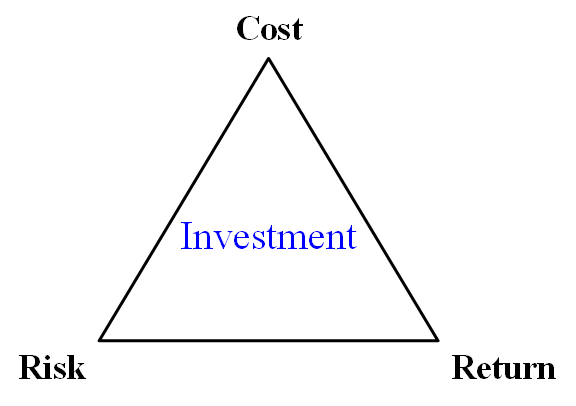
Every investment comes with a fundamental relationship: risk and return. Risk is the chance that your investment could lose value. Return is the money you make from your investment. The two are permanently linked.
Generally, to get a higher potential return, you have to accept more risk. There's no such thing as a high-return, no-risk investment.
Stocks, for example, have high potential returns because a company's value can grow significantly. But they also carry higher risk because a company can fail. Government bonds, on the other hand, typically offer lower returns but are much safer, as major governments are very unlikely to default on their loans. Understanding your personal comfort level with this trade-off is a key part of investing.
Don't Put All Your Eggs in One Basket
This old saying is the perfect way to describe diversification. It's the practice of spreading your investments across different asset classes. Why? Because different assets often behave differently under the same economic conditions.
Imagine you only invested in one company, and that company suddenly went out of business. You'd lose everything. But if you invested in many different companies across various industries, the failure of one would have a much smaller impact on your overall portfolio. Diversification helps manage risk. It doesn't eliminate it, but it's a crucial tool for protecting your capital.
Within each asset class, you likely want to diversify.
This means not just mixing stocks and bonds, but also owning stocks from different sectors (like technology, healthcare, and energy) and bonds from different issuers (governments and corporations).
What's the Point?
Finally, none of this matters without a purpose. Your investment strategy should be driven by your financial goals. Are you saving for a down payment on a house in five years? Or are you planning for a retirement that's 30 years away? The answer changes everything.
| Time Horizon | Example Goal | Typical Risk Tolerance |
|---|---|---|
| Short-Term (1-3 years) | Saving for a car | Very Low |
| Medium-Term (5-10 years) | Down payment on a house | Moderate |
| Long-Term (10+ years) | Retirement | Higher |
A short-term goal requires a low-risk approach because you can't afford to lose money you'll need soon. A long-term goal, like retirement, allows you to take on more risk. You have more time to recover from any downturns in the market, giving your investments a greater potential to grow. Your goals and your time horizon are the compass that guides your investment choices.
With these basics in hand, you're ready to start thinking more deeply about how to build a portfolio that's right for you.
Which of the following best describes the concept of an asset class?
The fundamental trade-off in investing states that investments with higher potential returns typically come with ______.