French Revolution Timeline 1774-1799 for AS Level
Prerevolutionary Crisis 1774-1788
The King's Empty Coffers
When Louis XVI ascended the throne in 1774, France was already on shaky financial ground. Decades of lavish spending and costly wars had left the treasury depleted. The final blow came from an unlikely source: America. France's decision to support the American colonists in their war for independence against Britain was a strategic success but a fiscal catastrophe.
Supporting the American Revolution cost France an estimated 1.3 billion livres. To fund this, finance ministers like Jacques Necker relied on massive international loans rather than raising taxes. This approach avoided angering the powerful First and Second Estates (the clergy and nobility), who were largely exempt from taxation. However, it saddled the kingdom with crippling debt. By the 1780s, over half of the state's annual revenue was being used just to pay the interest on these loans. The system was unsustainable.
The French monarchy's financial crisis wasn't just about a lack of money; it was a crisis of structure. The wealthiest were exempt from paying, while the poorest bore the entire burden.
The Wall of Privilege
As the crisis deepened, the king's finance minister, Charles Alexandre de Calonne, proposed a radical solution in 1786. He wanted to introduce a new land tax that would apply to all landowners, regardless of their social status. This would have finally forced the nobility and clergy to contribute their fair share. Knowing the regional high courts, or , would reject the idea, Calonne advised Louis XVI to convene an in 1787. This hand-picked group of elites, he hoped, would endorse his reforms and give him the political cover he needed.
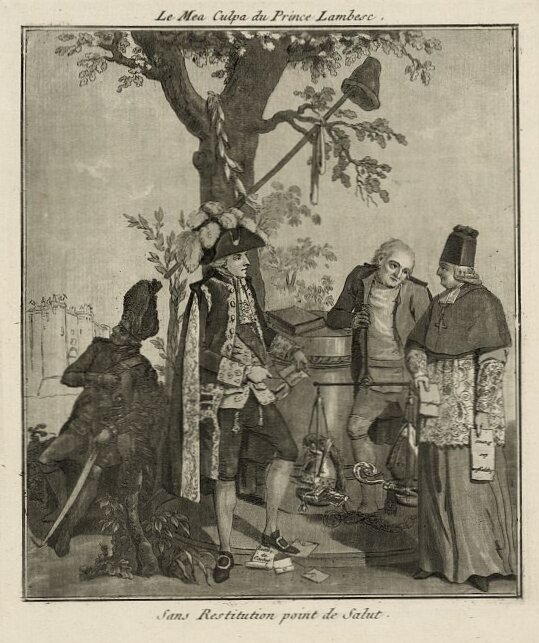
The plan backfired spectacularly. The Notables refused to endorse the new tax, arguing that only the Estates-General—a medieval representative body that hadn't met since 1614—could approve such a fundamental change. This refusal triggered what historians call the 'revolt of the nobility'. The very elites the king counted on for support were now leading the charge against him, using the language of liberty and constitutional rights to protect their financial privileges.
The monarchy was paralysed. Its attempts at reform were blocked at every turn by the powerful Parlements, who positioned themselves as champions of the people against royal despotism. The political deadlock was complete.
From Bad to Worse
As the political crisis festered, a natural disaster struck. A severe hailstorm in the summer of 1788, followed by a harsh winter, led to a catastrophic harvest failure. The price of bread, the staple food for most of the population, skyrocketed. For ordinary people, the abstract debates over taxation and representation were suddenly overshadowed by the immediate threat of starvation. Bread riots erupted across the country.
With France facing both bankruptcy and widespread famine, Louis XVI had no choice. In August 1788, he surrendered to the demands of the nobility and the Parlements and agreed to summon the Estates-General for May 1789.
This decision set off a firestorm of public debate. The key question was how the Estates-General would vote. Traditionally, each of the three estates voted as a single bloc. This meant the First and Second Estates could always outvote the Third Estate, which represented over 95% of the population. The Third Estate demanded double representation and voting by head, not by order.
In this charged atmosphere, a pamphlet by an obscure clergyman, , electrified the nation. Titled Qu'est-ce que le Tiers-État? (What is the Third Estate?), it opened with a revolutionary argument: "What is the Third Estate? Everything. What has it been until now in the political order? Nothing. What does it ask? To become something."
Sieyès's words captured the spirit of the moment. He argued that the Third Estate was not just one order among three but was the nation itself. The privileged orders were parasites, useless to the functioning of the state. This idea transformed the debate from one about financial reform into a radical questioning of the entire social and political structure of France.
What was a primary cause of France's massive national debt by the 1780s?
Why did finance minister Calonne's proposal for a new land tax on all estates fail?
The stage was set. The convergence of a bankrupt state, a defiant aristocracy, a starving populace, and a newly empowered Third Estate created a perfect storm. The Ancien Régime was about to be swept away.