French Language Fundamentals
French Alphabet and Pronunciation
The French Alphabet
The French alphabet uses the same 26 letters as English, which is a great start. For the most part, you'll find the letters are named similarly, but with a French twist. For example, 'A' is still 'ah', but 'H' is 'ash', and 'W' is 'double vé'.
Let's look at the full alphabet and how each letter's name is pronounced. Don't worry about memorizing this perfectly right now. Just get familiar with it.
| Letter | French Name | Pronunciation |
|---|---|---|
| A | a | ah |
| B | bé | bay |
| C | cé | say |
| D | dé | day |
| E | e | euh |
| F | effe | eff |
| G | gé | zhay |
| H | hache | ash |
| I | i | ee |
| J | ji | zhee |
| K | ka | kah |
| L | elle | ell |
| M | emme | emm |
| N | enne | enn |
| O | o | oh |
| P | pé | pay |
| Q | qu | koo |
| R | erre | airr (guttural) |
| S | esse | ess |
| T | té | tay |
| U | u | oo (lips pursed) |
| V | vé | vay |
| W | double vé | doo-bluh vay |
| X | ixe | eeks |
| Y | i grec | ee-grek |
| Z | zède | zed |
The names of the letters are useful, but the sounds they make in words are what really matter. Many consonants sound similar to their English counterparts, but some are tricky. The letter 'h' is always silent, 'j' sounds like the 's' in 'measure', and the French 'r' is pronounced in the back of the throat.
Vowels and Accents
Vowels are the heart of French pronunciation. Unlike English, where a vowel's sound can change dramatically, French vowels are more consistent. The challenge comes from sounds that don't exist in English and the use of accent marks, which change a letter's sound.
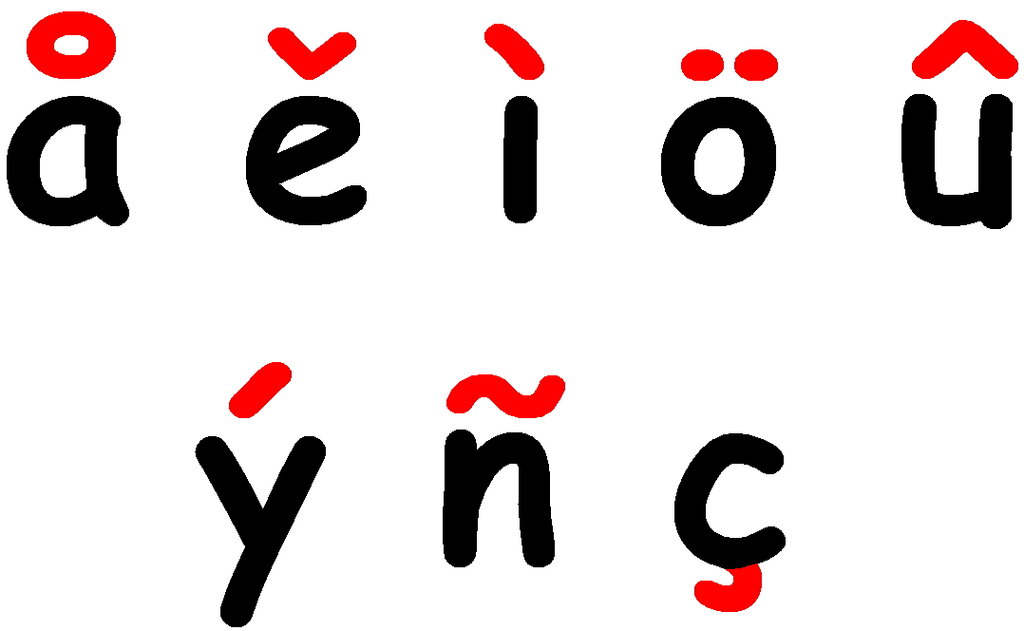
These accents, called diacritics, aren't just for decoration. They are a core part of the spelling and tell you exactly how to pronounce a vowel.
There are five accents in French:
The acute accent (l'accent aigu) – é: Only used on the letter 'e'. It makes an "ay" sound, like in "say". Example: café.
The grave accent (l'accent grave) – à, è, ù: On 'a' and 'u', it doesn't change the sound but distinguishes words. On 'e', it makes an "eh" sound, like in "get". Example: père (father).
The circumflex (l'accent circonflexe) – â, ê, î, ô, û: This can appear on any vowel. It slightly lengthens the vowel's sound. Example: forêt (forest).
The cedilla (la cédille) – ç: Only used on the letter 'c'. It changes the 'c' from a hard "k" sound to a soft "s" sound before a, o, or u. Example: français.
The trema (le tréma) – ë, ï, ü: This shows that two adjacent vowels should be pronounced separately, not blended. Example: Noël (Christmas).
The Nasal Sounds
One of the most characteristic features of French is its nasal vowel sounds. These happen when a vowel is followed by an 'n' or 'm' in the same syllable, and the 'n' or 'm' itself isn't pronounced. Instead, the vowel sound is pushed through the nose.
To make a nasal sound, you let air pass through your nose as you speak, rather than just your mouth. Try saying "on" but stop before your tongue touches the roof of your mouth to make the 'n' sound. That airy, open sound is a nasal vowel.
| Combination | Sound | Example Word |
|---|---|---|
| an, am, en, em | Sounds like "on" in English, but more open. | enfant (child), temps (time) |
| on, om | Sounds like "own" but without closing your mouth for the 'n'. | bon (good), nom (name) |
| in, im, ain, aim, ein | Sounds a bit like "an" in the English word "sang". | vin (wine), pain (bread) |
| un, um | A sound that doesn't exist in English. It's like the "euh" sound in je, but nasal. | un (one), parfum (perfume) |
Ready to test what you've learned about the sounds of French?
How is the letter 'h' typically pronounced in French words?
What is the primary function of accent marks (diacritics) in French?