French Language Fundamentals
French Alphabet and Pronunciation
The French Alphabet
The French alphabet uses the same 26 letters as the English alphabet, so it will look very familiar. However, the names of the letters are pronounced differently. Learning these names can be helpful, especially when you need to spell something out.
| Letter | Name | Pronunciation Guide |
|---|---|---|
| A | a | ah |
| B | bé | bay |
| C | cé | say |
| D | dé | day |
| E | e | uh |
| F | effe | eff |
| G | gé | zhay |
| H | hache | ash |
| I | i | ee |
| J | ji | zhee |
| K | ka | kah |
| L | elle | ell |
| M | emme | emm |
| N | enne | enn |
| O | o | oh |
| P | pé | pay |
| Q | qu | koo |
| R | erre | airr (with a rolled r) |
| S | esse | ess |
| T | té | tay |
| U | u | (no English equivalent) |
| V | vé | vay |
| W | double vé | DOO-bluh vay |
| X | ixe | eeks |
| Y | i grec | ee-GREK |
| Z | zède | zed |
While knowing the letter names is good, it's more important to know the sounds these letters make in words. Many sounds will be familiar, but French has a few that are unique and require practice.
Key Vowel Sounds
French vowels are crisp and pure, without the glide you often hear in English. For example, the French o is a pure "oh" sound, not "oh-w" like in the English word "go."
Some vowels are straightforward, while others, like u, have no direct English equivalent. The French u sound is made by forming your lips to say "oo" but trying to say "ee" instead. You'll also encounter accent marks (like é, è, â, ç) which change a letter's pronunciation, but we'll cover those in detail later. For now, let's focus on the basic sounds.
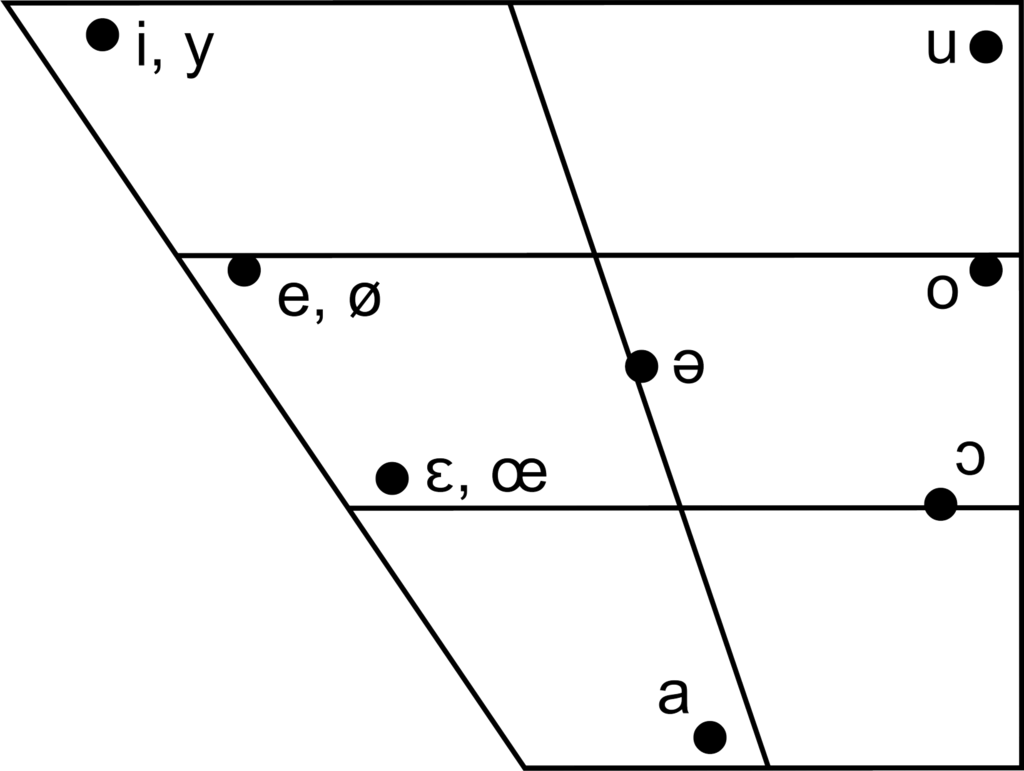
One of the most characteristic features of French pronunciation is its nasal sounds. These are created when air passes through both the nose and the mouth. You can spot them when a vowel is followed by an n or m at the end of a syllable.
| Combination | Sound | Example |
|---|---|---|
| an, am, en, em | like "on" in "song" | enfant (child), temps (time) |
| on, om | like "on" but more rounded | bon (good), nom (name) |
| in, im, ain, aim, ein | like "an" in "sang" | vin (wine), faim (hunger) |
| un, um | somewhere between the sounds in "sang" and "sung" | un (one), parfum (perfume) |
The key is not to pronounce the n or m as a hard consonant. It just signals that the vowel before it is nasal.
Consonants and Combinations
Most French consonants sound similar to their English counterparts, but there are a few important rules and exceptions to learn.
- C is soft (like
s) beforee,i, ory. It's hard (likek) beforea,o,u, or a consonant. C'est (it is) vs. café (coffee). - G is soft (like the
sin "measure") beforee,i, ory. It's hard (like thegin "go") beforea,o,u, or a consonant. Gens (people) vs. gâteau (cake). - H is always silent. You pronounce hôtel as if it were spelled "ôtel."
- R is pronounced in the back of the throat, not by rolling the tip of your tongue like in Spanish. It's a light, breathy rasp.
- J always sounds like the
sin "pleasure" or "measure."
One of the biggest hurdles for English speakers is knowing which letters not to pronounce.
As a general rule, final consonants like -d, -p, -s, -t, -x, and -z are silent. For example, in the word trop (too much), you don't pronounce the
p.
Certain letter combinations also create unique sounds:
- ch sounds like
shin "shoe." Chat (cat). - ou sounds like
ooin "food." Vous (you). - oi sounds like
wain "water." Moi (me). - gn sounds like
nyin "canyon." Mignon (cute).
Let's review these new sounds before we practice them.
Ready to test your knowledge? This quiz will help you check your understanding of the basic sounds and rules we've just covered.
How is the letter 'C' most likely pronounced in the French word cinéma?
In French, what is the primary role of an 'n' or 'm' that follows a vowel at the end of a syllable?
Getting comfortable with these sounds is the first major step toward speaking French clearly and confidently. It takes time and practice, so keep listening and repeating.