French Language Fundamentals
French Alphabet and Pronunciation
The French Alphabet
Getting started with French pronunciation begins with the alphabet. The good news is that French uses the same 26 letters as English and Portuguese. What's different is how the letters are named and, more importantly, how they sound.
Knowing the names of the letters is useful for spelling words aloud, like when you're giving someone your name over the phone.
| Letter | French Name (Pronunciation) |
|---|---|
| A a | a (ah) |
| B b | bé (bay) |
| C c | cé (say) |
| D d | dé (day) |
| E e | e (euh) |
| F f | effe (eff) |
| G g | gé (jay) |
| H h | hache (ash) |
| I i | i (ee) |
| J j | ji (jee) |
| K k | ka (kah) |
| L l | elle (ell) |
| M m | emme (emm) |
| N n | enne (enn) |
| O o | o (oh) |
| P p | pé (pay) |
| Q q | qu (kyoo) |
| R r | erre (air) |
| S s | esse (ess) |
| T t | té (tay) |
| U u | u (ew) |
| V v | vé (vay) |
| W w | double vé (doobluh vay) |
| X x | ixe (eeks) |
| Y y | i grec (ee grek) |
| Z z | zède (zed) |
Vowel Sounds
French vowels are where the real challenge—and beauty—of the language lies. Unlike in English, where vowel sounds often glide, French vowels are pure and crisp. You hold your mouth in one position for the entire sound. Portuguese speakers might find this familiar, but French has some unique sounds of its own.
The French 'u' sound has no equivalent in English. To make it, try saying 'ee' as in 'see', but round your lips tightly as if you were about to whistle.
street
Accents on the letter 'e' change its sound dramatically:
é(accent aigu) sounds like 'ay' in 'say'. Example: café (coffee).è(accent grave) andê(accent circonflexe) sound like 'e' in 'bed'. Example: mère (mother), fête (party).
A plain e is often a soft, unstressed sound, like the 'uh' in 'about', or it can be silent, especially at the end of a word.
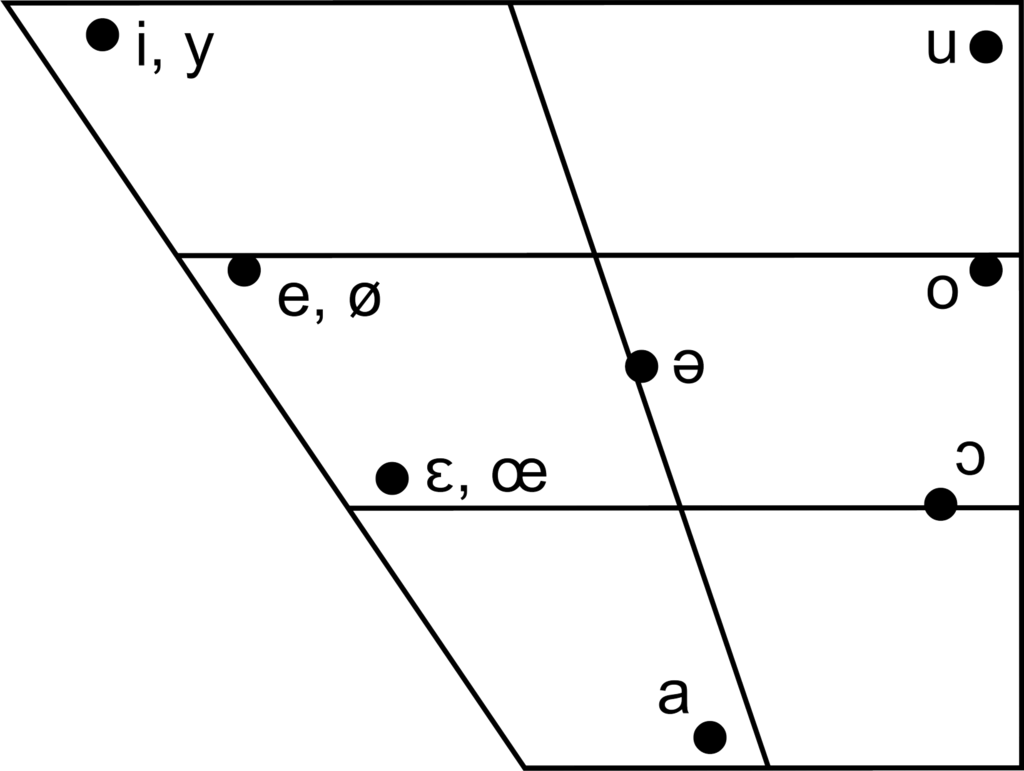
Then there are the nasal vowels. These are made by letting air pass through both your mouth and your nose. Portuguese has nasal sounds, but the French ones are distinct. They occur when a vowel is followed by 'n' or 'm' in the same syllable.
an,enmake an 'ahn' sound (like in maman - mom).in,ain,einmake an 'an' sound (like in vin - wine).onmakes an 'ohn' sound (like in bon - good).unmakes an 'uhn' sound (like in brun - brown).
Consonant Quirks
Most French consonants will feel familiar, but a few have their own personalities. The French r is probably the most famous. It's not rolled like in Spanish or pronounced in the front of the mouth like in English. It's a guttural sound, produced at the back of the throat, almost like a light gargle.
Another special character is the ç (cédille). This little tail tells you to pronounce the 'c' as an 's' sound before the vowels a, o, or u. Without it, 'ca', 'co', 'cu' would have a hard 'k' sound.
boy
Perhaps the biggest adjustment for new learners is the concept of silent letters. In French, you often don't pronounce the final consonant of a word. This is very common.
For example, in trop (too much), the 'p' is silent. In grand (big), the 'd' is silent. In petits (small, plural), both the 't' and the 's' are silent. You'll get a feel for this rule and its many exceptions over time.
A handy mnemonic is the word CaReFuL. The consonants C, R, F, and L are often the only ones pronounced at the end of a word. For example: sac (bag), cher (expensive), neuf (nine), sel (salt).
Finally, there's the liaison. This is when a normally silent final consonant is pronounced because the next word starts with a vowel or silent 'h'. It helps the words flow together smoothly. For instance, les amis (the friends) is pronounced "lay-za-mee," connecting the 's' from les to the 'a' in amis.
Let's check what you've learned.
How is the letter é (with an accent aigu) typically pronounced in French?
The French 'r' is best described as a sound produced...
Mastering these basic sounds is the first major step toward speaking French clearly and confidently. With practice, these new sounds will start to feel natural.