French Language Basics
French Alphabet and Pronunciation
The French Alphabet
Good news: the French alphabet uses the same 26 letters as English. This gives you a huge head start. For the most part, the letters have similar names, but the sounds they make can be quite different. Let's look at the full alphabet and how to pronounce each letter's name.
| Letter | Pronunciation (like in English) |
|---|---|
| A | ah |
| B | bay |
| C | say |
| D | day |
| E | euh (a soft 'uh' sound) |
| F | eff |
| G | jhay |
| H | ash |
| I | ee |
| J | jhee |
| K | kah |
| L | ell |
| M | emm |
| N | enn |
| O | oh |
| P | pay |
| Q | koo |
| R | air |
| S | ess |
| T | tay |
| U | ew (pucker your lips like you're whistling) |
| V | vay |
| W | doo-bluh-vay |
| X | eeks |
| Y | ee-grek |
| Z | zed |
Notice how many letters are pronounced with an '-ay' sound at the end, like B, C, D, G, P, T, and V. This is a common pattern.
Vowels and Accents
French pronunciation is all about the vowels. Unlike English, where a vowel's sound can be unpredictable (think of the 'o' in go, to, and women), French vowel sounds are much more consistent. However, they are often sharper and produced more in the front of the mouth.
The real game-changers are the accent marks, or diacritics. These little marks change how a vowel is pronounced. They aren't optional suggestions; they're part of the letter's identity.
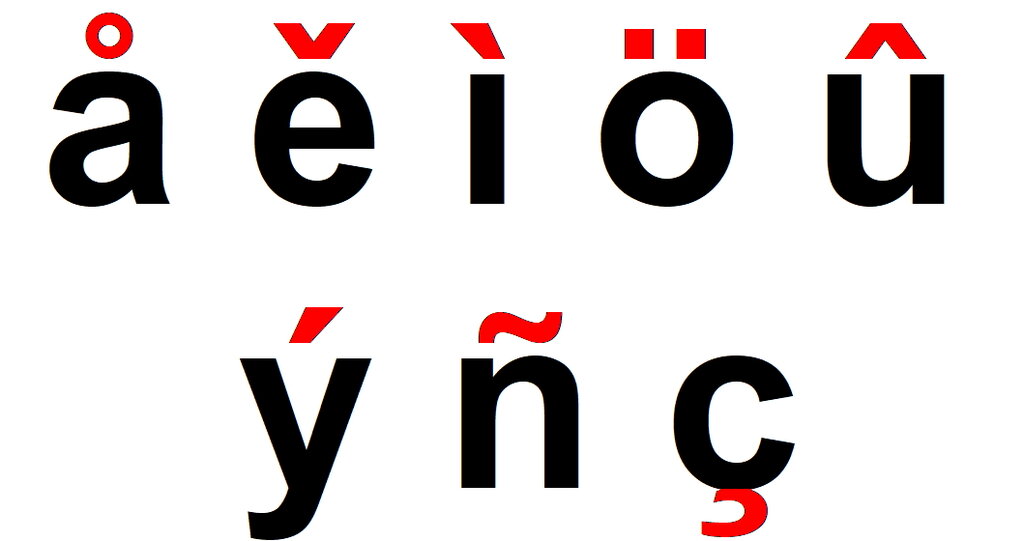
Here are the five main accents you'll encounter:
| Accent | Name | Example | Effect on Pronunciation |
|---|---|---|---|
| ´ | accent aigu | école (school) | Makes an 'ay' sound, like in "hey." |
| ` | accent grave | mère (mother) | Makes an 'eh' sound, like in "bet." |
| ˆ | accent circonflexe | forêt (forest) | Lengthens the vowel sound slightly. Often on 'e', it sounds like 'eh'. |
| ¨ | tréma | Noël (Christmas) | Tells you to pronounce two adjacent vowels separately. |
| ¸ | cédille | garçon (boy) | Only used on 'c'. Changes the hard 'k' sound to a soft 's' sound. |
The cédille (ç) is a lifesaver. Without it, français (French) would be pronounced "fran-kay."
Consonants and Combinations
Many French consonants sound similar to their English counterparts, but there are some key differences. The French 'r' is pronounced in the back of the throat, almost like a light gargle. The 'h' is always silent. And most importantly, final consonants are usually silent.
Think of the word trop (too much). You don't pronounce the 'p'. Or grand (big), where the 'd' is silent. This is one of the biggest rules to remember.
Although all those silent letters can seem confusing at first, once you learn the rules and patterns, you’ll realise that French pronunciation is actually a lot more logical and regular than English pronunciation.
Letters also team up to create new sounds. These combinations are very consistent.
| Combination | Sound | Example |
|---|---|---|
| ou | 'oo' as in "food" | oublié (forgotten) |
| au / eau | 'o' as in "boat" | cheaud (hot) |
| oi | 'wa' as in "water" | moi (me) |
| ch | 'sh' as in "shoe" | chat (cat) |
| gn | 'ny' as in "canyon" | montagne (mountain) |
Finally, we have nasal sounds. These occur when a vowel is followed by an 'n' or 'm'. Instead of pronouncing the 'n' or 'm', the sound resonates through your nose. It’s the sound you make when you say "huh?"
a good white wine
In this classic phrase, none of the 'n' sounds are fully pronounced. Instead, they turn the preceding vowels (un, on, in, an) into nasal sounds. This is a core feature of spoken French.
Time to review what we've learned.
Let's check your understanding.
In the French word "trop" (too much), how is the final 'p' typically pronounced?
What is the primary function of accent marks (diacritics) on French vowels?
Getting a feel for these sounds is the first major step. Don't worry about perfection. Just listening and trying will train your ear over time.