French for Absolute Beginners Dictionary Pronunciation
French Alphabet
The French Alphabet
The French alphabet uses the same 26 letters as the English alphabet. While the letters look familiar, their names and sounds can be quite different. Learning how to pronounce each letter is the first step toward speaking and reading French accurately.
Start with the French alphabet and core pronunciation rules to build a rock-solid foundation.
Let's go through each letter, its name in French, and an approximate sound to help you get started.
| Letter | French Name | Pronunciation Guide |
|---|---|---|
| A a | a | ah (like in 'father') |
| B b | bé | bay |
| C c | cé | say |
| D d | dé | day |
| E e | e | euh (like the 'e' in 'the') |
| F f | effe | ef |
| G g | gé | zhay |
| H h | ache | ash |
| I i | i | ee (like in 'see') |
| J j | ji | zhee |
| K k | ka | kah |
| L l | elle | el |
| M m | emme | em |
| N n | enne | en |
| O o | o | oh (like in 'go') |
| P p | pé | pay |
| Q q | qu | koo |
| R r | erre | ehr (a guttural sound) |
| S s | esse | ess |
| T t | té | tay |
| U u | u | (no English equivalent) |
| V v | vé | vay |
| W w | double vé | DOO-bluh vay |
| X x | ixe | eeks |
| Y y | i grec | ee grek |
| Z z | zède | zed |
The letter 'U' has a unique sound in French. To make it, try saying 'ee' while rounding your lips as if you were about to whistle.
Accents and Special Characters
You've probably noticed little marks on some French letters. These are called diacritics, and they're not just for decoration. They can change a letter's pronunciation or a word's meaning entirely. There are five you need to know.
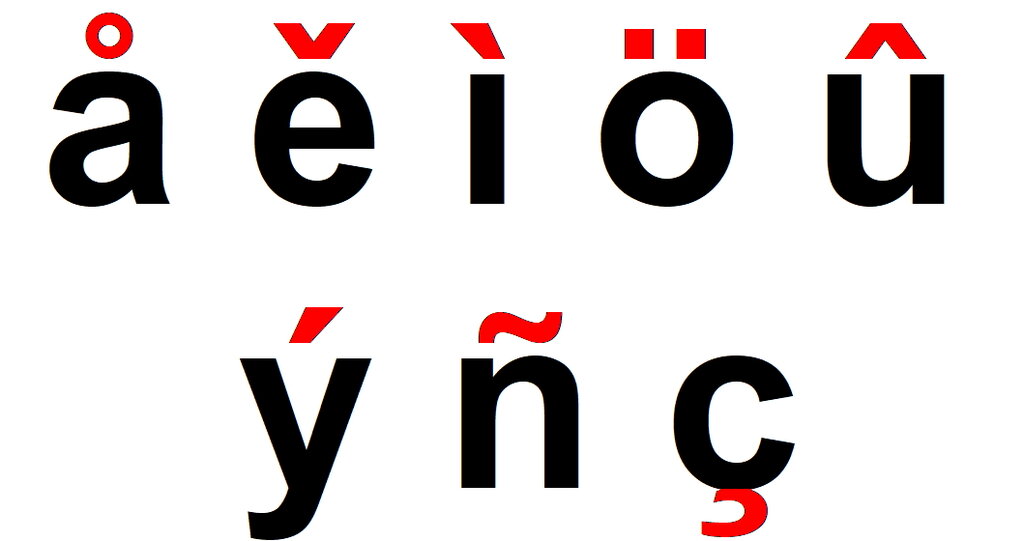
diacritic
noun
A sign, such as an accent or cedilla, which when written above or below a letter indicates a difference in pronunciation from the same letter when unmarked.
1. The Acute Accent (L'accent aigu) This accent only appears on the letter 'e', like this: é. It gives the 'e' an "ay" sound, similar to the 'e' in "hey."
school
2. The Grave Accent (L'accent grave) This accent can appear on 'a', 'e', or 'u' (à, è, ù).
On 'e', it creates an "eh" sound, like the 'e' in "bed." For example, père (father).
On 'a' and 'u', it doesn't change the sound but distinguishes between words that look alike.
ou means "or" où means "where"
a means "has" à means "to" or "at"
3. The Circumflex (L'accent circonflexe) This little hat can sit on top of any vowel: â, ê, î, ô, û. It can make the vowel sound longer. For example, the 'o' in hôtel is a longer 'o' sound. The circumflex often indicates that an 's' used to follow the vowel in Old French. Think of forêt (forest) or hôpital (hospital).
4. The Cedilla (La cédille) This mark is found only under the letter 'c': ç. Its job is simple: to make the 'c' sound like an 's' when it comes before the vowels a, o, or u. Without the cedilla, a 'c' before those vowels would make a hard 'k' sound.
boy
5. The Trema (Le tréma) The trema looks like two dots over a vowel: ë, ï, ü. It signals that two adjacent vowels should be pronounced as separate sounds, not blended into one. You'll see it in words like naïf (naive), where the 'a' and 'i' are pronounced separately: "nah-eef."
Which diacritic is used to ensure two adjacent vowels are pronounced separately, as in the word naïf?
In the word garçon (boy), what is the purpose of the mark under the 'c'?
Learning the alphabet and its accents is a huge first step. With this foundation, you can start to sound out new words with confidence.