French Cinema Explored
Origins of French Cinema
The Birth of Cinema
It all started with two brothers, Auguste and Louis Lumière. They were engineers from Lyon who invented the Cinématographe, a clever device that could record, develop, and project motion pictures. It was lighter and more portable than other early cameras, making it a revolutionary piece of technology.
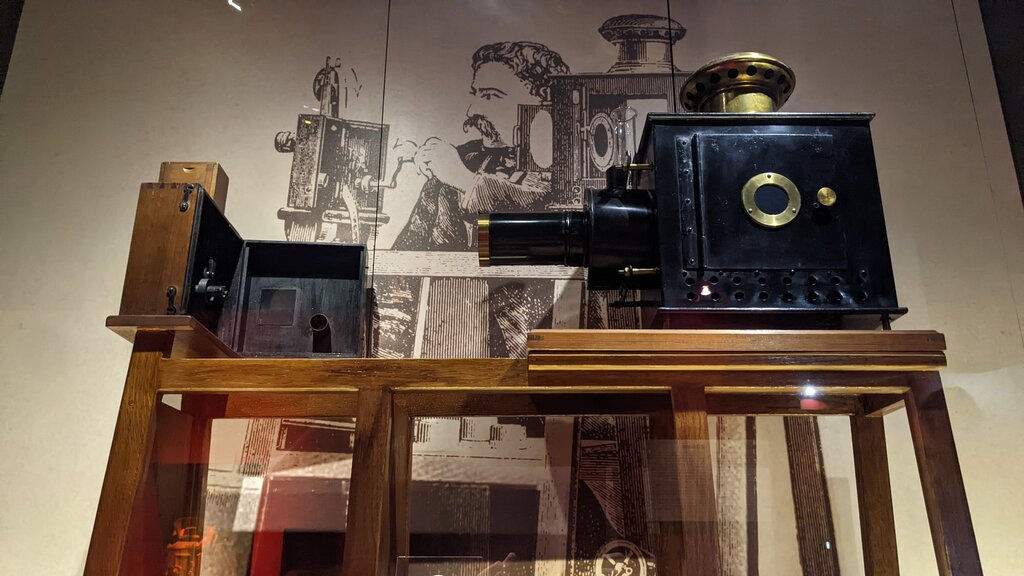
On December 28, 1895, in the basement of the Grand Café in Paris, the Lumière brothers held the first-ever public, paid screening of a film. The audience saw ten short films, each about 50 seconds long. These weren't stories with actors and plots; they were slices of real life. One of the most famous, L'Arrivée d'un train en gare de La Ciotat (Arrival of a Train at La Ciotat Station), was so realistic that legend says some audience members screamed and ran, fearing the train would burst through the screen.
The Lumière brothers, Auguste and Louis, are credited with inventing motion picture projection and held the first-ever public screening of a film in December 1895 in Paris.
The Lumières saw their invention primarily as a scientific tool for documenting reality. They sent camera operators around the world to capture scenes of everyday life, creating a visual record of the era. But others saw a different kind of potential in their machine.
From Novelty to Industry
The public's fascination with moving pictures quickly turned cinema from a novelty into a business. Two entrepreneurs, Charles Pathé and Léon Gaumont, recognized the commercial possibilities and founded the world's first major film studios. Pathé Frères was established in 1896, followed by Gaumont Film Company in 1897.
These studios industrialized the filmmaking process. They built large production facilities, hired filmmakers, and created vast distribution networks that extended across the globe. For a time, Pathé was the largest film company in the world, dominating the international market. They didn't just make films; they also manufactured and sold cameras and projectors, helping to spread the new medium far and wide.
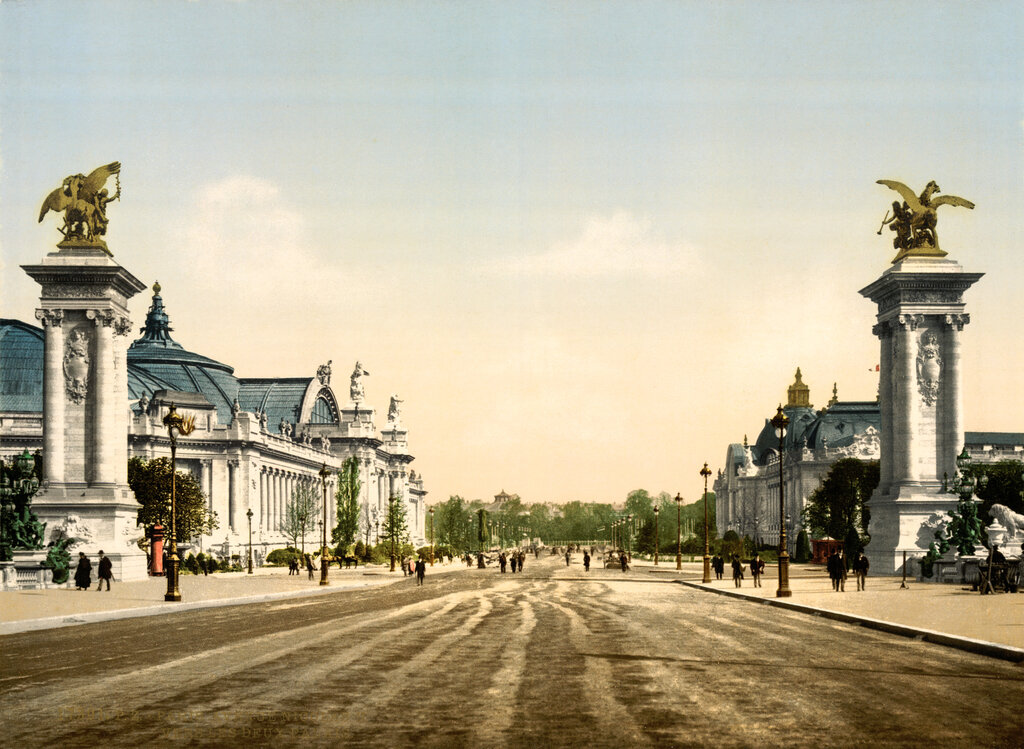
This rapid industrialization turned France into the epicenter of the early film world, setting the stage for cinema to become a powerful form of mass entertainment.
The Magician of the Screen
While the Lumières documented reality and the studios built an industry, a Parisian theater owner and magician named Georges Méliès saw cinema as a tool for creating fantasy. He was one of the first to understand that film could be used to tell stories and create worlds that didn't exist.
Méliès didn't want to show the world as it was. He wanted to show the world of his imagination.
He built one of the first film studios in Europe, a glasshouse that allowed him to control lighting. There, he experimented with pioneering special effects. He discovered the stop trick by accident when his camera jammed, making objects appear, disappear, or transform. He used multiple exposures, time-lapse photography, and hand-painted color on his film prints.
His most famous work, Le Voyage dans la Lune (A Trip to the Moon) from 1902, is considered a masterpiece of early cinema. The 14-minute film tells the story of a group of astronomers who travel to the moon in a cannon-propelled capsule. With its whimsical sets, strange lunar inhabitants, and the iconic image of the capsule hitting the Man in the Moon in the eye, the film was a global sensation.
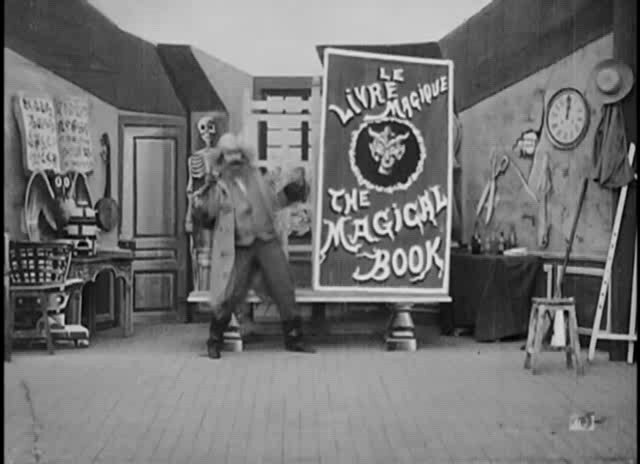
Méliès showed filmmakers that the camera wasn't just for capturing what was real, but for creating what was possible. His work laid the groundwork for narrative filmmaking and visual effects that are still central to cinema today.
What was the name of the device invented by Auguste and Louis Lumière that could record, develop, and project motion pictures?
Which individual is credited with pioneering the use of special effects and narrative fantasy in film, with works like A Trip to the Moon?
These early pioneers—the inventive Lumière brothers, the industrious Pathé and Gaumont, and the imaginative Georges Méliès—established the technical, commercial, and artistic foundations of French cinema, making it a dominant force in the art form's first decade.