French A1 Foundations
French Alphabet and Pronunciation
The French Alphabet
The French alphabet uses the same 26 letters as English, which is a great head start. Many letters even sound similar when you say their names. But watch out for a few tricky ones, like G, H, J, W, and Y. Listening closely to their sounds is the first step to good pronunciation.
| Letter | Name (Pronunciation) |
|---|---|
| A | ah |
| B | bé (bay) |
| C | cé (say) |
| D | dé (day) |
| E | euh |
| F | effe (ef) |
| G | gé (zhay) |
| H | hache (ash) |
| I | i (ee) |
| J | ji (zhee) |
| K | ka (kah) |
| L | elle (el) |
| M | emme (em) |
| N | enne (en) |
| O | o |
| P | pé (pay) |
| Q | qu (koo) |
| R | erre (air) |
| S | esse (ess) |
| T | té (tay) |
| U | u (ew) |
| V | vé (vay) |
| W | double vé (DOO-bluh vay) |
| X | ixe (eeks) |
| Y | i grec (ee grek) |
| Z | zède (zed) |
You'll notice the letter 'H' is called hache. In French, this letter is almost always silent. Think of the word hôtel. You don't pronounce the 'h' at the beginning. It's just there for spelling.
Start with the French alphabet and core pronunciation rules to build a rock-solid foundation.
Accents and Special Characters
French uses small marks on letters called diacritics, or accents. These aren't just for decoration; they change how a letter sounds. They are a core part of the spelling, so you can't leave them out.
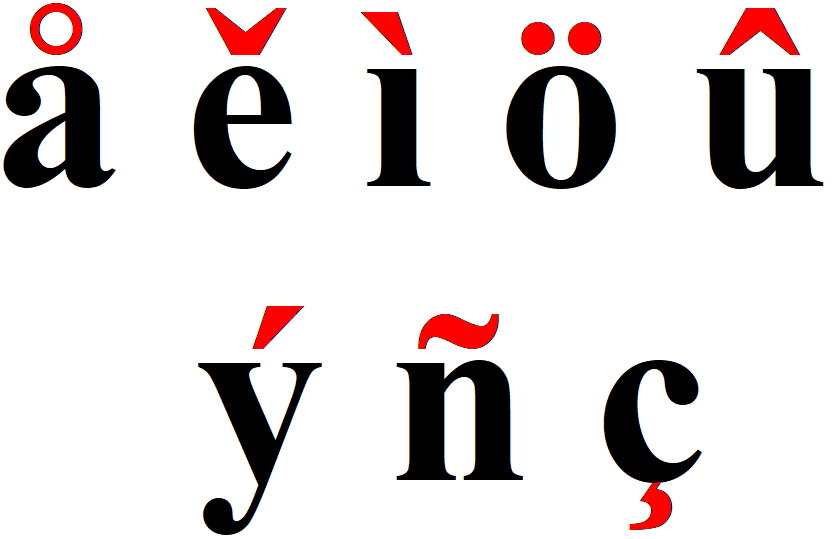
Here are the most common ones you'll see.
The Cedilla (la cédille): ç This little tail only appears on the letter 'c'. When 'c' is followed by an 'a', 'o', or 'u', it normally makes a hard 'k' sound. Adding a cedilla softens it to an 's' sound.
boy
Without the cedilla, garçon would be pronounced "gar-kon."
Accents on Vowels French vowels can have several different accents. For the letter 'e', each accent creates a distinct sound.
- Acute accent (l'accent aigu): é - Makes an "ay" sound, like in "say." You'll only find this on the letter 'e'. Example: café (ka-fay).
- Grave accent (l'accent grave): è, à, ù - On an 'e', it makes an "eh" sound, like in "bed." On 'à' and 'ù', it usually just changes the meaning of a short word, not the sound. For example, ou means "or," but où means "where."
- Circumflex (l'accent circonflexe): ê, â, î, ô, û - This little hat can appear on any vowel. It slightly lengthens the vowel sound. For 'e', it sounds like the grave accent 'è'. Historically, it often marks where a letter (usually an 's') was dropped from an older form of the word. For example, the French word for forest, forêt, is related to the English word "forest."
Key Sounds
Beyond single letters, French pronunciation is shaped by common letter combinations and a few unique types of sounds.
Although all those silent letters can seem confusing at first, once you learn the rules and patterns, you’ll realise that French pronunciation is actually a lot more logical and regular than English pronunciation.
Common Letter Groups Certain letter pairs create a single, consistent sound. Learning these will help you read new words more easily.
- ou: Makes an "oo" sound, like in "soup." Example: vous (voo), meaning "you."
- ch: Usually makes a "sh" sound, like in "shoe." Example: chat (shah), meaning "cat."
- gn: Makes a "ny" sound, like the 'ni' in "onion." Example: montagne (mon-tan-yuh), meaning "mountain."
Nasal Vowels This is a sound that doesn't really exist in English. It happens when a vowel is followed by 'n' or 'm' in the same syllable. The sound is produced partly through the nose, and the 'n' or 'm' isn't fully pronounced. It's like the vowel sound is humming.
Think of the words vin (wine), bon (good), and an (year). You don't hear a hard 'n' at the end. The sound flows through your nose.
Silent Letters A common feature of French is silent letters, especially at the end of words. The most common silent final letters are 'e', 's', 't', and 'd'.
For example, in the word petit (small), the final 't' is silent. In grands (big, plural), the 'd' and 's' are both silent. The final 'e' is also usually silent, as in table. It's there to support the consonant before it, but you don't pronounce it.
Ready to test what you've learned? This quiz will cover the alphabet, accents, and basic pronunciation rules.
What is the primary function of the cedilla (la cédille) on the letter 'c', as in 'ç'?
Which accent is found only on the letter 'e' and makes an "ay" sound, like in the word "say"?
Mastering these fundamentals is the first major step. As you learn more words, these patterns will become second nature.