Freestyle Swimming Anatomy for Athletes
Freestyle Stroke Mechanics
Body Position and Alignment
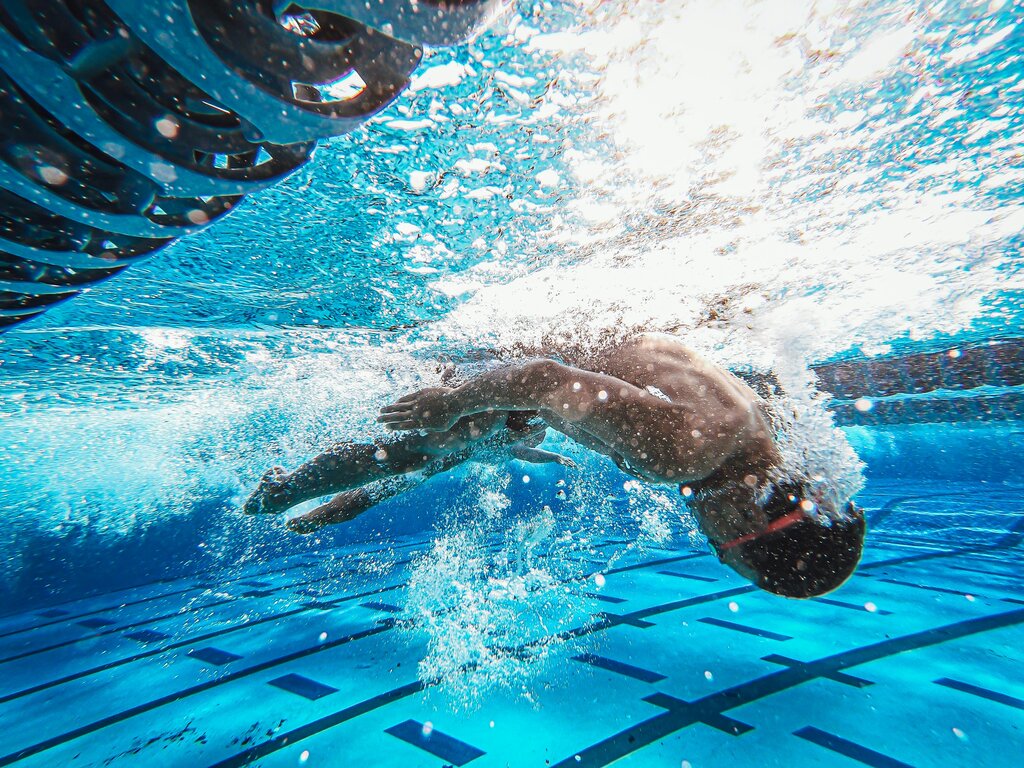
The foundation of a fast and efficient freestyle is a great body position. Think of your body as a boat. The flatter and more level it is, the less water it has to push out of the way. This resistance is called drag, and minimizing it is key.
Your goal is to stay as horizontal as possible, near the surface of the water. Your head, hips, and heels should form a straight line. Avoid letting your hips and legs sink, as this creates significant drag. A strong core is crucial for maintaining this streamlined alignment. Keep your head in a neutral position, looking toward the bottom of the pool, with the water line at your hairline.
If you’re not streamlined and balanced in the water, you’ll create more drag and resistance, which will slow you down and tire you out.
The Arm Stroke Cycle
Your arms are your primary engines in freestyle, providing most of the propulsion. The stroke is a continuous cycle, but we can break it down into four distinct phases for each arm: catch, pull, push, and recovery.
Catch: This is where you "catch" the water. Your hand enters the water, fingers first, at an angle between your head and shoulder. Your arm should be extended but not locked straight. The goal is to anchor your hand in the water.
Pull: Once your hand is anchored, you begin to pull your body past it. The key here is a "high elbow." Instead of pulling with a straight arm, you bend your elbow, keeping it higher than your hand. Your forearm and hand act like a single, large paddle, pulling you forward.
Push: As your hand moves under your torso and toward your hip, the movement accelerates. You push the water backward, propelling your body forward. This is the most powerful phase of the stroke.
Recovery: After the push, your hand exits the water near your thigh. Your elbow comes out first, high above the water. Your arm swings forward in a relaxed arc, ready to enter the water again for the next catch.
The Flutter Kick
While the arms provide most of the power, the legs are essential for stability, lift, and maintaining that all-important horizontal body line. The freestyle kick is called the flutter kick.
The motion should originate from your hips, not your knees. Think of your legs as long whips. The kick is a relatively small, fast motion. Your knees should bend slightly, but the primary force comes from your hip flexors and glutes. Keep your ankles relaxed and floppy, allowing your feet to act like fins.
Try to keep legs close together throughout a stroke and use a long, shallow kick from the hips, not the knees.
Breathing and Coordination
Breathing properly is crucial. You don’t lift your head to breathe; you rotate it to the side as your body naturally rolls during the stroke. As one arm is in the recovery phase, your body rolls away from it. This creates a pocket of air where you can turn your head and take a breath.
Timing is everything. Inhale quickly through your mouth. A common mistake is holding your breath. You should be exhaling continuously into the water whenever your face is submerged. This makes the quick inhale much easier and keeps your body relaxed.
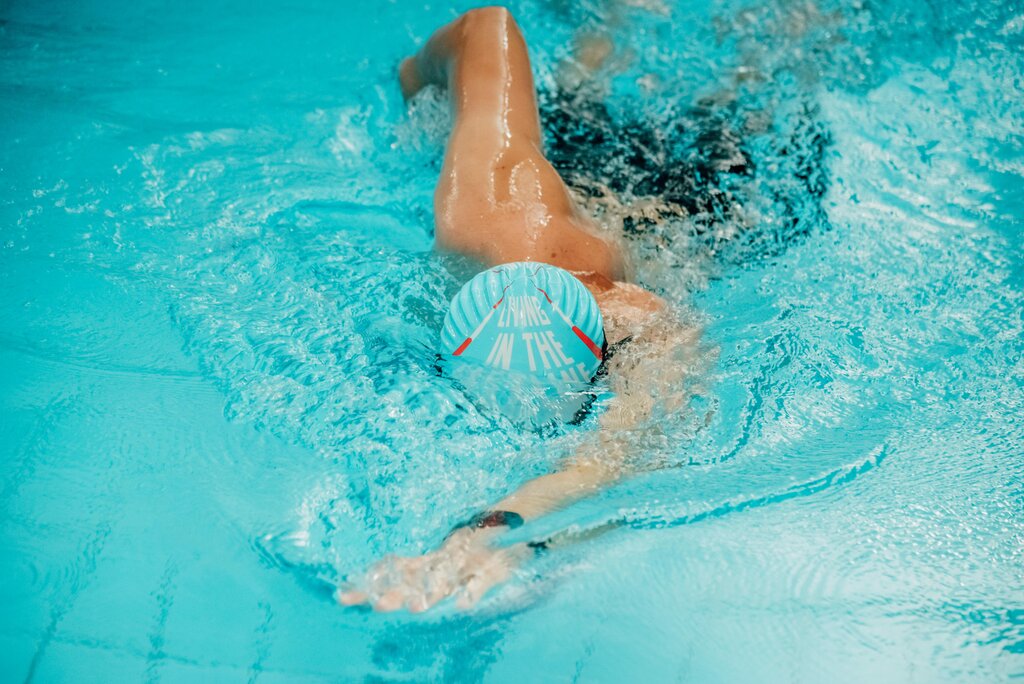
The arms and legs work in a coordinated rhythm. A common pattern is the six-beat kick, where you have six kicks for every full arm cycle (one stroke with the right arm and one with the left). However, the most important thing is to find a rhythm that feels natural and keeps your body balanced and moving forward smoothly.
What is the primary purpose of maintaining a flat, horizontal body position near the water's surface in freestyle?
During the "pull" phase of the freestyle arm stroke, what is the main advantage of maintaining a "high elbow"?