Free Online Education Resources
Understanding Open Educational Resources
What Are Open Educational Resources?
Imagine a library where every book, video, and piece of learning material is free to use, share, and even change. That's the basic idea behind Open Educational Resources, or OER. These aren't just freebies; they are high-quality materials intentionally made available for everyone.
Open Educational Resources
noun
Teaching, learning, and research materials in any medium – digital or otherwise – that reside in the public domain or have been released under an open license that permits no-cost access, use, adaptation, and redistribution by others with no or limited restrictions.
The two key ingredients are “free” and “open.” Free means you don’t have to pay for them. Open means you have legal permission to download, copy, edit, and share them. This openness is what truly separates OER from a regular library book or a free article you find online.
Why Bother with OER?
The most obvious benefit is cost. College textbooks can be incredibly expensive, creating a significant barrier for many students. OER eliminates this cost, making education more accessible. When course materials are available for free on day one, every student has a better chance to succeed.
But the advantages go beyond just saving money. For instructors, OER offers incredible flexibility. An instructor can take an open textbook, remove a chapter that isn't relevant to their course, add their own examples, and update it with the latest research. This customization leads to a more engaging and effective learning experience.
Open Educational Resources and other forms of readily available media can help by providing a broader perspective.
This adaptability means that educational materials can be tailored for different languages, cultures, and learning styles, fostering a more inclusive global learning environment.
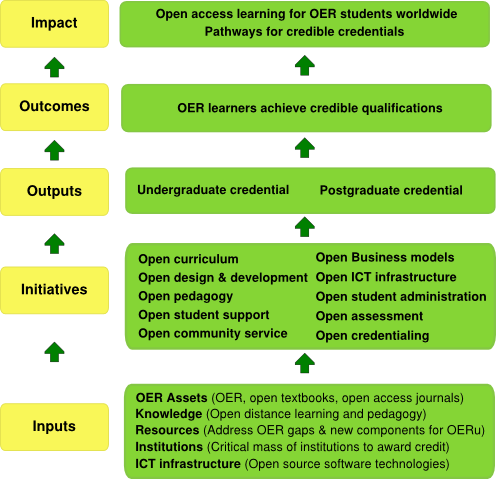
More Than Just Textbooks
When people hear “OER,” they often think of digital textbooks. While open textbooks are a huge part of the movement, the world of OER is much bigger. It includes a wide variety of materials that can support learning in many different ways.
Think of any resource you might use in a classroom. Chances are, there's an open version of it. This variety allows educators to build rich, dynamic courses entirely from free and open materials.
| Type | Description |
|---|---|
| Full Courses | Complete course packages, often including syllabi, lectures, and assignments. |
| Course Modules | Individual lessons or units that can be mixed into existing courses. |
| Textbooks | Digital books covering a specific subject, just like their printed counterparts. |
| Multimedia | Videos, audio files, and animations that can explain complex topics visually. |
| Images & Artwork | Photos, diagrams, and illustrations that are free to use in presentations and materials. |
| Software & Tools | Open-source software for things like data analysis or creating simulations. |
Understanding the Rules
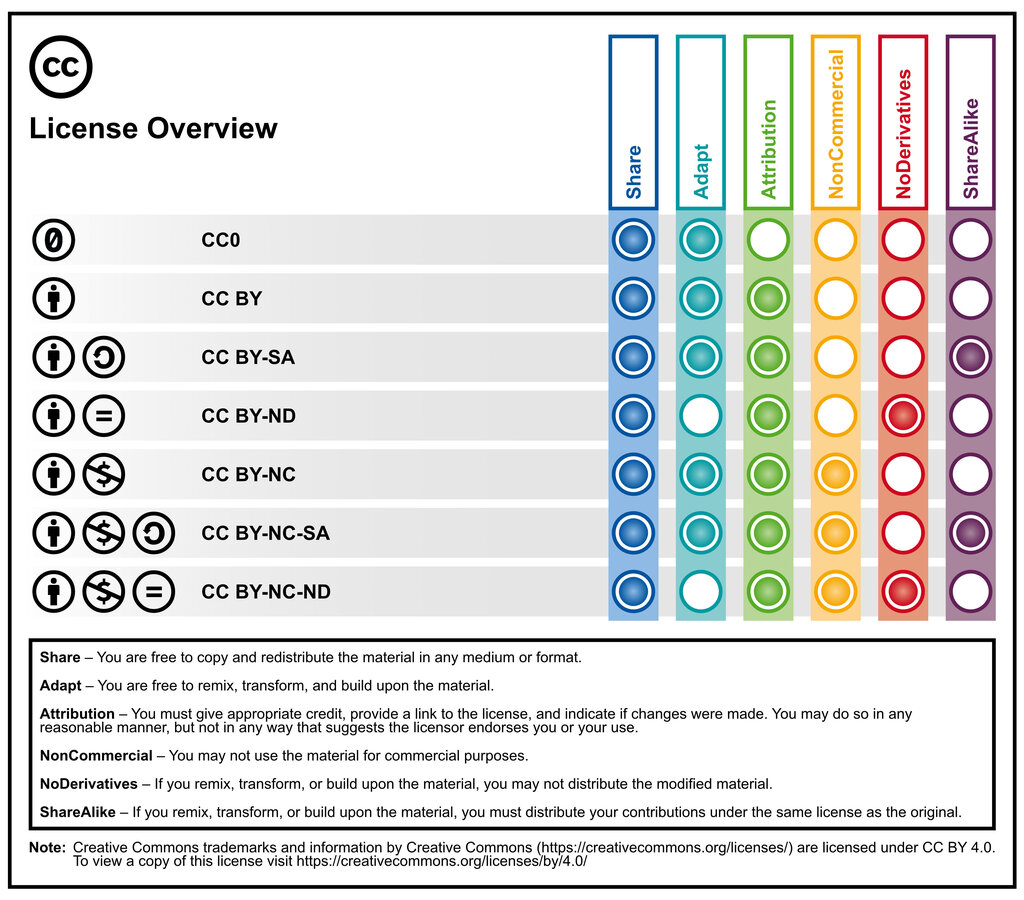
The “open” in OER comes from special licenses that creators apply to their work. These licenses tell everyone exactly what they are allowed to do with the material. You don't have to ask for permission each time because the creator has already granted it.
The most common are Creative Commons (CC) licenses. They provide a simple, standardized way to give the public permission to share and use creative work — on conditions of the creator’s choosing.
Think of a Creative Commons license as a tag that says, “You can use this, but here are the rules.”
For example, almost all CC licenses require “Attribution,” which means you must give credit to the original creator. Some licenses might not allow you to use the work for commercial purposes, while others might require you to share any adaptations you make under the same license.
Understanding these licenses is key to using OER correctly and respectfully. It ensures that creators get credit for their work while still allowing knowledge to be shared freely.
Let's review the key concepts we've covered.
Now, let's test your knowledge with a few questions.
What are the two defining characteristics of Open Educational Resources (OER)?
The legal framework that makes OER 'open' by granting permissions for sharing and use is most commonly provided by what system?
By embracing OER, educators and learners can participate in a global community dedicated to making knowledge more affordable, accessible, and adaptable for everyone.