France After the War 1945-1962
Post-War France
Rising from the Ashes
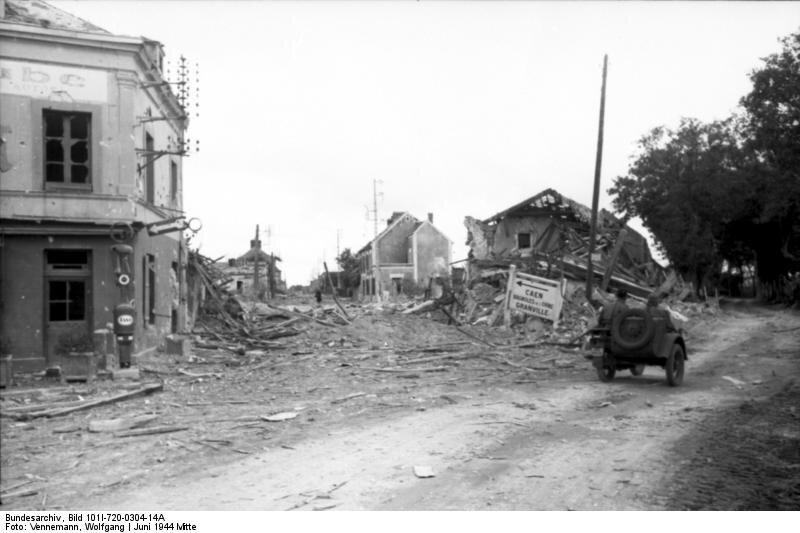
When World War II ended in 1945, France was free but shattered. Cities like Le Havre and Caen were almost completely destroyed. Over 600,000 French citizens had died. The country's infrastructure—bridges, railways, and ports—lay in ruins. The economy was in shambles, with production at less than half its pre-war levels. The immediate task was immense: rebuild a nation from the ground up.
The provisional government, led by General Charles de Gaulle, took drastic steps. It nationalized key industries like electricity, gas, coal mining, and major banks. Car manufacturer Renault was also taken under state control. This gave the government direct power to steer the economy's recovery.
Help also came from the outside. The Marshall Plan, an American aid program, provided crucial funds that helped France purchase equipment and raw materials. This combination of state planning and foreign aid kicked off a period of rapid economic growth known as the Trente Glorieuses, or the "Thirty Glorious Years."
A New Political Order
Rebuilding the country wasn't just about bricks and mortar; it was also about creating a new government. The Third Republic, which had governed France since 1870, was blamed for the swift defeat in 1940 and was deeply unpopular. In October 1945, French citizens voted overwhelmingly to scrap it and draft a new constitution.
Three major political parties emerged to dominate the post-war landscape: the French Communist Party (PCF), the socialist French Section of the Workers' International (SFIO), and the newly formed Christian democratic Popular Republican Movement (MRP). For a brief period, these three parties governed together in a coalition, a system known as tripartisme.
The goal was clear: create a political system that was more democratic, more stable, and more responsive to the needs of the people than the one that had failed them.
Crafting a new constitution proved difficult. Charles de Gaulle argued for a strong executive branch with a powerful president to provide stability. However, many politicians feared that a strong president could become an authoritarian figure, reminiscent of the recent past. They favored a system where power rested with a democratically elected parliament. Unable to get his way, de Gaulle abruptly resigned in January 1946.
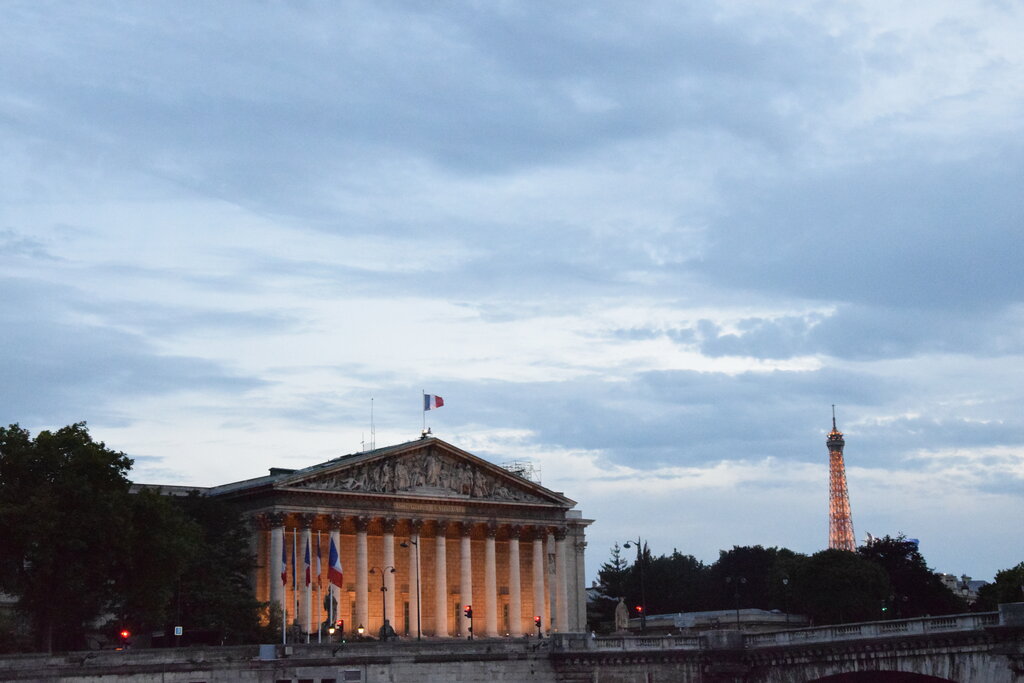
After his departure, a new constitution was drafted and approved by a narrow margin in October 1946, officially establishing the Fourth Republic. It created a parliamentary system where the National Assembly held most of the power. The President was a largely ceremonial figure, and the Prime Minister and their government depended on the Assembly's support to stay in office. This structure, designed to prevent the rise of a single strong leader, unfortunately had a critical flaw: it led to chronic political instability, with governments frequently collapsing.
The Empire Begins to Unravel
While France was rebuilding at home, its vast colonial empire was stirring. The war had weakened France's grip on its colonies. The ideals of liberty and self-determination, so central to the Allied cause, inspired independence movements across the globe.
The 1946 Constitution attempted to address this by replacing the old empire with the "French Union." In theory, this was a more equal partnership between France and its overseas territories. Colonies were renamed "overseas departments" or "territories," and their inhabitants were granted French citizenship.
However, this was largely a cosmetic change. Real political power remained firmly in Paris. For many independence leaders, the French Union was not enough. In Indochina, Ho Chi Minh had already declared Vietnam's independence in 1945, sparking the First Indochina War. In North Africa and sub-Saharan Africa, nationalist movements began to organize and demand true self-rule, not a reformed version of colonial control. The stage was set for the decades of decolonization to come.
Now, let's test your knowledge on France's transformation after the war.
What was a key economic strategy employed by the French provisional government immediately after World War II to rebuild the nation?
The period of rapid economic growth in France following World War II is known as:
The years immediately following World War II were a period of intense and often difficult transformation for France, setting the stage for the nation it would become in the latter half of the 20th century.