Fractured Basement Hydrocarbon Reservoirs
Introduction to Fractured Basement Reservoirs
Beyond Sandstone and Shale
When you think of oil and gas reservoirs, you probably picture porous rock layers like sandstone, formed from accumulated sediment. While these are the most common reservoirs, hydrocarbons can also be found in a much more surprising place: the dense, crystalline rock deep beneath the sedimentary layers, known as the basement.
Basement Rock
noun
The foundation of continental crust, composed of igneous and metamorphic rocks that lie beneath the sedimentary layers.
By their nature, basement rocks like granite or gneiss have very low porosity and permeability. They are made of interlocking crystals with almost no space between them. So how can they possibly hold and transmit oil and gas? The answer lies in the immense forces within the Earth's crust.
Creating Space in Hard Rock
Tectonic movements, the same forces that build mountains and cause earthquakes, can bend, stretch, and break even the strongest basement rocks. This stress creates a network of cracks, fissures, and faults. These openings are called fractures.
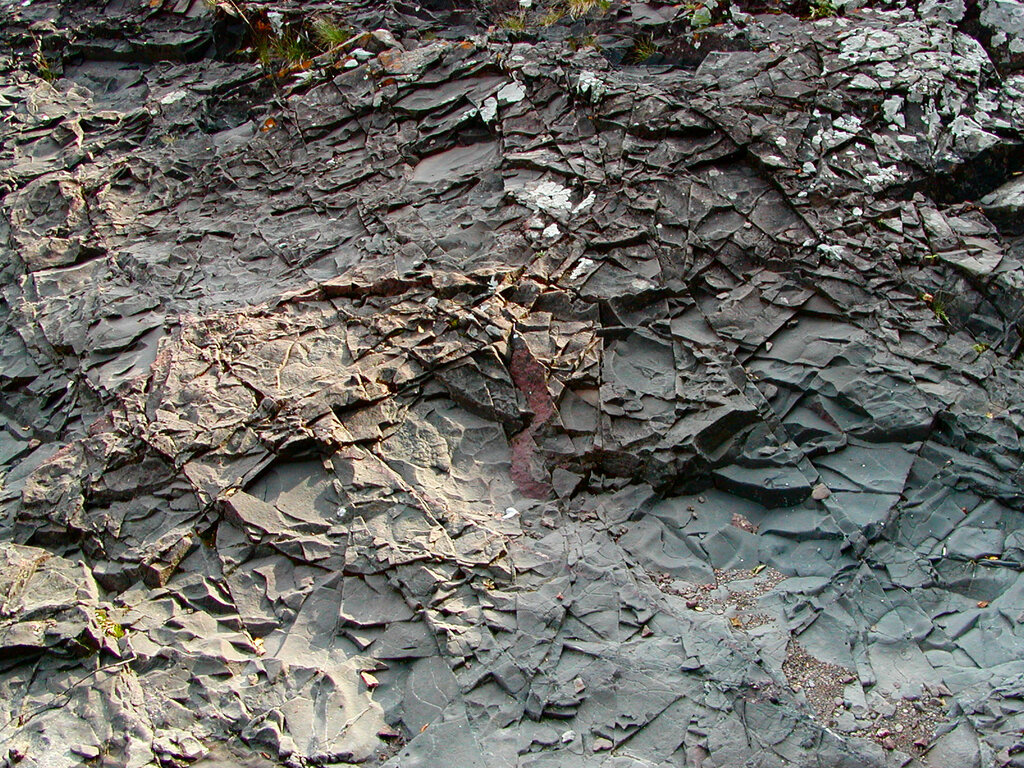
This fracture network is the key to turning dense, non-porous rock into a viable hydrocarbon reservoir. The fractures provide the empty space, or porosity, for oil and gas to accumulate. They also connect with each other, creating pathways for the hydrocarbons to flow, which provides permeability.
Fractures serve a dual purpose: they are the containers that hold the hydrocarbons and the highways that allow them to be extracted.
Fractured basement reservoirs can be found in a variety of crystalline rock types. The most common are igneous rocks like granite and metamorphic rocks such as gneiss and schist. The specific type of rock is less important than the presence of an extensive, well-connected fracture system.
Global Distribution and Importance
Fractured basement reservoirs are not just geological oddities; they are found all over the world and can be highly productive. They exist on every continent, often in regions that have experienced significant tectonic activity. Major fields have been discovered in places like Vietnam, Yemen, the North Sea, Brazil, and China.
Commercial amounts of porosity, permeability and petroleum accumulation appear to be restricted to areas where secondary porosity developed in association with hydrothermal fluid flow along faults and fractures related to basement tectonics.
While they make up a smaller percentage of global reserves compared to conventional sedimentary reservoirs, their contribution is significant. In some countries, they are the primary source of oil and gas production. Understanding these unique reservoirs is a crucial part of the global search for energy resources.
Now, let's test your understanding of these unconventional reservoirs.
What is the primary characteristic that allows dense basement rock to function as a hydrocarbon reservoir?
Which of the following rock types is LEAST likely to be a fractured basement reservoir rock?
These reservoirs show that with the right geological conditions, even the most unlikely rocks can become valuable sources of energy.