Fractions Demystified
Introduction to Fractions
Parts of a Whole
Imagine you have a pizza that you need to share with friends. You cut it into equal slices. A fraction is simply a way to talk about some of those slices. It's not a whole pizza, but a part of it.
Fractions represent parts of a whole.
Whether it's a pizza, a chocolate bar, or a tank of gas, a fraction tells us how much of that whole we're dealing with. It’s a number that’s written like a division problem, with one number sitting on top of another, separated by a line.
The Top and Bottom Numbers
Every fraction has two key parts: the number on top and the number on the bottom. Each one tells you something different about the pieces of the whole.
denominator
noun
The bottom number of a fraction. It tells you how many equal parts the whole is divided into.
Think of the denominator as the total number of slices in your pizza. If you cut it into 8 equal slices, the denominator is 8. If you cut it into 4, the denominator is 4.
numerator
noun
The top number of a fraction. It tells you how many of the equal parts you have.
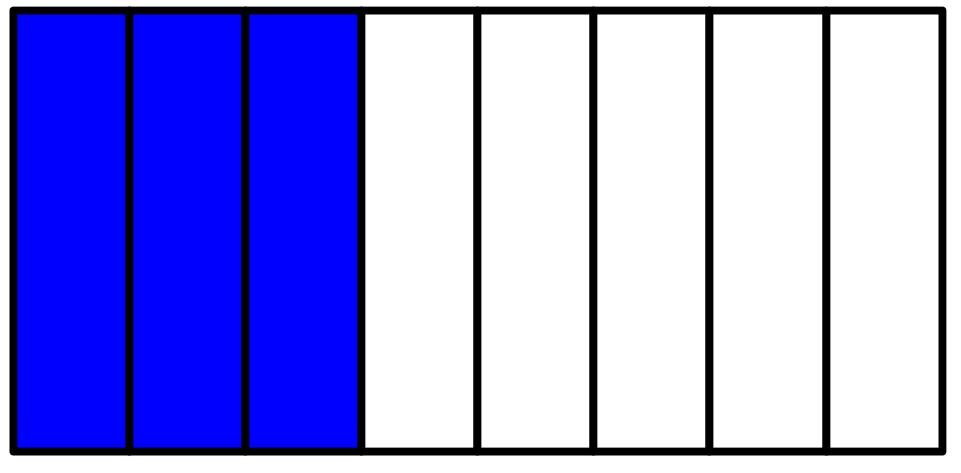
So, if your pizza is cut into 8 slices and you eat 3 of them, you've eaten 3/8 of the pizza. The 3 is the numerator (how many slices you had) and the 8 is the denominator (the total number of slices).
Fractions in Real Life
You use fractions all the time, maybe without even thinking about it. They show up in cooking, telling time, and even shopping.
| Situation | The Whole | The Fraction | What it Means |
|---|---|---|---|
| Baking a cake | 1 cup of flour | 1/2 | You need half of the full cup. |
| Telling time | 1 hour | 1/4 | A quarter, or 15 minutes, of the hour has passed. |
| Sharing candy | A bag of 10 candies | 3/10 | You gave away three out of the ten candies. |
| Phone Battery | A full charge | 1/2 | The battery is half empty, or half full. |
Understanding what the numerator and denominator mean is the first step. Once you're comfortable with this, you're ready to explore what else you can do with fractions.