Fraction Mastery Framework for Kids
Visual Modeling Frameworks
Models for Meaning
Knowing that a symbol like is called 'one-fourth' is one thing. Truly understanding its size, or magnitude, is another. Visual models bridge this gap by turning abstract numbers into concrete pictures.
Two of the most powerful frameworks for visualizing fractions are the Area Model and the Set Model. Each offers a different perspective on what a fraction represents, and choosing the right one depends entirely on the problem you're trying to solve.
The Area Model
The Area Model starts with a single, continuous whole that is divided into equal-sized pieces. It's the most common way fractions are introduced. Think of a pizza cut into slices, a chocolate bar broken into squares, or a garden plot divided into rows. The key idea is partitioning one object.
This model excels at teaching the fundamental concept of 'equal parts'. For a fraction to be valid in an Area Model, the pieces of the whole must be identical in size. This visual rule reinforces the role of the denominator: it tells you how many equal pieces the whole has been divided into.
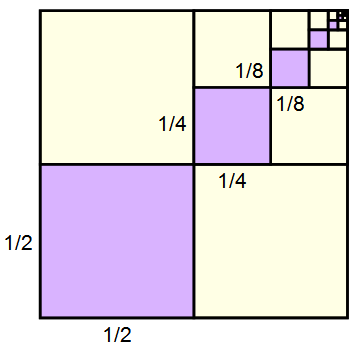
When you need to partition a shape, start with simple divisions. For halves or fourths, cut the shape down the middle. For thirds, it can be trickier. A common strategy for rectangles is to draw two vertical lines that look evenly spaced. Circles are harder to partition into anything other than halves, quarters, or eighths accurately by hand, which is one limitation of the model.
Use the Area Model when the problem involves dividing a single item: sharing a pie, painting a wall, or filling a container.
The Set Model
The Set Model, on the other hand, deals with a collection of discrete, individual items. Instead of one whole, the 'whole' is a group of objects. The fraction represents a portion of that group.
Imagine you have a bag of 12 marbles. The set of 12 marbles is the whole. If you want to find of the marbles, you're not cutting any single marble. Instead, you're dividing the collection into 4 equal groups. One of those groups represents the fraction.
Unlike the Area Model, the individual items in a Set Model don't have to be identical. You could have a set of pets (dogs and cats) or a fruit basket (apples and oranges). The fraction would represent a part of the total number of items, such as ' of the fruits are apples'.
This model is crucial for understanding fractions as ratios and for later concepts like probability. It shifts the thinking from 'dividing a thing' to 'grouping a collection'.
Use the Set Model when the problem involves a group of individual items: a bag of candies, a class of students, or a flock of birds.
Choosing the Right Tool
The model you choose can dramatically affect how easily a concept is understood. Early learners often start with the Area Model because it's more concrete and visually simpler. The idea of cutting a cake is very intuitive.
The Set Model introduces a higher level of abstraction. Students must first understand that the collection of items is a single 'whole' before they can conceptually divide it. It's a necessary step, however, for problems where partitioning a single object doesn't make sense.
| Situation | Best Model | Why? |
|---|---|---|
| Sharing one pizza among 4 friends | Area Model | The problem is about partitioning a single, continuous object. |
| Finding what fraction of 10 cars are red | Set Model | The problem deals with a portion of a collection of discrete items. |
| Painting 2/3 of a wall | Area Model | You are covering a part of a single, continuous area. |
| 1/5 of the students in a class wear glasses | Set Model | You are identifying a subgroup within a larger group of individuals. |
Ultimately, fluency with fractions means being able to switch between these models fluidly. A strong conceptual foundation is built not just on knowing how to use each model, but on knowing when to use each one.
Which of the following scenarios is best represented by the Area Model of fractions?
What is the most crucial requirement for a fraction to be represented correctly using the Area Model?