Fraction Addition Made Easy
Understanding Fractions
What is a Fraction?
Imagine you have a pizza that you need to share with friends. If you cut it into equal slices, each slice is a part of the whole pizza. A fraction is simply a way to describe these parts of a whole. It could be a whole pizza, a whole hour, or a whole group of people. Fractions help us talk about amounts that are not whole numbers.
Fractions are a way to represent parts of a whole.
The Parts of a Fraction
Every fraction has two key numbers, stacked on top of each other and separated by a line. Let's look at the fraction for one slice of a pizza cut into eight equal pieces: The number on the bottom is the denominator, and the number on top is the numerator.
denominator
noun
The bottom number in a fraction. It tells you how many equal parts the whole is divided into.
Think of the denominator as the name of the fraction. If a pizza is cut into eight slices, we're talking about
.
numerator
noun
The top number in a fraction. It tells you how many of those equal parts you have.
If you take three slices of that same pizza, you would have of the pizza. The whole is still divided into 8 parts (the denominator), but now you have 3 of them (the numerator).
Seeing Fractions
Visualizing fractions can make them much easier to understand. Let's look at a couple of examples.
In the circle, the whole is divided into 4 equal parts, and 3 of them are shaded. This represents the fraction . The rectangle is divided into 5 equal parts, and 2 are shaded, representing .
Fractions in Real Life
You use fractions all the time, even if you don't realize it. When you follow a recipe that calls for a half-cup of flour, that's a fraction (). When you say it's a quarter past the hour, you're talking about a fraction of an hour ().
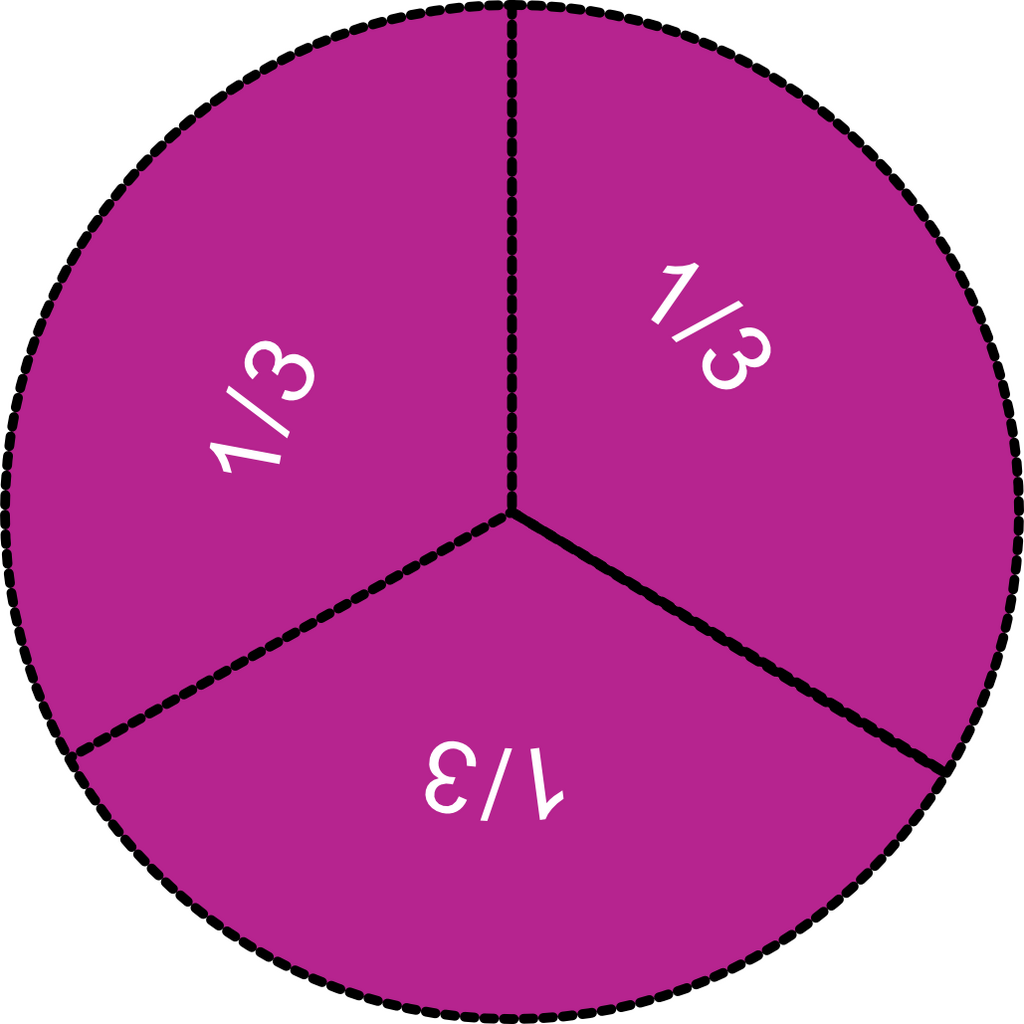
Understanding what fractions mean is the first step toward working with them confidently.
Use real-life examples, like slicing a pizza or dividing a bag of candy, to show how numerators and denominators work together to represent parts of a whole.
Ready to check your understanding? Let's try a few questions.
In the fraction , what is the top number (3) called?
If a pizza is cut into 8 equal slices and you eat 3 of them, what fraction of the pizza did you eat?
Grasping the roles of the numerator and denominator is the foundation for everything else you'll learn about fractions.