Fra Angelico Renaissance Master
Introduction to Fra Angelico
A Painter's Path to Prayer
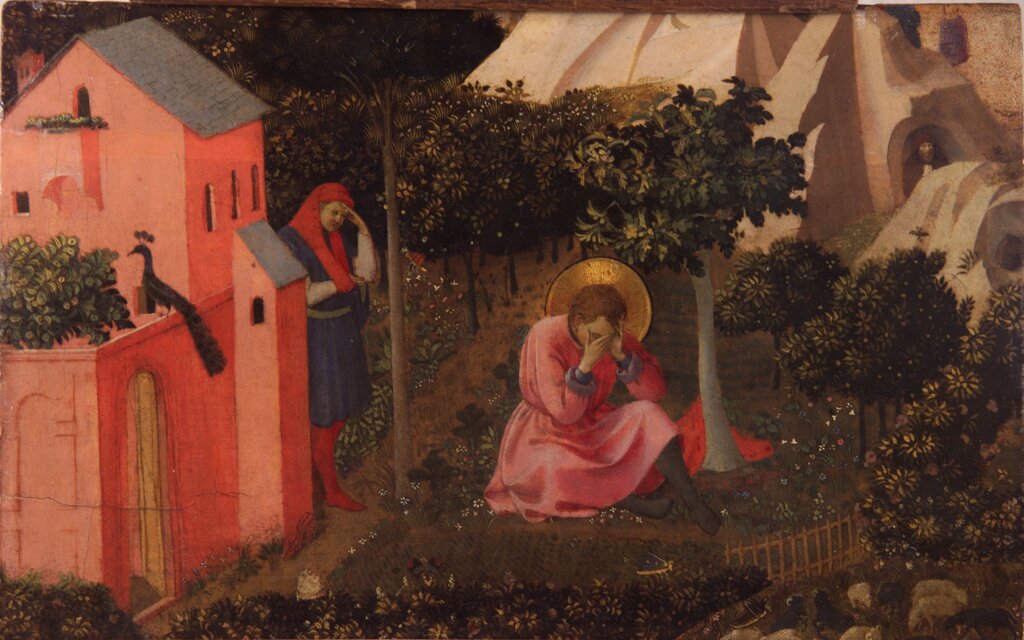
Before he was known as Fra Angelico, the “Angelic Brother,” he was Guido di Pietro, a young man born around the year 1400 in the Tuscan countryside near Florence. His early training was not in grand frescoes but in the delicate, detailed art of manuscript illumination. He learned to work with gold leaf and brilliant pigments on a small scale, skills that would later inform the jewel-like quality of his larger paintings.
Around 1420, Guido and his brother Benedetto made a life-altering decision. They entered a Dominican friary in Fiesole, a town overlooking Florence. Upon taking his vows, Guido di Pietro became Fra Giovanni da Fiesole, or “Brother John of Fiesole.” For a Dominican friar, life revolved around prayer, study, and preaching. Art, for Fra Giovanni, became another form of devotion—a way to communicate the stories of the Bible and the lives of the saints to the faithful.
Florence in the Quattrocento
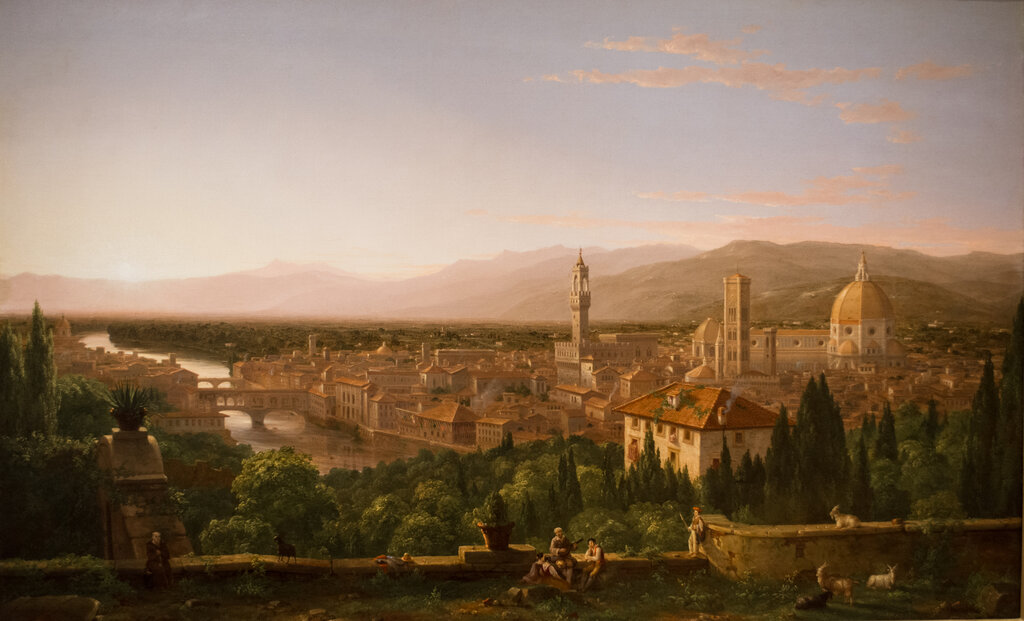
The world outside the monastery walls was buzzing with change. Fifteenth-century Florence, known as the Quattrocento, was the cradle of the Renaissance. It was a wealthy city-state, powered by banking and a flourishing wool trade. Powerful families like the Medici became major patrons of the arts, commissioning paintings, sculptures, and architectural marvels that transformed the city.
This was an era of intellectual ferment. Thinkers and artists were rediscovering the art and literature of ancient Greece and Rome, leading to a new philosophy called humanism. This movement celebrated human potential and placed a new emphasis on realism, perspective, and emotional depth in art. Artists like Brunelleschi were solving immense architectural puzzles like the dome of the Florence Cathedral, while sculptors like Donatello were creating figures with unprecedented naturalism. Fra Angelico was not isolated from this revolution; he was right in the middle of it.
Art as an Act of Faith
Fra Angelico’s unique genius lies in how he merged his deep Dominican faith with the artistic innovations of his time. He embraced the new tools of the Renaissance—like the use of linear perspective to create realistic depth—but always in the service of a spiritual goal. His paintings were not just beautiful objects; they were windows into the divine, meant to inspire piety and contemplation.
It was said that he never picked up a brush without first saying a prayer and that he would weep while painting scenes of Christ's crucifixion.
This profound sincerity is what makes his work so powerful. While other artists of the era focused on mythological subjects or portraits of wealthy patrons, Fra Angelico's art remained centered on sacred themes. He used the bright, clear colors of his manuscript illuminator days to create figures that seem to glow with an inner light. His work is a testament to a life where art and faith were one and the same.
What was Fra Angelico's name at birth?
Fra Angelico's early training as a manuscript illuminator directly influenced his later paintings, particularly in his use of sculpture-like forms.
His life as a friar in the heart of the Renaissance shaped him into one of the most distinctive artists of the period.