Four String Banjo Basics
Banjo Basics
Meet the Four-String Banjo
When most people picture a banjo, they often think of the five-string version famous in bluegrass and country music. But its four-string sibling has a rich history and a powerful voice of its own. It's a key player in genres from Dixieland jazz to Irish folk, offering a bright, punchy rhythm that can drive a whole band.
Unlike the five-string, which has a high-pitched drone string, the four-string banjo is built for crisp chords and melodic lines. Let's break down its parts to see how it works.
Anatomy of a Banjo
At first glance, a banjo might look like a guitar neck attached to a drum. That's not far from the truth. This unique construction is what gives the banjo its signature sound.
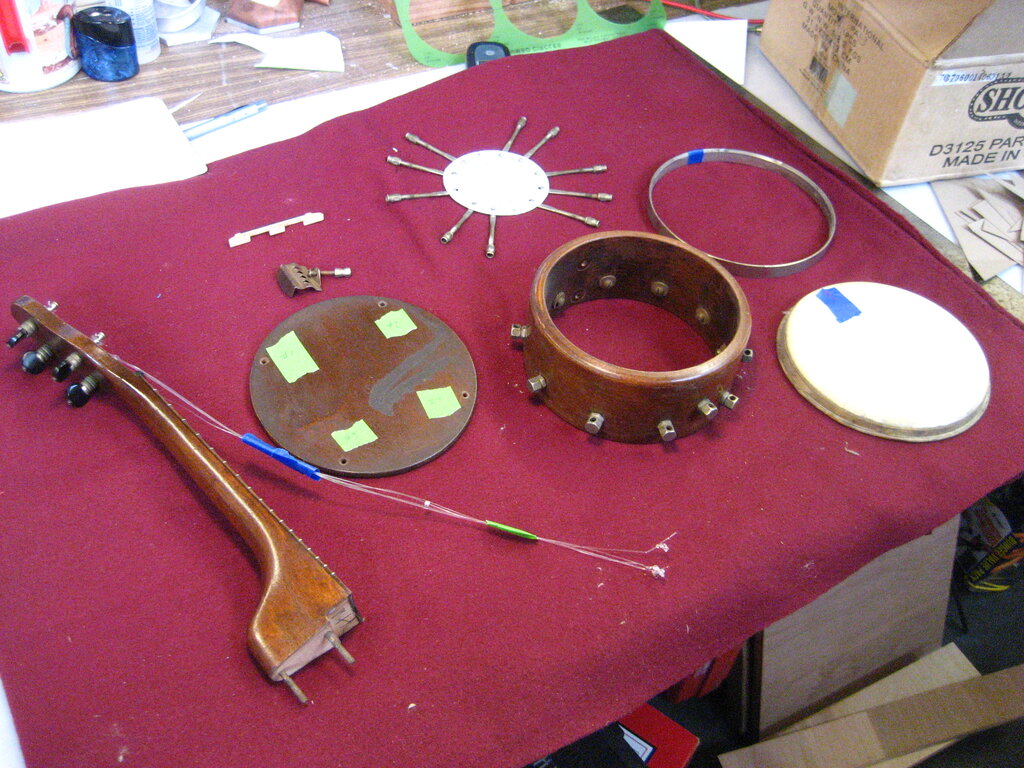
The main parts work together to produce a loud, vibrant tone:
-
The Pot Assembly: This is the round body of the banjo. It consists of a circular wooden or metal rim, a stretched head (like a drum skin), and a tone ring. The strings vibrate over the bridge, which sits on the head. The sound bounces around inside the pot assembly, creating a loud, bright, and percussive sound. Some banjos also have a resonator, a wooden plate on the back that projects the sound forward.
-
The Neck: This is the long wooden part where you'll select notes. It includes the fretboard, which has metal frets that divide the neck into semitones. At the top of the neck is the headstock.
-
Headstock and Tuning Pegs: The headstock holds the tuning pegs. You turn these pegs to tighten or loosen the four strings, changing their pitch.
-
Strings and Bridge: The four metal strings run from a tailpiece at the bottom of the body, over a small wooden bridge, and up the neck to the tuning pegs. The bridge is not glued down; it's held in place by the tension of the strings. Its position on the head is critical for the instrument's intonation.
Two Flavors of Four-String
Four-string banjos come in two main varieties: the tenor and the plectrum. They look similar but have different neck lengths and are used in distinct musical styles.
The key difference is the scale length—the distance from the nut to the bridge. This affects the string tension and the spacing of the frets.
The Tenor Banjo has a shorter neck, typically with 17 or 19 frets. Its compact size gives it a bright, punchy tone that cuts through a mix. It's a staple in traditional Irish music, where it's often used to play lively fiddle tunes. You'll also hear it strumming chords in Dixieland jazz bands, providing rhythmic drive.
The Plectrum Banjo has a longer neck, usually with 22 frets, the same as a five-string banjo. It was developed to play melodies and chords in early jazz and dance bands. Its longer scale length gives it a slightly deeper and more sustained sound than the tenor.
| Feature | Tenor Banjo | Plectrum Banjo |
|---|---|---|
| Neck Length | Shorter (17-19 frets) | Longer (22 frets) |
| Sound | Bright, punchy | Deeper, more sustain |
| Common Genres | Irish Traditional, Dixieland Jazz | Early Jazz, Ragtime |
The Banjo's Role
In any genre, the four-string banjo is primarily a rhythm and harmony instrument. Because of its loud and percussive nature, it excels at providing a strong rhythmic foundation for other musicians.
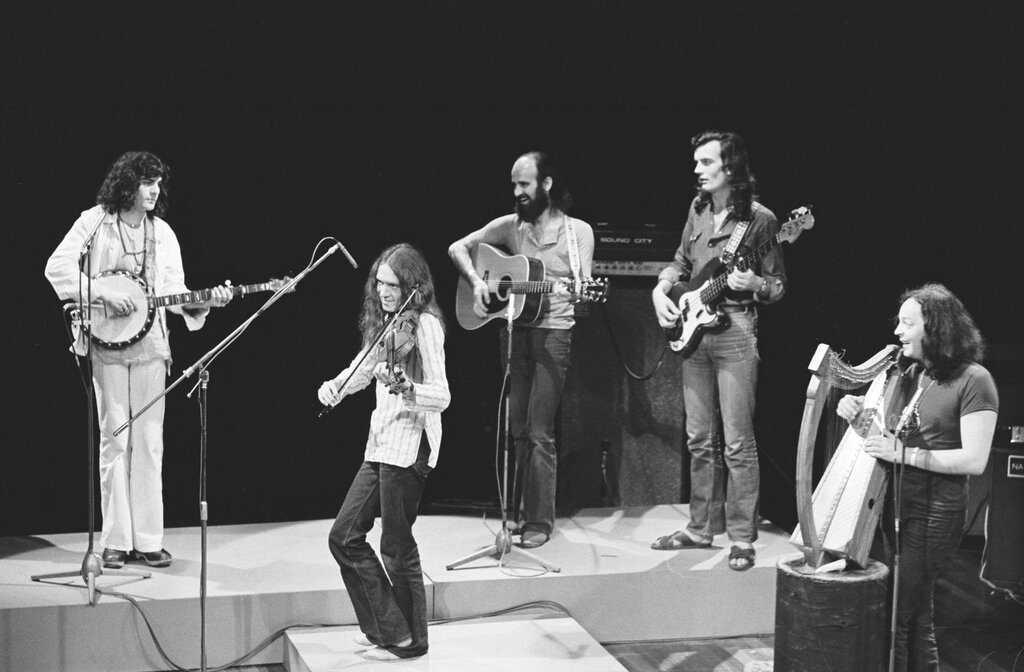
In a jazz band, a plectrum or tenor banjo might strum chords on every beat, a technique called chunking that helps keep time for the entire ensemble. In an Irish session, a tenor banjoist might play a fast, single-note melody in unison with a fiddle or flute, adding a metallic sparkle to the tune.
Whether it's laying down chords or firing off quick melodic lines, the four-string banjo is a versatile and powerful instrument with a distinct place in musical history.
Now, let's test your knowledge of the banjo's anatomy and types.
What is the main purpose of the "pot assembly" on a banjo?
What is the primary physical difference between a tenor banjo and a plectrum banjo?
Now that you understand the instrument's basic structure, you're ready to learn how to get it in tune.