Founding a Development-Focused Global Enterprise
Understanding the Global South
What Is the Global South?
The world is often divided into two broad categories: the Global North and the Global South. This isn't just about geography. You won't find a clear line on a map separating the two. Instead, the term "Global South" refers to a group of countries that often share similar histories and challenges.
Many of these nations are in Africa, Latin America, and Asia. Historically, many were colonies of European powers. This shared past has left a lasting impact on their economic and political structures. The term has largely replaced older, more problematic labels like "Third World" or "developing countries," as it better captures the complex realities and shared interests of these nations without imposing a simple hierarchy.
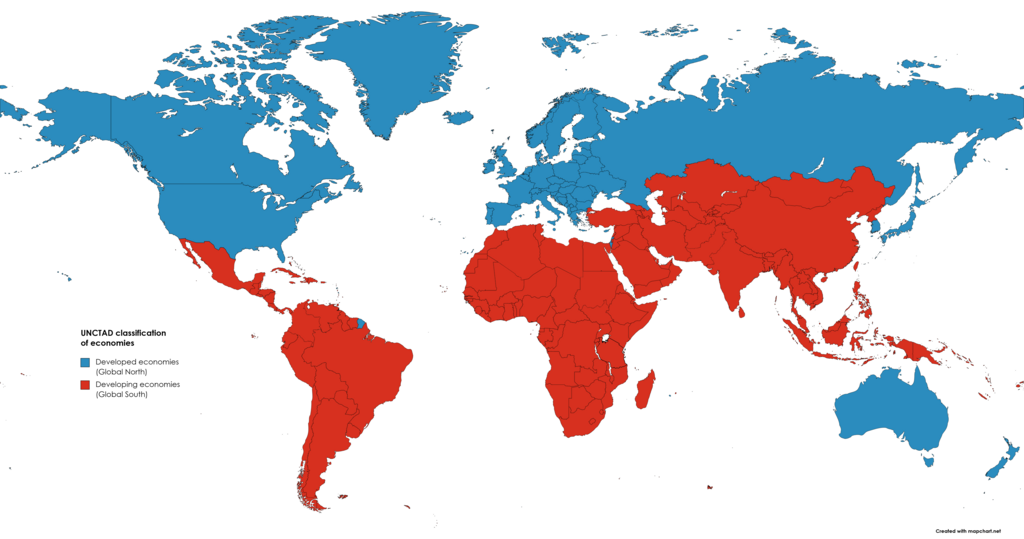
Think of it less as a physical place and more as a loose alliance of countries navigating similar paths. They are working to overcome historical disadvantages and build prosperous, stable societies in a world economy that has often been tilted in favor of the Global North.
Economic and Social Landscape
Economically, countries in the Global South show incredible diversity. Some have rapidly growing economies, while others face significant struggles. However, there are common threads. Many economies traditionally relied on exporting raw materials, like minerals or agricultural products, rather than finished goods. This can make them vulnerable to global price swings.
Large informal economies are also common. This means many people work in jobs that aren't registered or regulated, from street vendors to small-scale farmers. While this sector provides livelihoods for millions, it often lacks the stability and protections of formal employment.
On the social front, the Global South is home to the majority of the world's population. Many nations have very young populations, which can be a huge advantage—a so-called "demographic dividend." But it also puts pressure on education and healthcare systems, which often struggle with limited resources. Rapid urbanization is another major trend, as people move from rural areas to cities in search of opportunities. This creates vibrant, dynamic urban centers but also challenges like housing shortages and strained public services.
Challenges and Opportunities
The path to development is not a straight line. Countries in the Global South face a distinct set of hurdles. Poverty and inequality remain major concerns, with significant gaps between the rich and poor. These nations are also on the front lines of climate change, often facing the most severe impacts, like droughts and rising sea levels, despite having contributed the least to the problem.
Building infrastructure—from reliable electricity grids to modern transportation networks—is another critical challenge that requires immense investment.
Despite these obstacles, the Global South is a region of immense opportunity and innovation.
The same young population that strains services is also a source of energy, creativity, and a massive potential workforce. Many regions have become hubs for technological leapfrogging. For example, without the legacy of landline infrastructure, mobile banking and communication technologies have spread incredibly fast, transforming economies and daily life.
There's a growing spirit of entrepreneurship aimed at solving local problems, from clean energy access to agricultural productivity. Regional cooperation is also on the rise, as countries work together to boost trade, share knowledge, and amplify their collective voice on the global stage.

Ready to check your understanding?
The term "Global South" is best understood as a group of countries defined by...
A common economic characteristic in many Global South nations is the presence of a large informal economy.
By understanding these shared characteristics, challenges, and opportunities, we can better appreciate the complex reality of the Global South and its crucial role in shaping our collective future.