Foundations of Trading Mastery
Introduction to Financial Markets
The Global Marketplace
Financial markets are like giant, bustling marketplaces. But instead of selling fruits and vegetables, people buy and sell ownership in companies, lend and borrow money on a huge scale, and trade currencies. The core purpose of these markets is to connect those who have extra capital with those who need it. This connection fuels economic growth, allowing companies to expand, governments to fund projects, and individuals to save for the future.
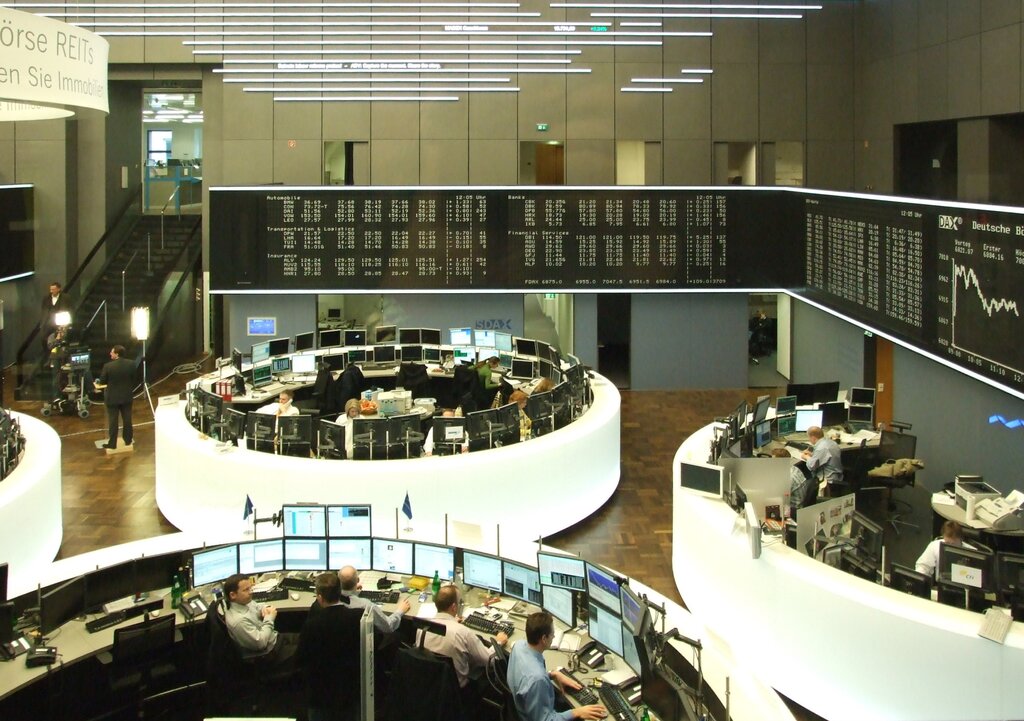
Think of it this way: a company wants to build a new factory but doesn't have the cash on hand. In the financial markets, it can raise that money by selling small pieces of ownership (stocks) or by borrowing from investors (bonds). In return, investors get the potential to share in the company's future profits or receive steady interest payments.
Primary vs. Secondary Markets
Financial markets are split into two main types: primary and secondary. Understanding the difference is key.
The primary market is where new financial assets are born. When a company decides to "go public," it holds an Initial Public Offering (IPO). This is its first-ever sale of stock to the public. The money from this sale goes directly to the company to fund its operations and growth. The same goes for when a government first issues bonds to raise money.
The secondary market is what most people think of as the "stock market." It’s where investors buy and sell assets from each other, not from the issuing company. If you buy shares of Apple today, you're buying them from another investor who decided to sell, not from Apple itself. The price is determined by supply and demand.
Analogy: The primary market is like a car dealership selling a brand-new car off the assembly line. The secondary market is the vast network of used car lots and private sellers where that car is bought and sold for the rest of its life.
The Players and the Field
Many different participants interact within these markets. Each has a distinct role.
| Participant | Role |
|---|---|
| Issuers | Companies or governments that create and sell securities to raise capital. |
| Investors | Individuals and institutions that buy securities, providing capital in exchange for potential returns. |
| Exchanges | Provide the physical or electronic venue for trading. They ensure trading is fair and orderly. Think of the New York Stock Exchange (NYSE) or Nasdaq. |
| Brokers | Firms that act as intermediaries, executing buy and sell orders on behalf of investors. |
| Regulators | Government agencies (like the SEC in the U.S.) that create and enforce the rules of the market to protect investors and maintain fairness. |
Stock exchanges are the playing field. They don't own the shares being traded, but they provide the technology, rules, and oversight necessary for the market to function smoothly. They match buyers with sellers in a transparent and efficient way, a process known as price discovery.
What's Being Traded
While countless financial products exist, most fall into a few major categories. The two most common are stocks and bonds.
Stock
noun
A type of security that signifies a fractional ownership in a corporation and entitles the stockholder to a proportion of the corporation's assets and profits.
Stocks, also known as equities, represent a claim on a company's earnings. If the company does well, the value of your stock may go up. If it does poorly, the value may fall.
Bond
noun
A fixed-income instrument that represents a loan made by an investor to a borrower (typically corporate or governmental).
Bonds are essentially IOUs. When you buy a bond, you are lending money to the issuer. In return, they promise to pay you periodic interest payments (called coupon payments) and return the original amount of the loan (the principal) at a future date, known as the maturity date. Bonds are generally considered less risky than stocks.
Markets and the Economy
Financial markets don't exist in a vacuum. They are deeply connected to the health of the broader economy, and they react to news and data known as economic indicators. These are statistics that give clues about how the economy is performing.
Key indicators include:
- Gross Domestic Product (GDP): The total value of all goods and services produced by a country. Strong GDP growth is usually good for the stock market.
- Inflation Rate: The rate at which the general level of prices for goods and services is rising. High inflation can be a negative for markets as it erodes the value of future earnings and can lead to higher interest rates.
- Unemployment Rate: The percentage of the labor force that is jobless. Low unemployment often signals a strong economy.
When these indicators are released, investors analyze them to predict the economy's future direction and adjust their buying and selling decisions accordingly. This is why you often see markets move sharply on the day a new GDP or inflation report comes out.
Now that you understand the basic landscape, let's test your knowledge.
What is the core purpose of financial markets?
A technology company holds an Initial Public Offering (IPO) to raise funds for a new research facility. When an investor buys shares directly from the company during this IPO, in which market are they participating?
Grasping these fundamental concepts is the first step toward understanding how financial markets work and their role in the global economy.