Foundations of Trading
Introduction to Financial Markets
What Are Financial Markets?
At its heart, a financial market is just a place where buyers and sellers meet to trade assets. Think of a bustling farmers' market, but instead of trading apples for cash, participants trade things like stocks, bonds, and currencies. The fundamental purpose is to channel money from those who have it (savers and investors) to those who need it (companies, governments, and individuals).
This process helps companies grow, funds government projects, and allows individuals to save for the future. Without these markets, capital would be stuck, and economic growth would be much slower. They are the circulatory system of the economy, moving money where it's needed most.
The Market's Structure
Financial markets aren't a single, monolithic entity. They're divided into two main categories based on how assets are traded: the primary and secondary markets.
The primary market is where new financial securities are created and sold for the very first time. When a company decides to "go public" through an Initial Public Offering (IPO), it sells its shares on the primary market. The money from this sale goes directly to the company.
Once those securities have been issued, they begin to trade on the secondary market. This is the market most people are familiar with. It's where investors buy and sell existing securities from one another. The New York Stock Exchange (NYSE) and Nasdaq are famous examples of secondary markets. When you buy shares of a company on a trading app, you're participating in the secondary market. The money changes hands between investors; the original company isn't directly involved in the transaction.
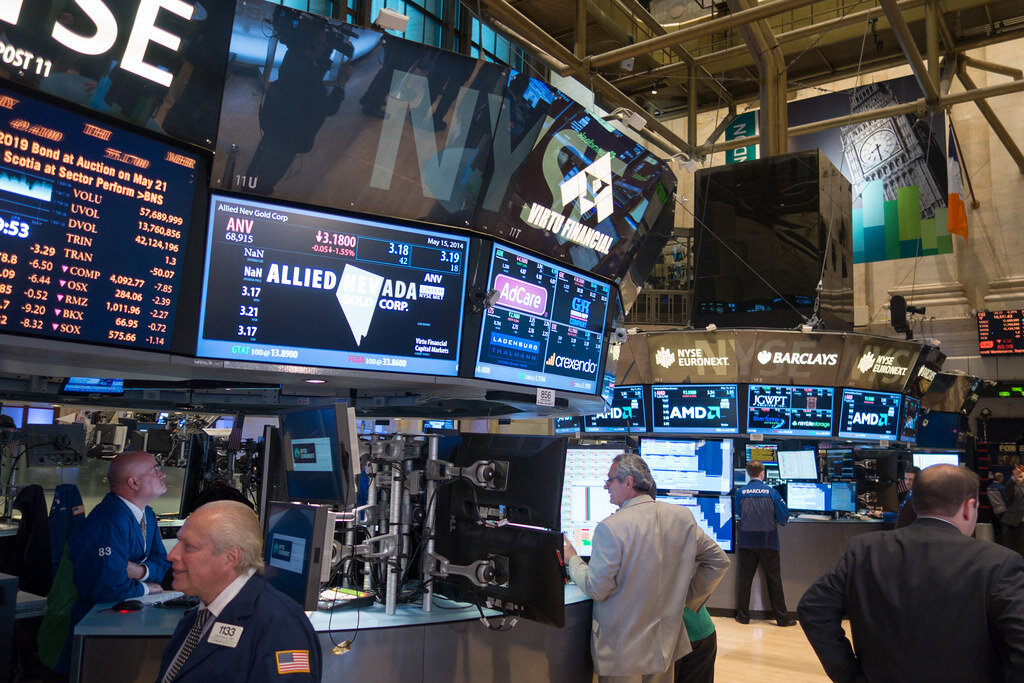
Key Players in the Game
Several key participants work together to make these markets function. On the most basic level, you have issuers, who sell securities, and investors, who buy them. But a crucial group of intermediaries sits in the middle, ensuring the whole system runs smoothly.
| Participant | Role |
|---|---|
| Issuers | Companies or governments that sell securities to raise capital. |
| Investors | Individuals or institutions that buy securities to earn a return. |
| Brokers | Firms that execute buy and sell orders on behalf of investors. |
| Market Makers | Firms that provide liquidity by continuously quoting buy and sell prices for a security. |
| Exchanges | The organized marketplaces (like the NYSE) where securities are traded. |
Think of it this way: An issuer (like a tech company) wants to sell shares. You, an investor, want to buy them. You place an order through your broker. Your broker sends the order to an exchange, where a market maker might facilitate the trade by matching your buy order with a seller's order. Each player has a distinct and vital role.
What's Being Traded?
The assets traded in financial markets are called financial instruments or securities. They are essentially formal contracts that represent a claim to some future value. While there are countless variations, most fall into a few major categories.
Equity
noun
A security that signifies ownership in a corporation and represents a claim on part of the corporation's assets and earnings.
Commonly known as stocks or shares, equities give the holder a piece of the company. If the company does well and its value increases, the value of the stock should rise, too. Equity holders may also receive a portion of the company's profits in the form of dividends.
Bond
noun
A fixed-income instrument that represents a loan made by an investor to a borrower, typically corporate or governmental.
When you buy a bond, you're essentially lending money to an issuer. In return, the issuer promises to pay you periodic interest (called the coupon) over a set period and then return the original amount of the loan (the principal) at a specified date, known as the maturity date.
Another major category is derivatives. These are more complex instruments whose value is derived from an underlying asset, like a stock or a commodity. Options and futures are common types of derivatives. They are often used for hedging against risk or for speculation, but they involve a higher degree of complexity.
This covers the basic landscape of financial markets. Understanding the structure, the players, and the products is the first step before diving into the strategies and details of trading.
What is the fundamental purpose of financial markets?
When you buy shares of a well-established company from another investor on a platform like the New York Stock Exchange (NYSE), you are participating in the: