Foundations of the New Testament
Historical Background
A World in Transition
The final words of the Old Testament were written around 400 BCE. The first books of the New Testament appeared nearly 450 years later. This vast stretch of time, often called the Intertestamental Period, was anything but quiet. It was an era of dramatic change that completely reshaped the Jewish world, setting the stage for the events of the New Testament.
After the Persians, who had allowed the Jews to return from exile and rebuild their temple, a new power swept across the ancient world: the Greeks, led by Alexander the Great. This kicked off a period of Hellenization, the spread of Greek culture, language, and ideas. Think of it like modern globalization. Suddenly, Greek became the common language for trade and government, much like English is today. Jewish scriptures were even translated into Greek in a version called the Septuagint. This was a massive development, making the texts accessible to Jews living outside Judea and even to non-Jews.
Hellenization created a cultural crossroads. It brought new philosophies and ways of life into contact with traditional Jewish faith, forcing people to decide how to adapt, or whether to resist.
This tension boiled over when a Seleucid (Greek) king, Antiochus IV Epiphanes, tried to force Hellenism on the Jews. He outlawed Jewish practices and desecrated the Temple in Jerusalem. This sparked the Maccabean Revolt, a successful Jewish uprising that led to about a century of Jewish independence under the Hasmonean dynasty. However, internal conflicts weakened the Hasmoneans, paving the way for a new, more powerful empire to take control: Rome.
Life Under Roman Rule
By the first century, Judea was firmly under Roman occupation. Rome's approach was practical: maintain order, collect taxes, and keep the peace. They installed local rulers to manage daily affairs, like Herod the Great, a ruthless but effective king known for his massive building projects, including a grand expansion of the Jerusalem Temple. After his death, his kingdom was divided among his sons.
Roman rule was a mixed bag for the Jewish people. On one hand, it brought a degree of stability and infrastructure like roads and aqueducts. On the other, it was a constant reminder of their loss of sovereignty. Heavy taxes and the presence of Roman soldiers were sources of friction, and the emperor was often viewed as a divine figure, which clashed directly with Jewish monotheism. This simmering resentment would occasionally erupt into rebellion.
Factions and Philosophies
The pressures of Hellenization and Roman rule led to the formation of distinct religious and political groups within Judaism. Understanding these groups is key, as they feature prominently in the New Testament narratives.
| Group | Key Beliefs & Characteristics |
|---|---|
| Pharisees | Experts in Jewish law, believed in resurrection and angels. Popular with the common people. |
| Sadducees | Wealthy aristocrats, often priests. Controlled the Temple. Rejected resurrection and the supernatural. More politically cooperative with Rome. |
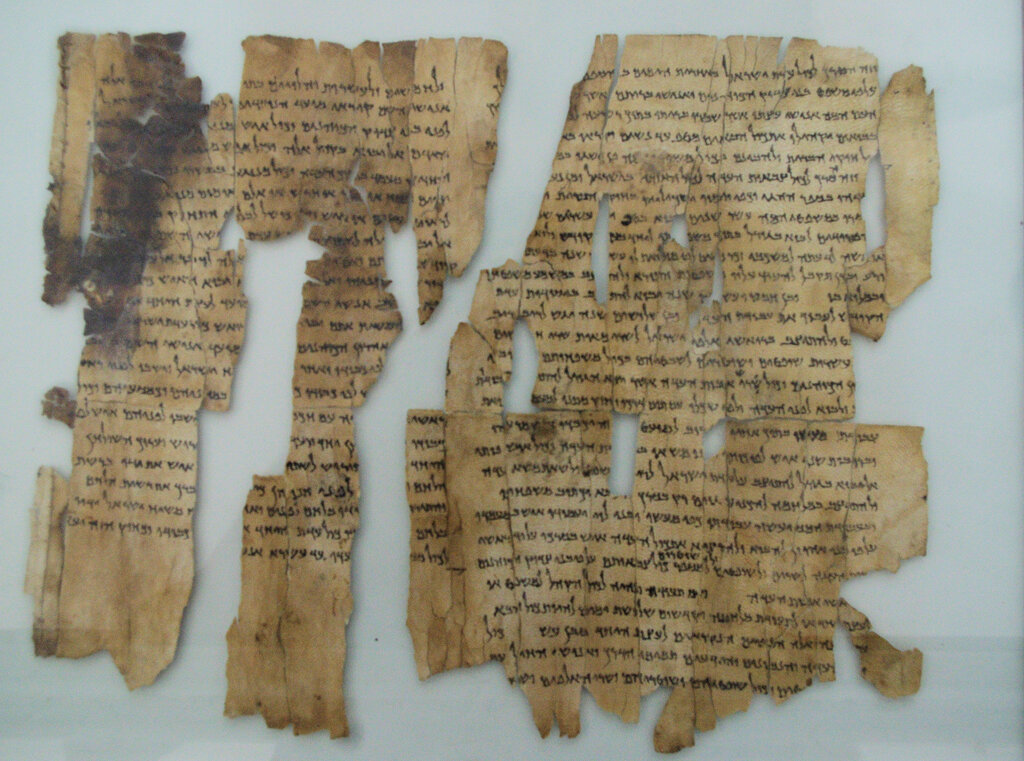
| Essenes | A monastic group that separated from mainstream society. Believed the Temple was corrupt. The Dead Sea Scrolls are associated with them. |
| Zealots | A radical political movement that fiercely opposed Roman rule and advocated for violent rebellion. |
These groups were not just debating abstract theology. Their disagreements had real-world consequences, shaping public opinion and political alliances. The Pharisees and Sadducees, in particular, held seats on the Sanhedrin, the Jewish high court, and their rivalry often influenced major decisions.
This was the complex world into which Jesus was born: a land steeped in religious tradition, wrestling with foreign culture, and chafing under military occupation. It was a society filled with political tension and a deep longing for a messiah who would restore Israel's fortunes. Every event and teaching in the New Testament must be read against this rich, turbulent historical backdrop.
Let's review some of the key terms from this period.
Now, let's test your understanding of this crucial context.
What was the most significant outcome of the process known as Hellenization in Judea?
The Maccabean Revolt resulted in approximately a century of Jewish independence under the Hasmonean dynasty.
With this historical framework in mind, you're now better equipped to understand the people, conflicts, and ideas that populate the New Testament.