Foundations of Structured Learning
Structured Inquiry Principles
Beyond Asking: The Art of Inquiry
Asking questions is easy. Asking the right questions is a skill. In any professional or academic setting, the quality of your answers is directly tied to the precision of your initial query. Vague questions yield vague responses. High-utility questions, on the other hand, are crafted to dissect a problem, uncover specific information, and drive projects forward with clarity.
Think of it as the difference between asking "What's up with the new project?" and "What are the key performance indicators for the Q3 project, and what's our current progress toward those targets?" The first is a conversation starter; the second is a tool for structured knowledge acquisition. The goal is to move from simple curiosity to strategic inquiry, where every question is designed to elicit valuable, actionable information.
Effective questions invite exploration and self-reflection.
Exploratory vs. Confirmatory Inquiry
Questions generally fall into two categories: exploratory and confirmatory. Exploratory questions are open-ended, designed to brainstorm, generate ideas, and understand the broad landscape of a topic. They often begin with words like "What if...?" or "How might we...?" This type of inquiry is crucial in the early stages of a project when you're defining the problem space. One popular technique for this is , a method similar to brainstorming but focused solely on generating questions rather than answers.
Confirmatory questions are closed-ended. They are used to validate assumptions, test hypotheses, and gather specific, factual data. They usually have a narrow scope and can often be answered with a 'yes,' 'no,' or a specific data point. For example, after an exploratory session about improving user engagement, a confirmatory question might be, "Did adding a tutorial video increase the user retention rate last month?" Both types of inquiry are essential, but they serve different purposes at different stages of a project.
| Inquiry Type | Primary Goal | Common Phrasing |
|---|---|---|
| Exploratory (Open-Ended) | Generate ideas, understand scope | "How might we...?", "What are the possibilities?" |
| Confirmatory (Closed-Ended) | Validate facts, test hypotheses | "Did we achieve X?", "Is it true that...?" |
Scoping Problems with the W-H Frame
To ensure you cover all critical aspects of a problem, a simple yet powerful tool is the W-H Framing Model. It uses a set of six fundamental questions to deconstruct any complex issue: Who, What, When, Where, Why, and How. This framework forces you to move beyond a single perspective and build a 360-degree view of the situation. It acts as a checklist to prevent blind spots in your analysis.
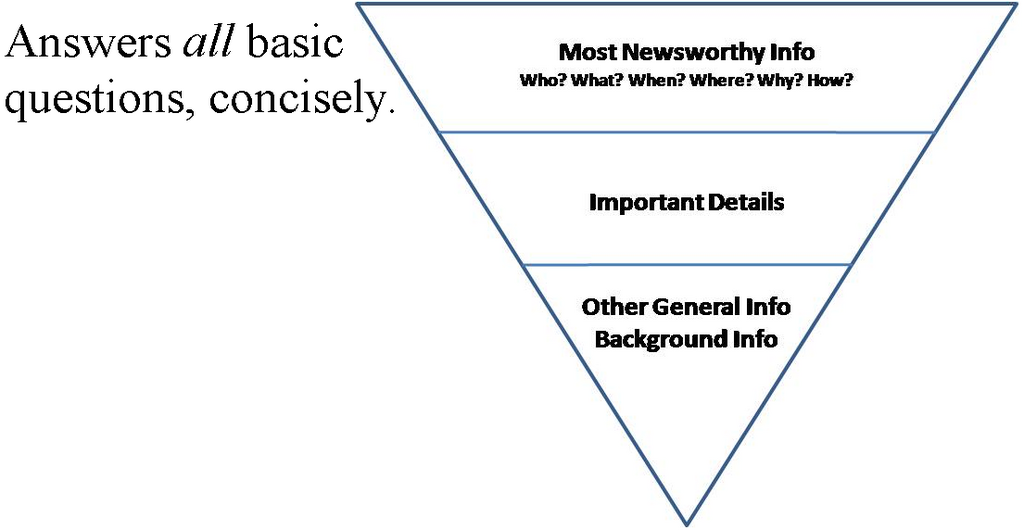
Let's apply this to a real-world scenario. Imagine your team is tasked with reducing customer churn.
- Who is affected? (e.g., new customers, long-term users, a specific demographic)
- What exactly is the problem? (e.g., customers cancel after their first month, they report bugs, they don't use key features)
- When does the problem occur? (e.g., after a price change, during onboarding, on weekends)
- Where in the user journey does it happen? (e.g., on the payment screen, in the mobile app vs. the website)
- Why is it happening? (e.g., poor user experience, competitor offers, lack of perceived value) This often becomes the core question for deeper investigation.
- How can we measure the problem and any potential solution? (e.g., churn rate percentage, support ticket volume, feature adoption metrics)
Using this framework transforms a vague goal like "reduce churn" into a set of specific, investigable questions. Each answer provides a piece of the puzzle, leading to a much clearer and more complete understanding.
By mastering these structured inquiry techniques, you move from passively receiving information to actively shaping the discovery process. The precision of your questions directly dictates the utility of the knowledge you gain.