Foundations of Smart Investing
Risk and Return Dynamics
The Risk and Reward Trade-off
In investing, you can't have one without the other. Potential reward is intrinsically linked to risk. If you want a chance at higher returns, you must accept a higher level of uncertainty. A government bond, for instance, offers a modest, predictable return because the risk of default is extremely low. A new tech startup, on the other hand, could offer explosive returns, but it could also easily fail, wiping out your entire investment.
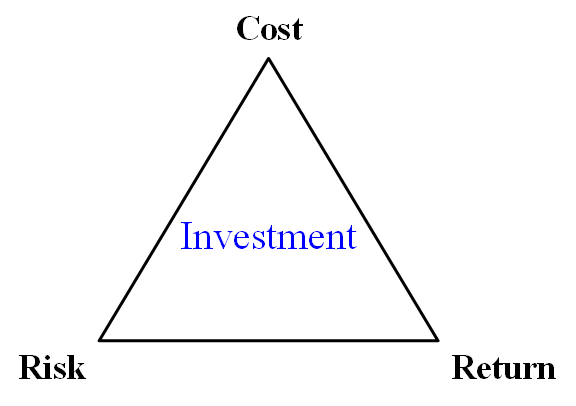
Risk and return are fundamental principles; typically, higher potential returns come with increased risk.
This relationship isn't a suggestion; it's the engine of the market. The extra return you expect to earn for taking on more risk is known as the risk premium. Without it, there would be no incentive to invest in anything other than the safest assets. Every investment decision is a calculation of whether the potential reward justifies the risk involved.
Two Types of Risk
Not all risk is created equal. Investment risk can be broken down into two main categories: systematic and unsystematic.
Systematic risk, also known as market risk, is the danger inherent to the entire market. It's the risk you can't escape, no matter how many different stocks you own. Think of major events like recessions, changes in interest rates, or geopolitical conflicts. These forces affect almost every company and asset.
Unsystematic risk, or specific risk, is unique to a particular company or industry. This is the risk that a company's new product fails, a key executive leaves, or a new regulation hurts its business model. The good news is that unsystematic risk can be significantly reduced through diversification—the practice of spreading investments across various assets.
Measuring and Comparing Risk
To manage risk, we first need to measure it. The most common way to quantify the risk of an asset is by measuring its volatility, or how much its price swings around its average. This is calculated using standard deviation.
A low standard deviation means an asset's price is relatively stable. A high standard deviation indicates its price fluctuates wildly. While useful, standard deviation only tells you about an asset's volatility in isolation. It doesn't tell you if you're being adequately compensated for taking on that volatility.
That's where the comes in. It measures the risk-adjusted return of an investment. It tells you how much excess return you're getting for each unit of risk you take on. A higher Sharpe ratio is better, as it suggests a more efficient investment.
Finding the Optimal Portfolio
So, how do you combine different assets to build the best possible portfolio? This is where the concept of the becomes crucial. It's a graph that maps out all possible portfolios that offer the highest expected return for a defined level of risk (standard deviation).
Any portfolio that lies on the curve of the Efficient Frontier is considered optimal. Portfolios below the curve are sub-optimal because you could get a higher return for the same amount of risk, or the same return for less risk. Portfolios above the curve are impossible to achieve.
An investor's personal risk tolerance determines where on the frontier they should aim to be. A conservative investor would choose a portfolio on the lower-left part of the curve (low risk, low return), while an aggressive investor would aim for the upper-right (high risk, high return). The key is that both are on the frontier, meaning they are getting the best possible return for the level of risk they've chosen.
Your time horizon and personal liquidity needs also play a huge role. If you need the money in two years for a down payment, you can't afford the volatility of a high-risk portfolio. But if you're investing for retirement in 30 years, you have time to ride out market downturns and can afford to take on more risk for potentially higher long-term growth.
According to the fundamental principle of investing, what is the relationship between risk and potential reward?
A pharmaceutical company's stock plummets after its flagship drug fails a critical clinical trial. This is a clear example of:
Understanding these dynamics is the first step toward building an investment portfolio that aligns with your goals and comfort level with risk.