Foundations of Psychology
Introduction to Psychology
The Science of Us
Why do you remember the lyrics to a song from a decade ago but forget what you had for breakfast yesterday? Why do some people thrive in big crowds while others prefer quiet solitude? These are the kinds of questions psychology seeks to answer.
Psychology is the scientific study of the mind and behavior. It explores the vast inner world of our thoughts and feelings, and connects it to our outward actions.
The term “scientific” is key. Psychologists don't just guess about human nature. They use systematic methods to observe, measure, and analyze behavior, from the firing of a single brain cell to the complex interactions within a large social group. It’s a field that touches every aspect of our lives, from personal growth and relationships to education and workplace dynamics.
A Brief History
For thousands of years, philosophers have debated the nature of the mind and consciousness. But psychology as a distinct science is relatively young. Most historians point to 1879 as its birth year. That’s when German professor Wilhelm Wundt opened the first-ever laboratory dedicated exclusively to psychological research.
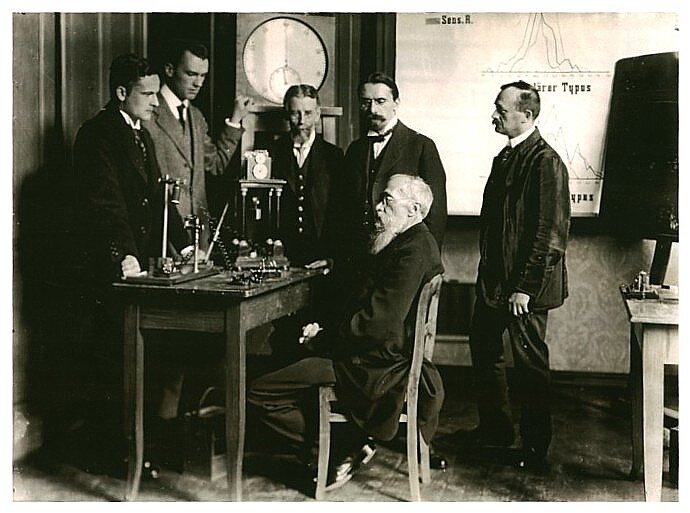
Wundt's approach, called structuralism, tried to break down mental processes into their most basic components. Around the same time, thinkers like Sigmund Freud were developing very different ideas. Freud's psychoanalytic theory focused on the unconscious mind, proposing that hidden desires and childhood experiences shape our behavior. While many of Freud's theories are no longer central to modern psychology, his work drew massive attention to the inner world of the mind.
In the early 20th century, some psychologists felt that studying the mind was too subjective. A new perspective called behaviorism emerged, arguing that psychology should only study observable behavior. Behaviorists like B.F. Skinner studied how rewards and punishments shape our actions. Later, the "cognitive revolution" in the 1960s brought the focus back to mental processes, exploring topics like memory, language, and problem-solving with new scientific rigor.
Different Ways of Seeing
Today, psychologists don't limit themselves to a single viewpoint. Instead, they draw on several major perspectives, each offering a unique lens through which to understand human behavior. Think of them as different tools in a toolbox, each suited for a different job.
| Perspective | Core Idea | Example Question |
|---|---|---|
| Behavioral | Behavior is learned through rewards, punishments, and observation. | How can we use positive reinforcement to teach a dog a new trick? |
| Cognitive | Focuses on mental processes like thinking, memory, and problem-solving. | What is the most effective way to study for an exam? |
| Humanistic | Emphasizes personal growth, free will, and the drive to reach one's full potential. | How can a person achieve a greater sense of fulfillment in their life? |
| Psychodynamic | Unconscious drives and early life experiences shape our behavior. | How might unresolved childhood conflicts affect adult relationships? |
| Biological | Behavior is explained by brain chemistry, genetics, and hormones. | How do neurotransmitters like serotonin influence our mood? |
No single perspective is "correct." A comprehensive understanding of human behavior often requires combining insights from several different viewpoints. For example, to understand depression, a psychologist might look at a person's thought patterns (cognitive), their brain chemistry (biological), and their life experiences (psychodynamic).
Branches of the Field
Just as medicine has specialists like cardiologists and pediatricians, psychology is a broad field with many specialized branches. Each focuses on a specific area of study or application.
Other major branches include industrial-organizational psychology, which applies psychological principles to the workplace, and educational psychology, which studies how people learn. This is just a small sample, but it shows the incredible diversity of the field.
Time to check your understanding of these core concepts.
Which school of thought in psychology argued that the field should only focus on observable actions and how they are shaped by rewards and punishments, rather than internal mental states?
Modern psychology is characterized by its reliance on a single, unified theory to explain all human behavior.