Foundations of Psychology
Introduction to Psychology
What Is Psychology?
Psychology is the scientific study of the mind and behavior. It tries to answer big questions: Why do we think the way we do? What drives our actions? How do we learn and remember things? It's a field that looks at everything from the firing of a single brain cell to the complex interactions within large social groups.
psychology
noun
The scientific study of the human mind and its functions, especially those affecting behavior in a given context.
The two main areas of focus are mental processes and behaviors. Mental processes are the internal things we do with our minds, like thinking, feeling, and remembering. Behaviors are the outward actions we can observe, like talking, walking, or laughing. Psychologists use scientific methods to understand both.
A Quick Trip Through History
For centuries, questions about the mind were part of philosophy. Thinkers like Plato and Aristotle debated the nature of knowledge and consciousness. But psychology didn't become its own scientific discipline until the late 1800s.
The big shift happened in 1879 in Leipzig, Germany. A man named Wilhelm Wundt opened the very first laboratory dedicated to psychological experiments. He wanted to study the mind by breaking down mental processes into their most basic components, an approach called structuralism.
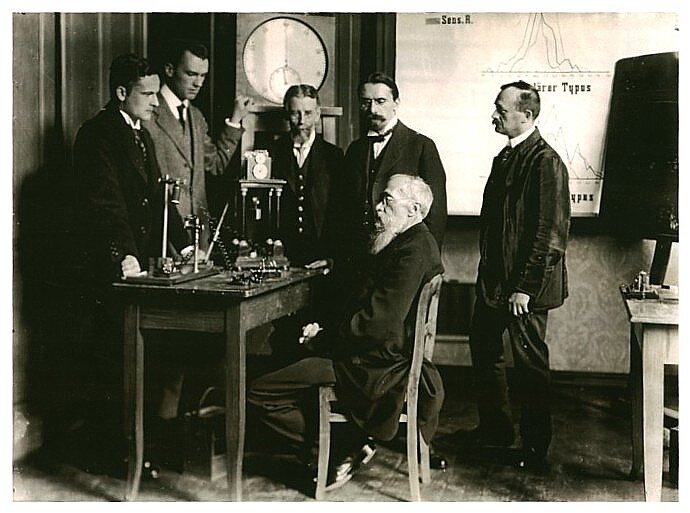
Around the same time in America, William James had a different idea. He was more interested in why we think and behave the way we do. Influenced by Charles Darwin's theories, James focused on how mental processes help us adapt to our environment. This perspective was called functionalism, and it focused on the purpose, or function, of consciousness and behavior.
The Major Approaches
As psychology grew, different schools of thought emerged. Each offered a unique lens through which to view human behavior. These aren't competing teams; they're different tools for understanding the complexities of the mind.
Think of these approaches like different camera lenses. A wide-angle lens gives you a broad view, while a macro lens lets you see tiny details. Both are useful for capturing the full picture.
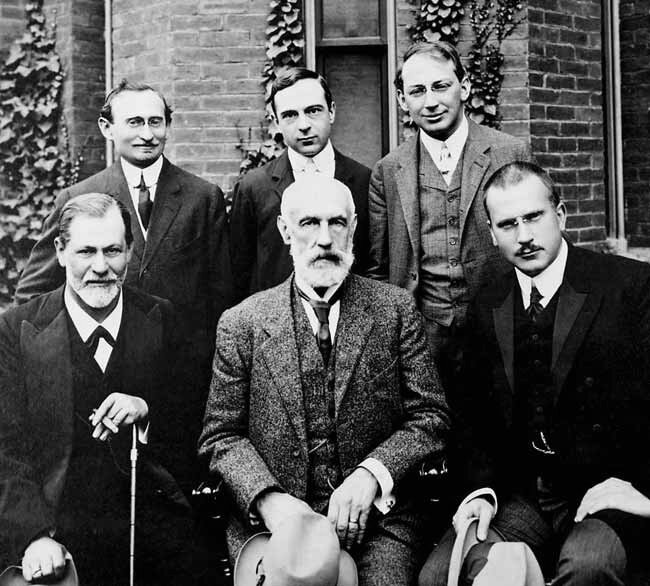
The psychodynamic approach, pioneered by Sigmund Freud, emphasizes the role of the unconscious mind. Freud believed that our early childhood experiences and unconscious drives, especially those related to sex and aggression, shape our personality and behavior. His work introduced ideas like the id, ego, and superego, and the importance of dream analysis.
Then came behaviorism, which shifted the focus entirely. Behaviorists like B.F. Skinner argued that psychology should only study observable behavior, not internal mental states which are impossible to see. They believed that all behavior is learned through interaction with the environment, shaped by a system of rewards and punishments. According to this view, you are what you do.
In the mid-20th century, some psychologists felt that both the psychodynamic and behavioral approaches were too deterministic. They didn't like the idea that our actions were controlled by unconscious forces or environmental rewards. This led to the humanistic approach. Figures like Carl Rogers and Abraham Maslow emphasized individual free will, personal growth, and the drive for self-actualization—the desire to achieve one's full potential.
The cognitive approach brought the focus back to the mind, but in a new way. It likens the brain to a computer, focusing on how we process information. It explores mental processes like thinking, memory, perception, and problem-solving. Jean Piaget was a key figure here, known for his groundbreaking theories on how children's thinking develops through stages.
| Approach | Key Idea | Key Figures |
|---|---|---|
| Psychodynamic | Behavior is driven by unconscious conflicts and early experiences. | Sigmund Freud |
| Behavioral | Focus on observable behavior learned through conditioning. | B.F. Skinner, John B. Watson |
| Humanistic | People are inherently good and strive for self-actualization. | Carl Rogers, Abraham Maslow |
| Cognitive | Focuses on mental processes like thinking, memory, and perception. | Jean Piaget, Ulric Neisser |
Modern psychology often integrates these ideas with newer perspectives. The biological approach examines how our brain, genes, and hormones influence our actions and thoughts. The sociocultural approach looks at how our behavior is shaped by the social groups and cultures we belong to.
No single approach has all the answers. By combining their insights, psychologists can build a more complete and nuanced understanding of the human experience.
Ready to check your understanding?