Foundations of Product Management
Introduction to Product Management
What is Product Management?
Product management is the job of looking after a product from the moment it's just an idea all the way through its entire life. Think of a product like a smartphone, a software app, or even a coffee maker. Someone has to decide what it should do, who it's for, and why anyone would want it. That's the core of product management.
Product management is an organizational function that deals with the entire product lifecycle: from discovery to delivery.
It’s a field that blends business, technology, and user experience. The person at the center of this work is the product manager.
Product Manager
noun
The person responsible for a product's success by guiding its vision, strategy, and development to meet both user needs and business goals.
A product manager (PM) is like the captain of a ship. They don't row the oars or hoist the sails themselves, but they are responsible for setting the destination and making sure the ship gets there safely. They champion the product, define its goals, and are ultimately accountable for its success or failure in the market.
The Product Lifecycle
Just like people, products have a lifecycle. They are born, they grow up, they mature, and eventually, they retire. Understanding this cycle is crucial for managing a product effectively, as each stage requires different strategies and decisions.
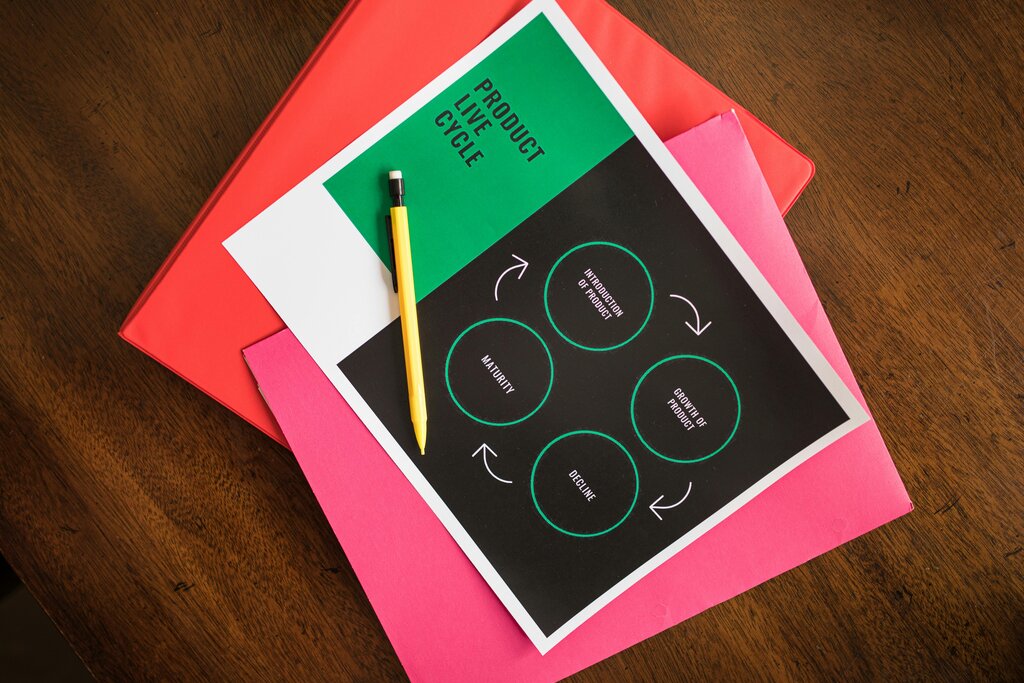
The typical lifecycle has four key stages:
-
Introduction: This is the product launch. The company introduces a new product to the market. Sales are usually slow as people are just learning about it. The focus here is on building awareness.
-
Growth: If the product is successful, it enters a growth phase. Sales pick up quickly, and profits increase. Competitors may start to appear. The goal is to capture as much market share as possible.
-
Maturity: At this stage, sales growth slows down. The product is well-established, and the market is often saturated. The focus shifts to defending market share and maximizing profit, perhaps by adding new features or finding new uses for the product.
-
Decline: Eventually, sales start to fall. This could be due to new technology, changing customer tastes, or increased competition. The company must decide whether to discontinue the product, sell it, or try to reinvent it.
Connecting to Business Goals
A successful product doesn't just appear out of nowhere. It must be carefully aligned with the company's overall business objectives. A product that users love but doesn't make money or support the company's mission is ultimately a failure.
The product manager’s job is to ensure that what the team builds is not only great for the customer but also great for the business.
Imagine a company whose main goal is to be the most affordable option in the market. A product manager there shouldn't be pushing for a high-end, luxury product packed with expensive features. That would conflict with the company's core strategy. Instead, they should focus on creating a product that is cost-effective and provides excellent value for the price.
This alignment is critical. It ensures that every new feature, every design choice, and every marketing decision pushes the company closer to its larger goals. The product becomes a tool to achieve the business's vision.
Time to check what you've learned.
Which of the following best describes the primary role of a product manager?
A new social media app has been on the market for a year. Its sales growth is slowing down, and the market is filled with similar apps. The company is now focused on adding small new features to keep existing users happy. Which stage of the product lifecycle is the app in?