Foundations of Physics Explained
Introduction to Physics
What is Physics?
Physics is the quest to understand the fundamental rules of the universe. It's the study of matter, energy, and how they interact. Physicists explore everything from the tiniest subatomic particles, like quarks, to the vastness of the cosmos, including stars, galaxies, and the very fabric of spacetime. The goal is to find simple, powerful principles that can explain a wide range of phenomena, from why a ball falls to the ground to how the sun generates light and heat.
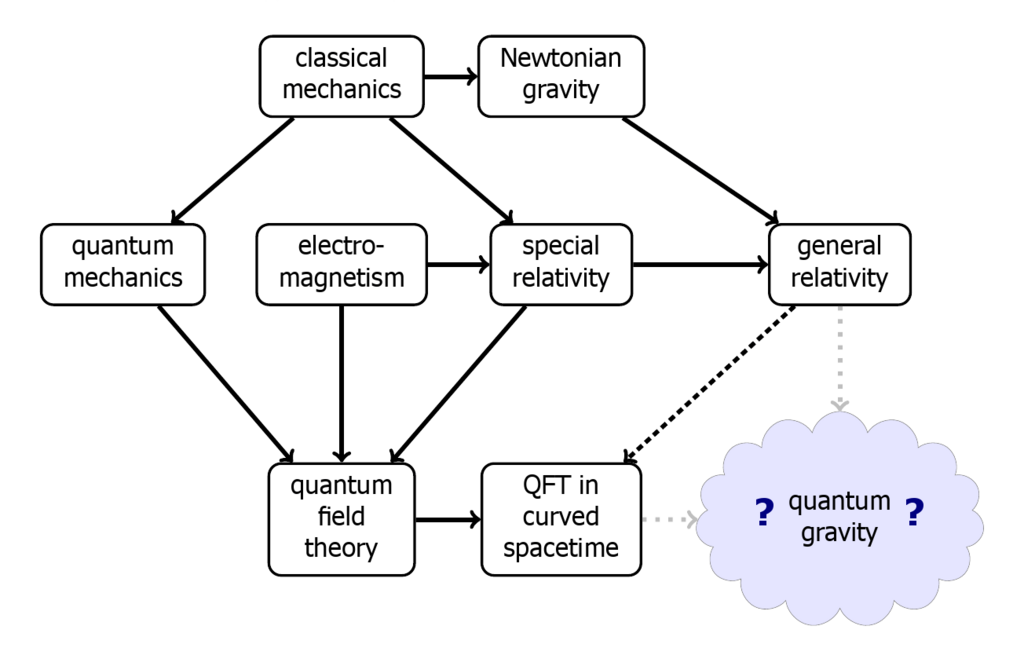
At its core, physics is about asking questions and seeking answers through observation and experimentation. It's the foundation of many other sciences, including chemistry, biology, and engineering. The principles discovered in physics have led to countless technological advancements, from electricity and computers to medical imaging and space travel.
The Scientific Method
How do physicists move from a question to an answer? They use a structured process called the scientific method. It's a systematic way of investigating the world that helps ensure conclusions are based on evidence, not just guesswork.
The scientific method is a cycle of observation, questioning, hypothesizing, testing, and concluding. It's a self-correcting process that builds knowledge over time.
The key steps generally look like this:
- Observation: You notice something interesting in the world.
- Hypothesis: You form a testable explanation, or a guess, for your observation.
- Experiment: You design and conduct an experiment to test your hypothesis.
- Analysis: You collect and analyze the data from your experiment.
- Conclusion: You determine whether your results support or refute your hypothesis. If they refute it, it's back to the drawing board to form a new hypothesis.
A Common Language
For experiments to be meaningful and repeatable by scientists anywhere in the world, they must share a common language of measurement. Imagine trying to build a machine where one engineer uses inches and another uses centimeters. It would be a disaster. That's why scientists use a standardized system.
Unit
noun
A standard quantity used to express a physical measurement.
The modern scientific standard is the International System of Units, abbreviated as SI from the French Système International. You likely know it as the metric system. It's based on a set of seven base units, but for now, we'll focus on the three most common ones in introductory physics.
| Quantity | SI Base Unit | Symbol |
|---|---|---|
| Length | meter | m |
| Mass | kilogram | kg |
| Time | second | s |
These base units can be scaled up or down using prefixes to handle quantities of all sizes. For instance, a kilometer (km) is 1,000 meters, and a millimeter (mm) is one-thousandth of a meter.
Handling Big and Small Numbers
Physics deals with numbers that are astronomically large and microscopically small. Writing out all the zeros for the mass of the Earth or the size of an atom is cumbersome and prone to errors. To simplify this, scientists use scientific notation.
Scientific notation expresses a number as a coefficient multiplied by 10 raised to a power. For example, 500 becomes .
A positive exponent means the number is large, and you move the decimal point to the right. A negative exponent means the number is small, and you move the decimal to the left. Let's look at a couple of examples.
And for a very small number:
Another way to handle scale is with metric prefixes, which are shorthand for powers of 10.
| Prefix | Symbol | Power of 10 | Example |
|---|---|---|---|
| giga | G | Gigawatt (GW) | |
| mega | M | Megahertz (MHz) | |
| kilo | k | Kilogram (kg) | |
| centi | c | Centimeter (cm) | |
| milli | m | Millisecond (ms) | |
| micro | µ | Microgram (µg) | |
| nano | n | Nanometer (nm) |
How Precise Are We?
Not all measurements are created equal. If you measure a table with a standard ruler, you might say it's 1.52 meters long. If you use a laser measuring device, you might find it's 1.5238 meters. The laser measurement is more precise. Significant figures (or "sig figs") are the digits in a number that carry meaning about its precision.
The number of significant figures in a measurement reflects the precision of the instrument used to make that measurement.
When you perform calculations, your answer can't be more precise than your least precise measurement. There are two simple rules for this:
For multiplication and division, the result should have the same number of significant figures as the number with the fewest significant figures in the calculation.
For addition and subtraction, the result should have the same number of decimal places as the number with the fewest decimal places.
For example, if you calculate the area of a rectangle that is 3.45 m long (3 sig figs) and 1.2 m wide (2 sig figs), your calculator might give you 4.14 m². But since your least precise measurement (1.2 m) only has two significant figures, you should round your answer to two significant figures: 4.1 m².
Which statement best describes the fundamental goal of physics?
A scientist observes that plants in one area of a garden grow taller than others. She guesses this is because they receive more sunlight. What is the next logical step according to the scientific method?
These foundational ideas—the scientific method, standard units, scientific notation, and significant figures—are the tools you'll use throughout your study of physics. They ensure that we can describe the world accurately and communicate our findings clearly.