Foundations of Personal Health
Defining Health
More Than an Absence of Sickness
When you think of the word "health," what comes to mind? For many, it’s the absence of a cold, a broken bone, or a chronic illness. While not being sick is certainly part of it, this view is incomplete. True health is a much broader and more positive concept.
Health is a state of complete physical, mental and social well-being and not merely the absence of disease or infirmity.
This definition comes from the World Health Organization (WHO), the leading global authority on public health. It shifts our focus from simply avoiding illness to actively pursuing a state of overall wellness. This framework is built on three core, interconnected dimensions.
The Three Dimensions
Let’s break down the three pillars of health according to the WHO.
Physical Health refers to the state of your body. It's about how well your organs function, your energy levels, and your ability to perform daily tasks without physical strain. This includes everything from getting enough sleep and eating nutritious food to regular physical activity.
Mental Health encompasses your emotional, psychological, and cognitive well-being. It's about how you feel, think, and cope with life’s ups and downs. Good mental health means you can handle stress, form healthy relationships, and make sound decisions.
Social Health involves your ability to form meaningful relationships and connect with your community. It's about having a supportive network of family and friends and feeling a sense of belonging. Humans are social creatures, and the quality of our connections deeply impacts our overall well-being.
These three dimensions are not isolated. They constantly interact and influence one another in a dynamic relationship.
A Connected System
Thinking of physical, mental, and social health as separate boxes is a mistake. They are deeply intertwined. A change in one area often creates a ripple effect across the others.
Consider someone who loses their job. This can trigger significant financial stress (mental), leading to sleepless nights and high blood pressure (physical). The stress might also cause them to withdraw from friends and family, damaging their support system (social).
Conversely, positive changes also ripple through the system. Joining a local sports team can improve your physical fitness, introduce you to new friends (social), and boost your mood and confidence (mental). This holistic view helps us understand that taking care of our health requires a balanced approach that addresses all three dimensions.
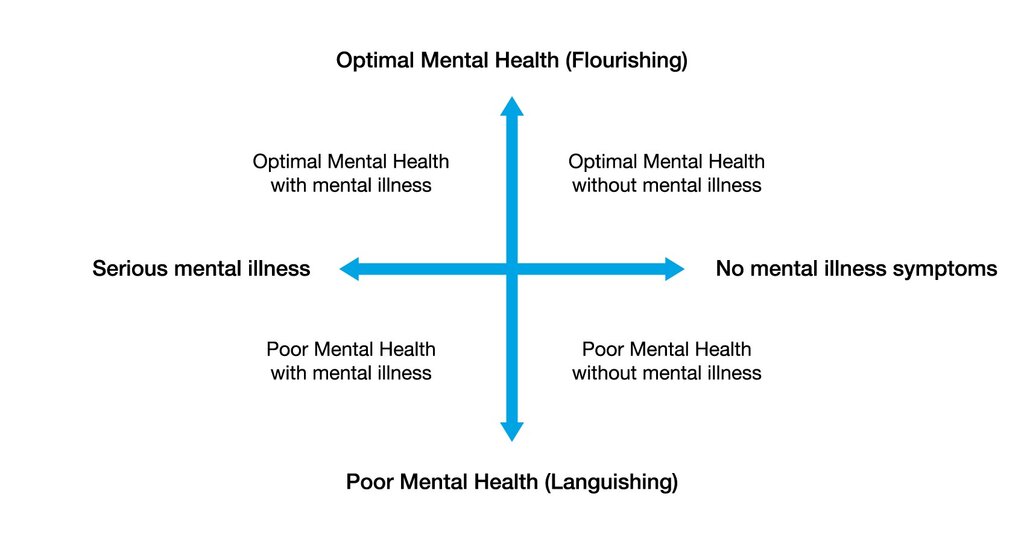
The model above illustrates that health is complex. For example, someone can live with a chronic illness but still achieve optimal mental and social well-being. It reinforces the idea that health isn't just about what's absent, but about what's present in our lives.
Making Informed Choices
Understanding this broad definition of health is the first step. The next is being able to act on it. This is where health literacy comes in.
Health Literacy
noun
The ability to obtain, process, and understand basic health information and services needed to make appropriate health decisions.
Health literacy isn't about being a medical expert. It's about having the skills to navigate the world of health and wellness effectively. It's the ability to read a prescription label correctly, understand a doctor's instructions, interpret nutrition facts on a food package, and know when and where to seek care.
Without it, it's difficult to manage your own well-being or care for others. Strong health literacy empowers you to ask good questions, advocate for yourself, and make choices that support a healthy life across all three dimensions.
Everyone needs a basic level of health literacy to protect their wellbeing and the health of those they love.
By viewing health as a state of complete well-being and empowering ourselves with knowledge, we can move beyond simply avoiding sickness and start building a foundation for a truly healthy life.
According to the World Health Organization (WHO), what is the definition of health?
Which of the following is the best example of 'health literacy' in action?