Foundations of Organizational Behavior and Team Effectiveness
Introduction to Organizational Behavior
Why People Do What They Do at Work
Every workplace is a complex ecosystem of people. Some days, everything clicks and projects move forward smoothly. Other days, misunderstandings arise, motivation drops, and progress stalls. What makes the difference?
Organizational Behavior, or OB, is the study of how people—as individuals and in groups—act within an organization. It’s not about finding a single magic formula for success. Instead, it’s a field that helps us understand the 'why' behind workplace behavior. By exploring these patterns, organizations can create environments where both the company and its employees can thrive.
Think of OB as the user manual for the human side of work. It helps decode behaviors, improve interactions, and build a more effective organization from the inside out.
It Starts with the Individual
Before we can understand a team or a company, we have to start with the individual. Each person brings a unique internal world to their job, which shapes how they perform, interact, and react. Several key factors are at play.
Perception
noun
The process by which individuals organize and interpret their sensory impressions in order to give meaning to their environment.
Attitudes are our feelings and beliefs about our job, our colleagues, and the company. Someone with a positive attitude might see challenges as opportunities, while someone with a negative attitude might see them as obstacles.
Perception is our personal lens on reality. The same exact event—like a company-wide announcement—can be interpreted in wildly different ways by different people based on their past experiences and expectations.
Motivation is the engine that drives our actions. It’s what makes us put in extra effort or just do the bare minimum. Motivation can come from external sources, like a bonus (extrinsic), or from an internal sense of purpose and satisfaction (intrinsic).
Learning processes also play a role. We constantly learn from our successes and failures, which adapts our behavior over time. A mistake that leads to a constructive conversation is a learning opportunity that can improve future performance.
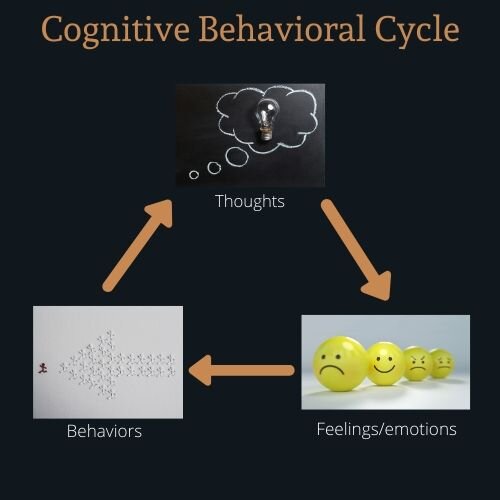
Finally, personality refers to the stable patterns of behavior, thought, and emotion that make us who we are. Some people are naturally outgoing and assertive, while others are more quiet and agreeable. These traits don't just disappear when we clock in; they influence how we communicate, handle stress, and work with others.
When People Form Groups
Things get even more interesting when individuals come together to work in groups. Group dynamics describe the forces and interactions that emerge. A team isn't just a collection of individuals; it becomes its own entity with unique characteristics.
Effective communication is the lifeblood of any group. When information flows freely and clearly, teams can coordinate their efforts and solve problems. When communication breaks down, it creates confusion, conflict, and inefficiency.
Leadership is another critical element. A leader influences the group's direction and motivation. This doesn't just mean the formal manager; informal leaders often emerge within a team, guiding conversations and shaping the group's culture.
Conflict is also a natural part of group life. People have different ideas, priorities, and personalities. OB studies how to manage these disagreements. Handled poorly, conflict can tear a team apart. Handled well, it can lead to better ideas and stronger solutions.
The goal isn't to eliminate conflict, but to turn it from a destructive force into a constructive one.
The Big Picture System
Finally, individual and group behaviors are all happening within a larger organizational system. This system sets the stage and defines the rules of the game.
Organizational culture is like the personality of the company. It's the collection of shared values, beliefs, and assumptions that guide how people behave. Is the culture innovative and fast-paced, or is it cautious and traditional? The culture tells employees what is truly valued, regardless of what the official mission statement says.
Structure refers to how the organization is formally arranged—who reports to whom, how teams are formed, and how decisions are made. A tall, hierarchical structure operates very differently from a flat, collaborative one.
Policies are the formal rules of the workplace, from dress code to performance reviews. They provide a framework for behavior and ensure consistency. And when these systems need to change, change management becomes crucial. It’s the process of guiding the organization and its people through a transition, minimizing resistance and disruption.
Understanding these three levels—individual, group, and organizational—gives us a complete picture of organizational behavior.
Ready to check your understanding? Let's see what you've learned.
An employee works late to finish a project because they find the work genuinely fulfilling and enjoy the challenge. This is an example of what?
The shared values, beliefs, and assumptions that guide how people behave within a company is known as its _______.
By grasping these core concepts, you can better navigate the workplace, understand your colleagues, and contribute to a healthier, more effective organization.