Foundations of Neuroscience
Introduction to Neuroscience
The Science of You
Everything you think, feel, and do is governed by a three-pound organ nestled inside your skull: the brain. Along with the spinal cord and a vast network of nerves, it forms your nervous system. Neuroscience is the study of this intricate system. It’s a field dedicated to understanding how we perceive the world, form memories, experience emotions, and execute actions.
Neuroscience
noun
The scientific study of the nervous system and its role in behavior, cognition, and emotion.
At its core, neuroscience seeks to answer fundamental questions. Why do we sleep? How do we learn a new language? What causes diseases like Alzheimer's or Parkinson's? The scope is immense, ranging from the molecular level—examining individual proteins and cells—to the systems level, looking at how entire brain circuits produce behaviors.
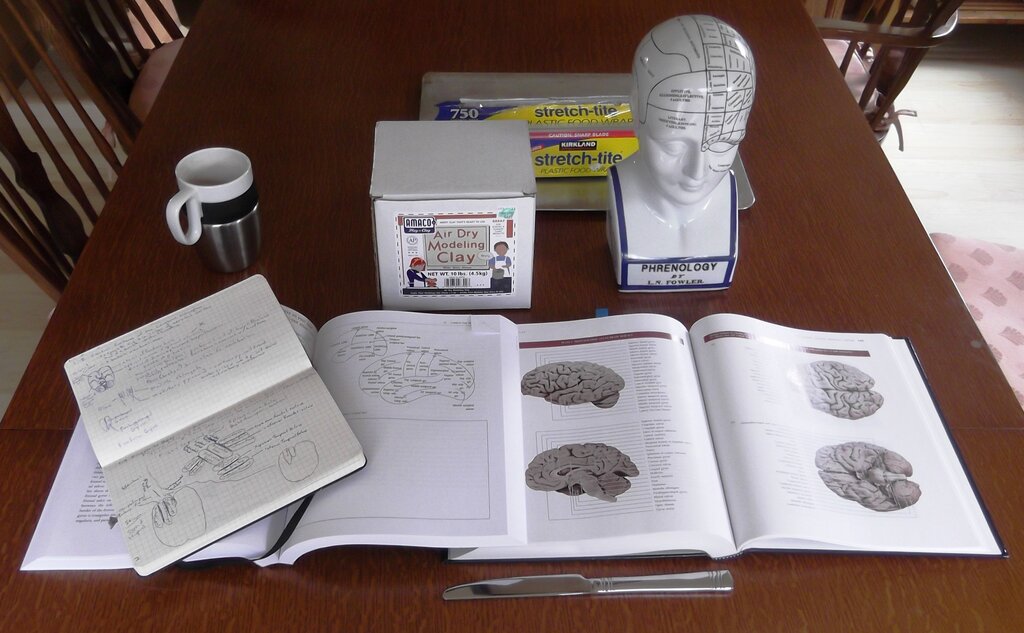
A Brief History of the Brain
For much of human history, the brain’s role was a mystery. The ancient Egyptians, meticulous in preserving organs for the afterlife, discarded the brain, believing the heart was the seat of intelligence. It wasn’t until ancient Greece that thinkers like Hippocrates correctly identified the brain as the center of sensation and intellect.
Centuries of slow progress followed. It was the invention of the microscope in the 17th century that allowed scientists to see the nervous system’s basic building blocks for the first time. In the 19th century, a flurry of discoveries began to connect specific brain regions to distinct functions. This period laid the groundwork for modern neuroscience.
| Period | Key Milestone | Significance |
|---|---|---|
| Ancient Egypt (~1700 BCE) | The Edwin Smith Papyrus | First written record describing the brain and linking brain injury to specific symptoms. |
| Ancient Greece (~400 BCE) | Hippocrates' Teachings | Argued that the brain, not the heart, was the seat of thought and emotion. |
| 1800s | Phrenology | A flawed theory, but it popularized the idea that different brain areas have different functions. |
| Late 1800s | Neuron Doctrine | Santiago Ramón y Cajal established that the nervous system is made of individual cells (neurons). |
| 20th Century | Brain Imaging (fMRI, PET) | Technologies emerged that allowed scientists to observe the living brain in action. |
Today, we can watch thoughts form in real-time and map the brain’s complex wiring. Each advance builds on the last, painting an ever-clearer picture of how our nervous system works.
A Meeting of Minds
Neuroscience isn't a single, isolated discipline. It’s a vibrant, interdisciplinary field that borrows tools and insights from many other areas of science and medicine. Think of it as a central hub where various experts come together to solve a common puzzle.
Biologists provide the foundation by studying the cells, genes, and proteins of the nervous system. Psychologists help us understand behavior and cognition, offering a framework for what the brain is actually doing. Medical doctors, particularly neurologists and psychiatrists, diagnose and treat disorders of the nervous system. Chemists analyze the brain's complex molecular interactions, while computer scientists build models of neural networks and help analyze the massive amounts of data generated by modern experiments.
This collaboration is crucial. Understanding a complex behavior like memory requires knowing the psychology of learning, the biology of synaptic changes, and the chemistry of neurotransmitters.
Why It Matters
Studying the nervous system is more than an academic exercise. It has profound implications for human health and well-being. Neurological and psychiatric disorders—from depression and anxiety to stroke and dementia—affect millions of people worldwide. Neuroscience research is our best hope for developing effective treatments and, eventually, cures.
The complexity of human behavior produced by the nervous system depends less on the variety of neurons than on their organization into anatomical circuits with precise functions.
Beyond medicine, neuroscience informs education, law, economics, and even artificial intelligence. By understanding how we learn, make decisions, and interact with others, we can create better schools, fairer legal systems, and smarter technology. In essence, to understand the brain is to understand ourselves.
Time to review what you've learned about the foundations of neuroscience.
Let's check your understanding with a few questions.
Neuroscience is the study of which biological system?
How did the ancient Egyptians' view of the brain differ from that of ancient Greek thinkers like Hippocrates?
With this foundational understanding, we can begin to explore the building blocks of the nervous system in more detail.