Foundations of Neuroanatomy
Neurons and Glia
The Brain's Building Blocks
The nervous system is built from two primary types of cells: neurons and glia. Think of neurons as the stars of the show. They are the communicators, sending and receiving the electrical and chemical signals that control everything we do, think, and feel. Glial cells are the essential support crew, working tirelessly behind the scenes to make sure the neurons can perform.
For a long time, scientists focused almost exclusively on neurons. Glia, whose name comes from the Greek word for "glue," were thought to be simple structural support. We now know they play a much more active and critical role in brain function. Both cell types are vital, working together in a complex and beautifully coordinated partnership.
Anatomy of a Neuron
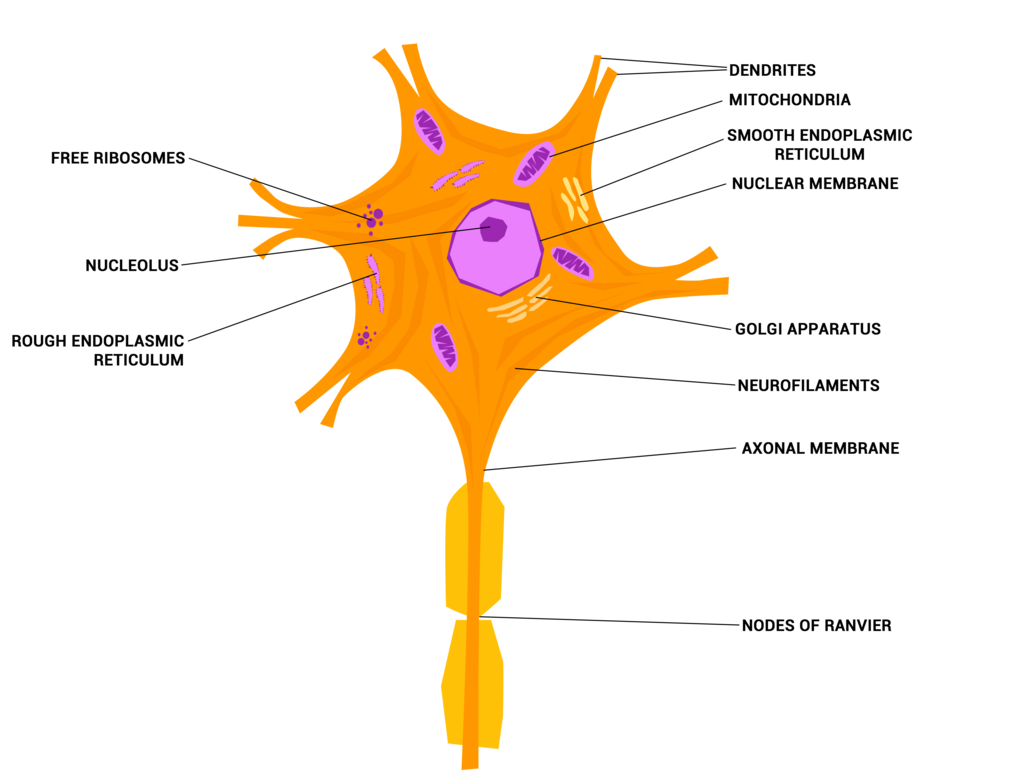
Neurons are specialized cells designed to transmit information. While they come in many shapes and sizes, most share a common three-part structure that allows them to do their job effectively.
Neuron
noun
A specialized cell that transmits nerve impulses; a nerve cell.
At the center of the neuron is the soma, or cell body. Like other cells in your body, it contains a nucleus and other organelles that keep the cell alive and functioning.
Branching out from the soma are dendrites. These tree-like extensions are the primary receivers of information, collecting signals from other neurons and passing them toward the cell body.
The third part is the axon, a long, slender projection that carries signals away from the soma to other neurons, muscles, or glands. Think of it as a transmission cable.
Dendrites listen. Axons speak.
Many axons are wrapped in a fatty substance called the myelin sheath. This sheath acts as an insulator, much like the rubber coating on an electrical wire. It isn't continuous; there are small gaps called nodes of Ranvier. This setup allows electrical signals to jump from node to node, dramatically increasing the speed of transmission.
Types of Neurons
Neurons aren't all the same. They can be classified by their function into three main categories. This division of labor allows the nervous system to handle different tasks efficiently.
Sensory neurons act as the nervous system's input channels. They are activated by physical or chemical stimuli from our environment, like light, sound, touch, or temperature, and they send this information to the brain and spinal cord.
Motor neurons are the output channels. They transmit signals from the brain and spinal cord to the rest of the body, primarily to muscles and glands, telling them to act.
Interneurons are the connectors. Found exclusively within the brain and spinal cord, they form the circuits that link sensory and motor neurons. They are the most numerous type of neuron and are responsible for the complex processing that happens between stimulus and response.
The Supportive Glia
Outnumbering neurons in some parts of the brain, glial cells are the unsung heroes of the nervous system. They don't transmit nerve impulses themselves, but they perform dozens of essential tasks that allow neurons to function correctly.
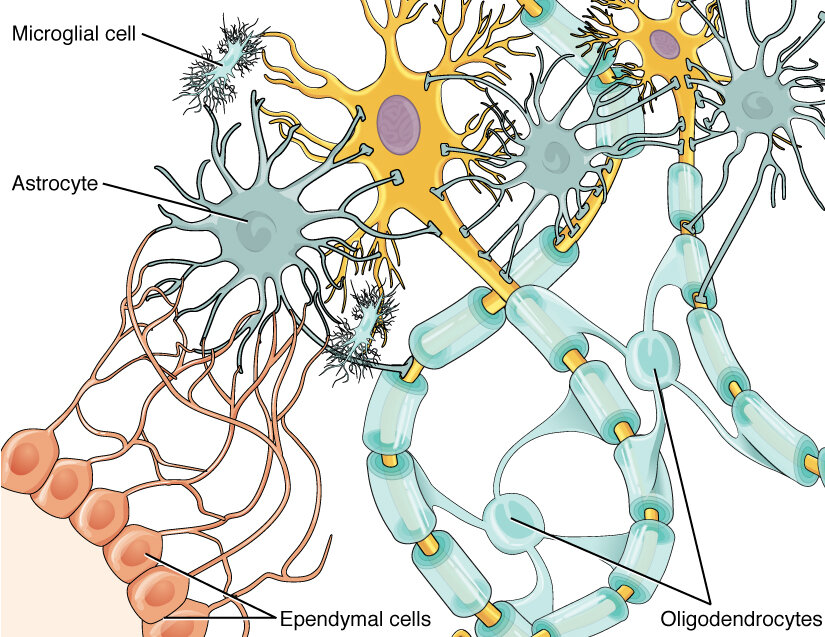
There are several main types of glial cells in the central nervous system (the brain and spinal cord):
-
Astrocytes: These star-shaped cells are the most abundant. They provide physical support to neurons, help supply them with nutrients from the blood, and maintain the chemical balance outside the cells. They also play a crucial role in forming the blood-brain barrier, a protective layer that shields the brain from harmful substances.
-
Oligodendrocytes: These cells produce the myelin sheath that insulates axons in the central nervous system. A single oligodendrocyte can myelinate multiple axons at once.
-
Microglia: These are the brain's resident immune cells. They act like tiny janitors and bodyguards, cleaning up cellular debris and defending against pathogens.
In the peripheral nervous system (the nerves outside the brain and spinal cord), the main glial cells are Schwann cells, which serve the same function as oligodendrocytes: producing myelin. However, one Schwann cell myelinates only a single segment of one axon.
How Neurons Communicate
Communication between neurons happens at a specialized junction called a synapse. It’s here that a signal is passed from the axon of one neuron to the dendrite of the next.
When an electrical signal, called an action potential, travels down an axon and reaches its end (the axon terminal), it triggers the release of chemical messengers called neurotransmitters. These chemicals cross the tiny gap of the synapse and bind to receptors on the receiving neuron's dendrite. This binding can either excite the receiving neuron, making it more likely to fire its own action potential, or inhibit it, making it less likely to fire.
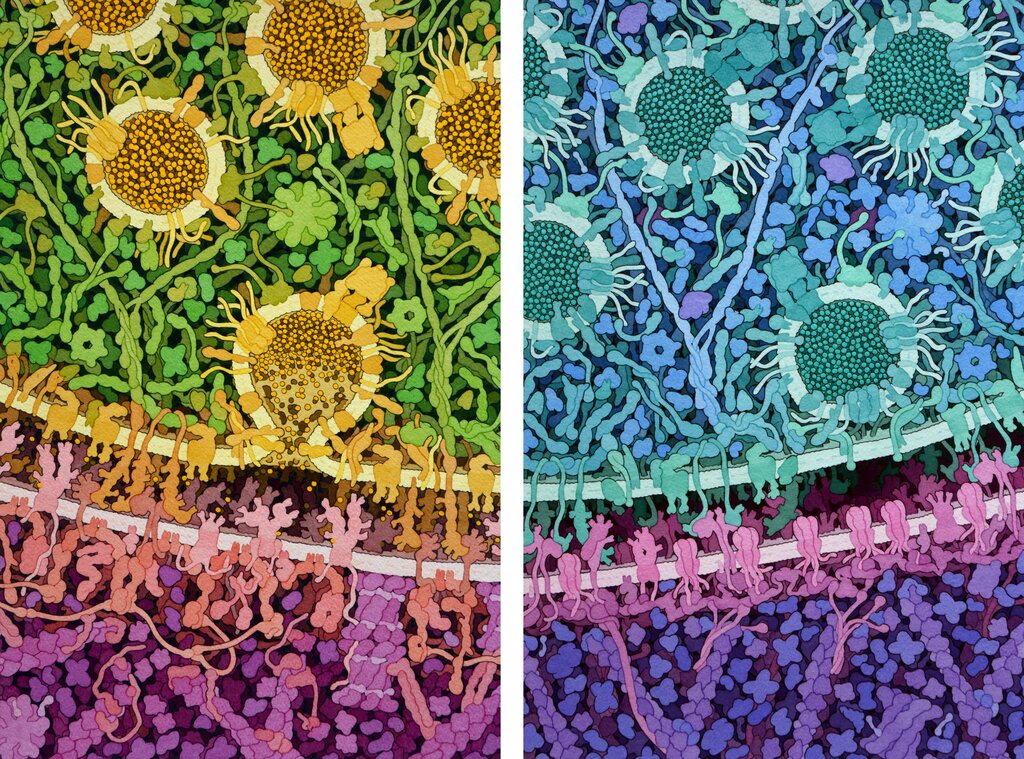
This whole process—from electrical signal to chemical release to electrical signal again—is the foundation of neurotransmission. It's how information moves through the brain, creating a complex web of activity that underlies all of our thoughts, feelings, and actions. It's a rapid and precise system that allows for incredibly complex information processing.
Let's check your understanding of these fundamental components.
What is the primary function of neurons in the nervous system?
Which part of a neuron is primarily responsible for receiving signals from other neurons?
Understanding the structure and function of neurons and glia is the first step in exploring the intricate geography of the nervous system.