Foundations of Music Theory
Musical Notation
The Language of Music
Musical notation is a system for writing down music. Think of it as a set of instructions that tells a musician what to play, how fast to play it, and for how long. Just like learning the alphabet is the first step to reading words, learning the symbols of notation is the first step to reading music.
The Musical Canvas
The foundation of all written music is the staff (or stave). It's a set of five horizontal lines and four spaces. Each line and space represents a different musical pitch. The lower a note is on the staff, the lower its pitch.
By itself, the staff is just a grid. To know which specific notes the lines and spaces represent, we need a clef. A clef is a symbol placed at the very beginning of the staff that assigns a specific pitch to one of the lines. The two most common clefs are the treble clef and the bass clef.
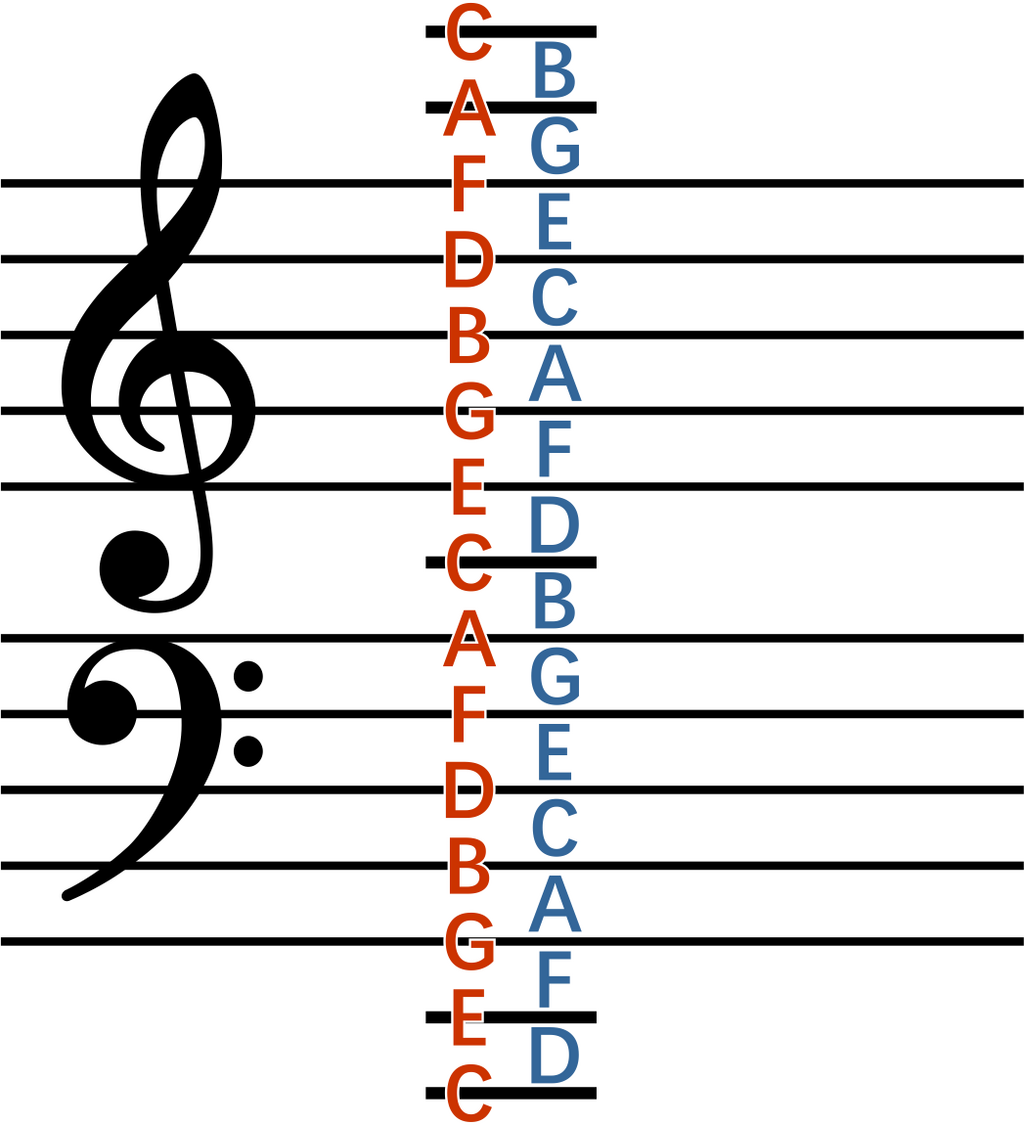
The treble clef, also known as the G-clef, is for higher-pitched notes. The curl in the clef wraps around the second line from the bottom, fixing that line as the note G above middle C. Instruments like the violin, flute, and trumpet use the treble clef, as does the right hand on the piano.
A helpful way to remember the notes on the treble staff is to use mnemonics:
- Lines: E-G-B-D-F (Every Good Boy Deserves Fudge)
- Spaces: F-A-C-E (It spells FACE)
The bass clef, or F-clef, is for lower-pitched notes. The two dots of the clef surround the fourth line from the bottom, which assigns that line as the note F below middle C. Instruments like the cello, bassoon, and trombone use the bass clef, as does the left hand on the piano.
Here are the mnemonics for the bass staff:
- Lines: G-B-D-F-A (Good Boys Do Fine Always)
- Spaces: A-C-E-G (All Cows Eat Grass)
Rhythm and Timing
Music isn't just about which notes you play; it's also about when you play them and for how long. This is where note values, rests, and time signatures come in.
Note values indicate the duration of a sound. Rests indicate the duration of silence.
The duration of each note and rest is relative. A whole note is the longest standard note value, and other notes are fractions of it. A half note is half as long as a whole note, a quarter note is a quarter as long, and so on.
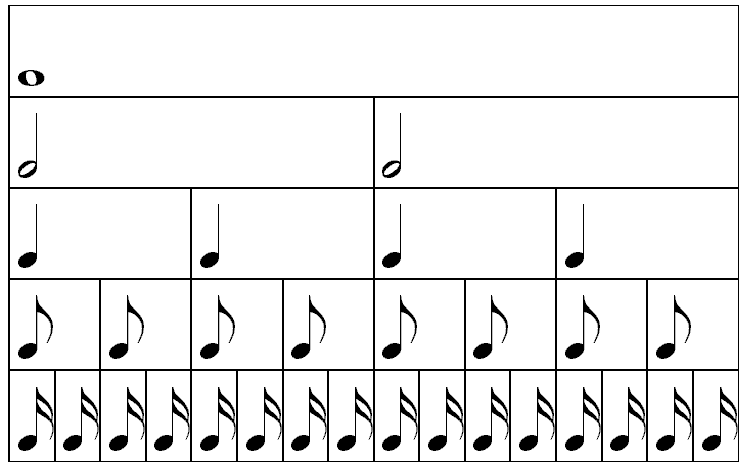
Each note value has a corresponding rest symbol that represents the same duration of silence.
| Note | Duration | Rest Symbol |
|---|---|---|
| Whole Note | 4 beats |  |
| Half Note | 2 beats |  |
| Quarter Note | 1 beat |  |
| Eighth Note | 1/2 beat |  |
But what is a "beat"? That's determined by the time signature. It appears at the beginning of the music, right after the clef, and looks like a fraction.
signature
noun
A sign or set of symbols at the beginning of a piece of music to indicate the key and the time.
The top number of the time signature tells you how many beats are in each measure (the space between two vertical bar lines). The bottom number tells you what kind of note gets one beat.
For example, in 4/4 time:
- The top '4' means there are four beats per measure.
- The bottom '4' means a quarter note gets one beat.
In 3/4 time, there are three beats per measure, and a quarter note still gets one beat. This is the rhythm of a waltz.
Setting the Key
The last piece of the puzzle at the start of a musical staff is the key signature. It's a collection of sharp (♯) or flat (♭) symbols placed after the clef and before the time signature.
A key signature tells you which notes to play consistently higher or lower throughout the entire piece of music. For instance, a key signature with one sharp (on the F line in the treble clef) means that every F you see should be played as F-sharp, unless otherwise noted.
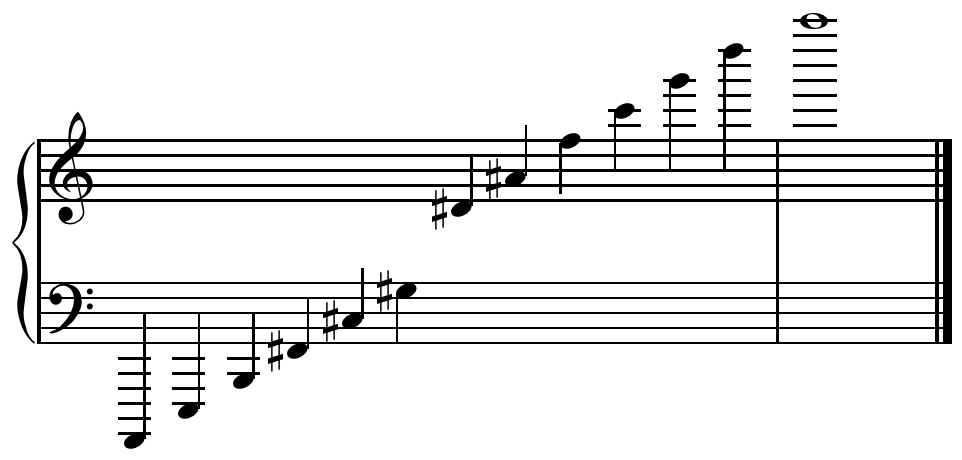
Without a key signature, the music is in the key of C major or A minor, which use only the white keys on a piano. Key signatures make it possible to write music in different keys without having to place a sharp or flat symbol next to every single affected note.
What is the primary function of the staff in musical notation?
A clef is a symbol that assigns a specific pitch to one of the lines on the staff, thereby defining the notes for all lines and spaces.