Foundations of Music Theory
Introduction to Music Theory
What Is Music Theory?
Music theory is the language we use to understand, talk about, and create music. It's not a set of strict rules you must follow. Instead, think of it as a toolbox that helps explain why certain combinations of sounds create the emotions they do, from a song that makes you want to dance to a melody that feels sad and slow.
Learning the basics helps you listen with new ears. You start to hear the patterns and structures that composers use, whether you're listening to Bach, Beyoncé, or the blues. For musicians, it's the key to unlocking improvisation, writing your own songs, and understanding the music you play on a much deeper level.
Music theory doesn't tell you what to do. It explains what's been done and gives you the tools to build something new.
The Building Blocks
All music is made from the same fundamental ingredients. Let's break them down.
Pitch
noun
The perceived highness or lowness of a sound. Think of the difference between a bird's high chirp and a dog's low growl.
When we organize pitches into a sequence, one after another, we get a melody.
Melody
noun
A sequence of single musical notes that the listener perceives as a single entity. It's the part of a song you're most likely to hum.
When we play multiple pitches at the same time, we create harmony.
Harmony
noun
The combination of simultaneously sounded musical notes to produce chords and chord progressions with a pleasing effect.
Pitch doesn't exist in a vacuum; it unfolds over time. That's where rhythm comes in.
Rhythm
noun
The pattern of sounds, silences, and emphasis in a piece of music. It's the element that gives music its sense of forward movement.
Finally, all these elements are organized into a larger structure, which we call form.
Form
noun
The overall structure or plan of a piece of music. It describes the layout of a composition as divided into sections.
Reading the Language
To communicate these musical ideas, composers developed a system of writing called musical notation. It's a way to visually represent the building blocks we just discussed, allowing musicians anywhere to perform a piece of music exactly as intended.
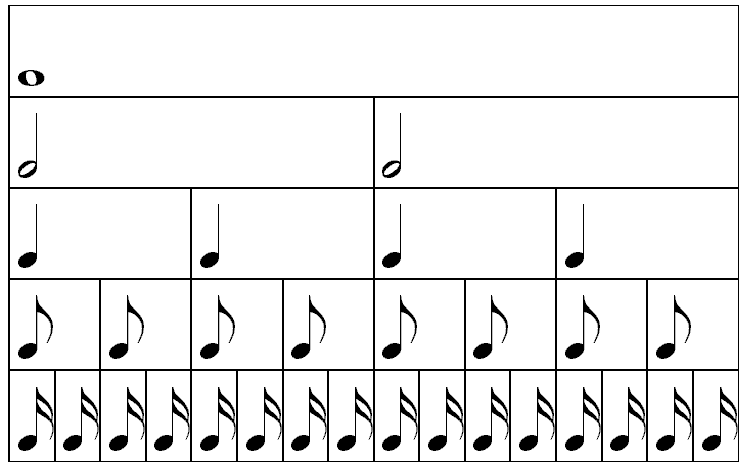
At its most basic, notation uses a five-line staff. A symbol at the beginning of the staff, called a clef, tells the musician which pitches correspond to which lines and spaces. The two most common are the treble clef for higher-pitched instruments (like a flute or violin) and the bass clef for lower-pitched ones (like a cello or bass guitar).
Symbols called notes are placed on the staff. The vertical position of a note indicates its pitch, while the shape of the note tells you its duration, or how long to hold it. This elegant system captures both melody and rhythm on one page.
A Quick History
Music theory isn't a modern invention. The ancient Greeks, particularly figures like Pythagoras, were among the first to explore the mathematical relationships between pitches. They discovered that simple integer ratios produced consonant, pleasing sounds, laying the groundwork for our understanding of harmony.
Through the Middle Ages and the Renaissance, notation evolved from simple marks above text to the five-line staff system we use today. During the Baroque period (around 1600-1750), composers like Johann Sebastian Bach helped codify the system of harmony that would dominate Western music for centuries. This is often called the "common practice" period, and its principles still form the foundation of most of the music we hear today, from classical to pop.
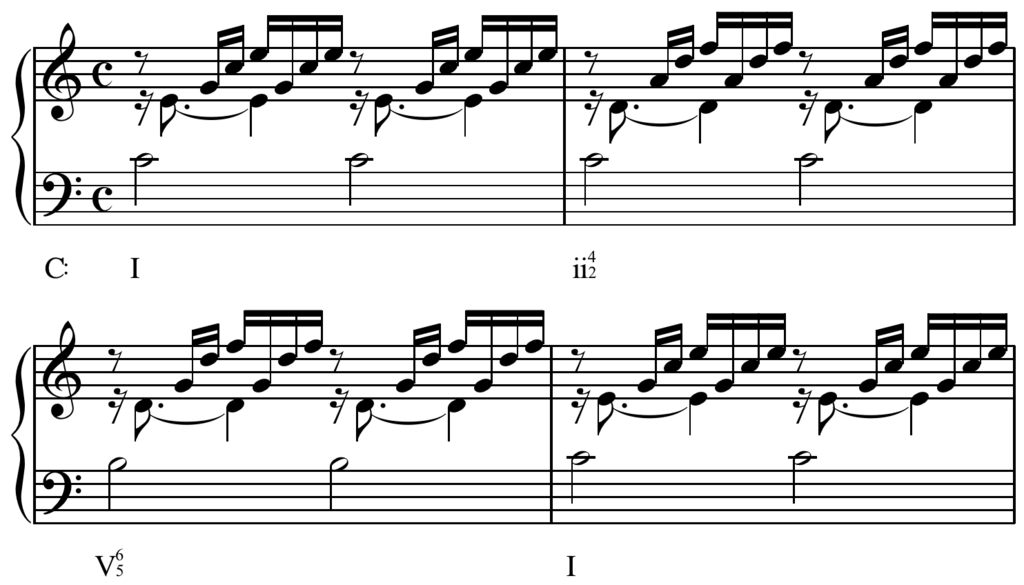
Of course, music theory continues to evolve. Composers in the 20th and 21st centuries have challenged traditional ideas of melody, harmony, and form, creating new systems and new sounds. But they all build upon the fundamental elements that have shaped music for thousands of years.
Ready to test your knowledge? Let's see what you've learned about the language of music.
Which statement best describes the primary role of music theory?
When a composer arranges pitches to be played one after another in a sequence, what are they creating?
Understanding these core concepts is the first step on a lifelong journey of musical discovery. They provide the framework for everything that comes next.