Foundations of Music Theory
Introduction to Pitch
What Is Pitch?
Pitch is the quality that makes it possible to judge a sound as “higher” or “lower.” When you sing a song, the tune you create is made of different pitches. Think of it like climbing a ladder. Each step up is a higher pitch, and each step down is a lower one.
Pitch is essentially how high or low a sound is.
This highness or lowness comes from vibrations. Every sound is a vibration that travels through the air to our ears. The speed of these vibrations is called frequency. Faster vibrations create a higher frequency, which our brains hear as a higher pitch. Slower vibrations mean a lower frequency and a lower pitch.
The Musical Alphabet
To talk about pitch in a standardized way, we give the notes names. The musical alphabet uses just seven letters: A, B, C, D, E, F, and G. After G, the cycle starts over again at A.
Each of these notes represents a specific pitch. An 'A' always has the same relationship to a 'B', no matter where you find them on an instrument. This repeating pattern is the foundation for creating scales and melodies.
Going Higher with Octaves
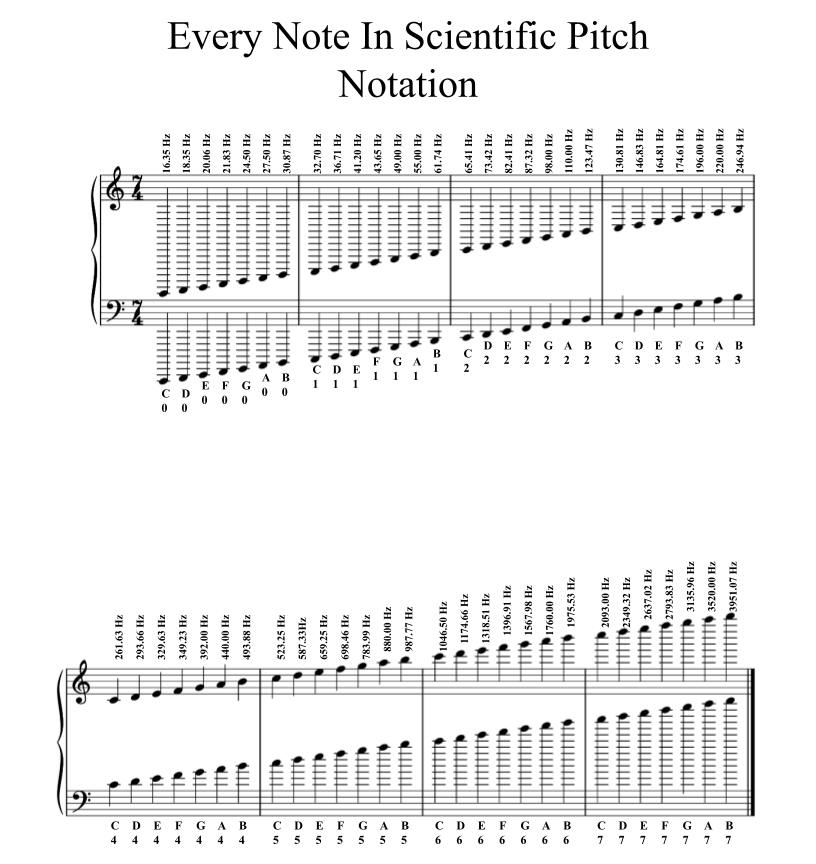
Since the musical alphabet repeats, you'll find many notes with the same name. For example, a piano has multiple C's. The distance between one C and the next C is called an octave.
Octave
noun
The interval between one musical pitch and another with double or half its frequency.
When you move up an octave, the pitch sounds higher but also very similar to the note you started on. It has the same tonal quality. This is because its frequency is exactly double the frequency of the lower note.
This doubling relationship holds true for every note. An A that is one octave above another A will have twice the frequency.
Writing Pitch Down
To write music, we need a way to show which pitch to play. We do this using a staff, which is a set of five horizontal lines and four spaces. Each line and each space represents a different pitch.
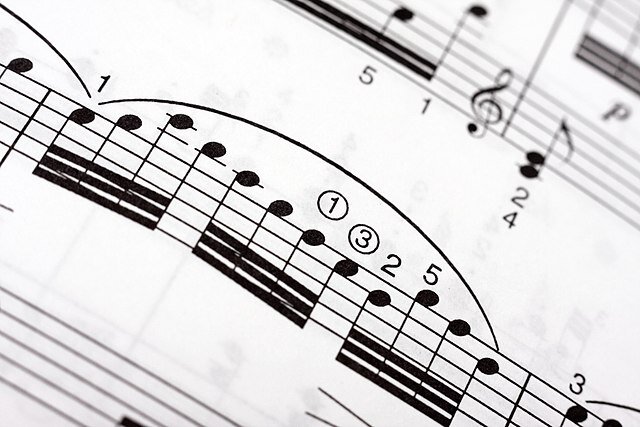
But which line represents which pitch? That's determined by a symbol at the beginning of the staff called a clef. The most common clef is the treble clef, which curls around the 'G' line. Once you know where one note is, you can figure out all the others by moving up or down the musical alphabet.
And that's the core of pitch. We use a seven-letter alphabet that repeats in octaves, and we write it all down on a staff. Understanding these building blocks is the first step to reading, writing, and understanding music.
What physical property of a sound wave determines its pitch?
The musical alphabet consists of which seven letters?