Foundations of Music Theory
Pitch and Notation
What Is Pitch?
Pitch is simply how high or low a sound is. Think of it like a ladder. The higher you climb, the higher the pitch. A bird's chirp is a high-pitched sound, while a big dog's bark is a low-pitched sound. In music, we organize these high and low sounds to create melodies and harmonies.
Every sound has a pitch, from a quiet whisper to a loud siren. Scientifically, pitch is determined by the frequency of a sound wave, measured in Hertz (Hz). A higher frequency means a higher pitch.
Writing Down Pitches
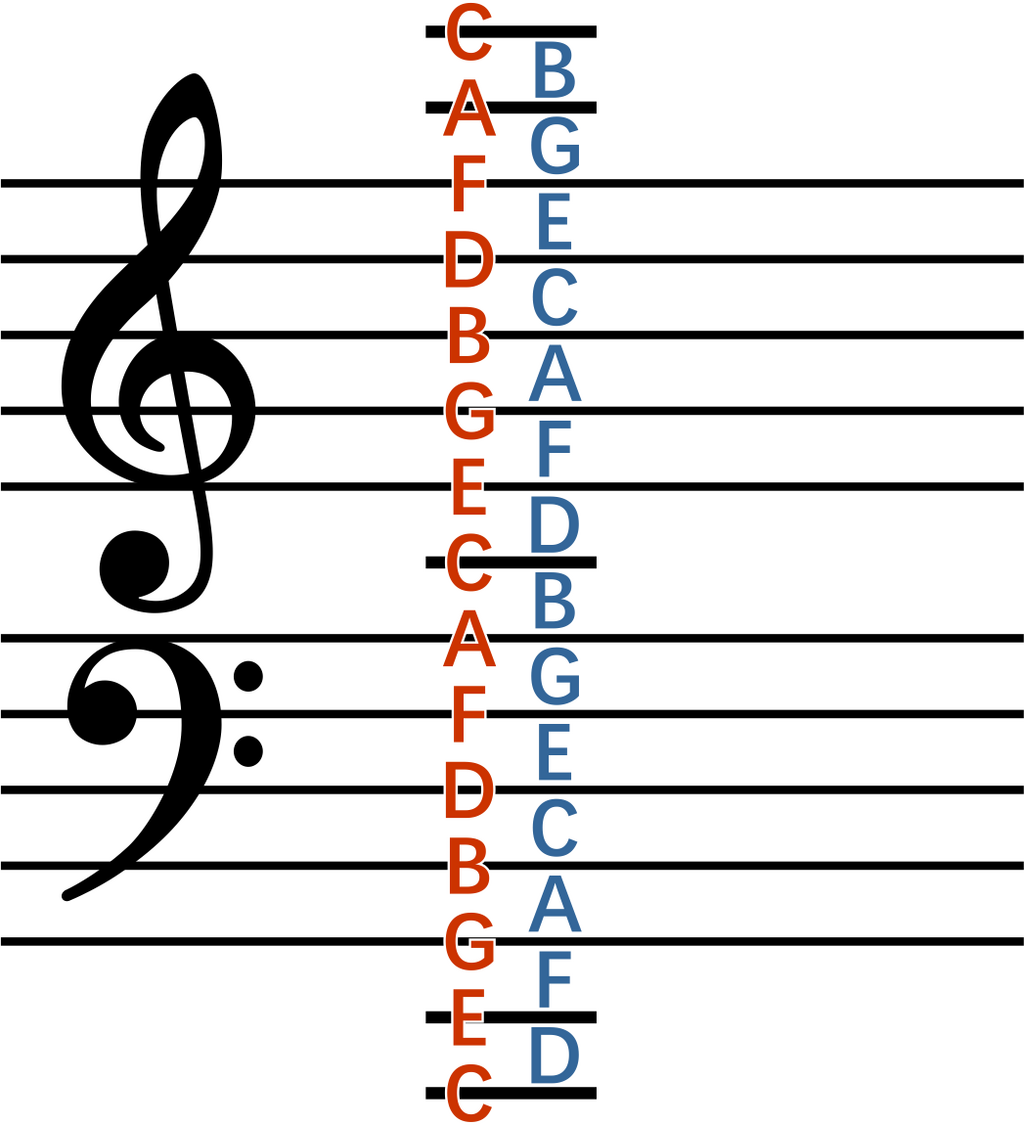
To write music, we need a way to show which pitches to play. For this, we use the staff (or stave). The staff is a set of five horizontal lines and four spaces. Each line and space represents a different pitch.
But the lines and spaces don't mean anything by themselves. We need a special symbol at the beginning of the staff to tell us which notes correspond to which lines. This symbol is called a clef.
The two most common clefs are the treble clef and the bass clef.
Treble Clef
noun
Used for higher-pitched notes. It's also known as the G-clef because it curls around the line that represents the note G.
In the treble clef, the notes on the lines are E, G, B, D, F. A common way to remember this is the phrase "Every Good Boy Does Fine." The notes in the spaces spell out the word FACE.
Bass Clef
noun
Used for lower-pitched notes. It's also known as the F-clef. The two dots on the clef surround the line that represents the note F.
For the bass clef, the notes on the lines are G, B, D, F, A, which you can remember with "Good Boys Do Fine Always." The notes in the spaces are A, C, E, G, remembered with "All Cows Eat Grass."
Instruments like the piano use both clefs at the same time. This is called the grand staff. The staves are connected, with the treble for the right hand and the bass for the left. The note right in the middle, connecting them, is called Middle C.
Altering the Pitch
The seven notes (A, B, C, D, E, F, G) are just the beginning. We can alter their pitches slightly using symbols called accidentals. There are three main accidentals.
| Accidental | Name | What it Does |
|---|---|---|
| ♯ | Sharp | Raises a note by a half step. |
| ♭ | Flat | Lowers a note by a half step. |
| ♮ | Natural | Cancels a previous sharp or flat. |
For example, if you see a sharp symbol (♯) next to a C, you play C-sharp, which is slightly higher in pitch than C. If you see a flat symbol (♭) next to a B, you play B-flat, a pitch slightly lower than B.
An accidental placed before a note applies to that note for the rest of the measure. A natural sign (♮) is used to return the note to its original pitch within that measure.
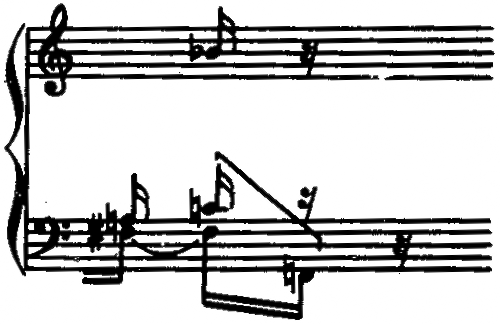
Finally, the same note name can appear multiple times at different pitches. For example, there are many Cs on a piano. The distance between one C and the next higher C is called an octave. The notes within an octave have the same name but different frequencies, giving them a higher or lower sound.
Ready to test your knowledge? Let's see if you can identify notes and understand accidentals.
What is the primary function of a clef on a musical staff?
The notes in the spaces of the treble clef spell out which word?
Understanding pitch and how it's written is the first major step to reading music. Once you can identify the notes on the page, you're ready to start making music.