Foundations of Music Theory
Introduction to Music Notation
The Musical Alphabet
Music has its own alphabet. It’s simpler than the one you’re used to, with only seven letters: A, B, C, D, E, F, and G. Once you get to G, the pattern just repeats. This cycle of seven notes is the foundation for all melodies and harmonies you hear.
Think of it like the days of the week. After Sunday, you just start over again with Monday. The musical alphabet does the same thing, cycling from G back to A.
The Staff and Clefs
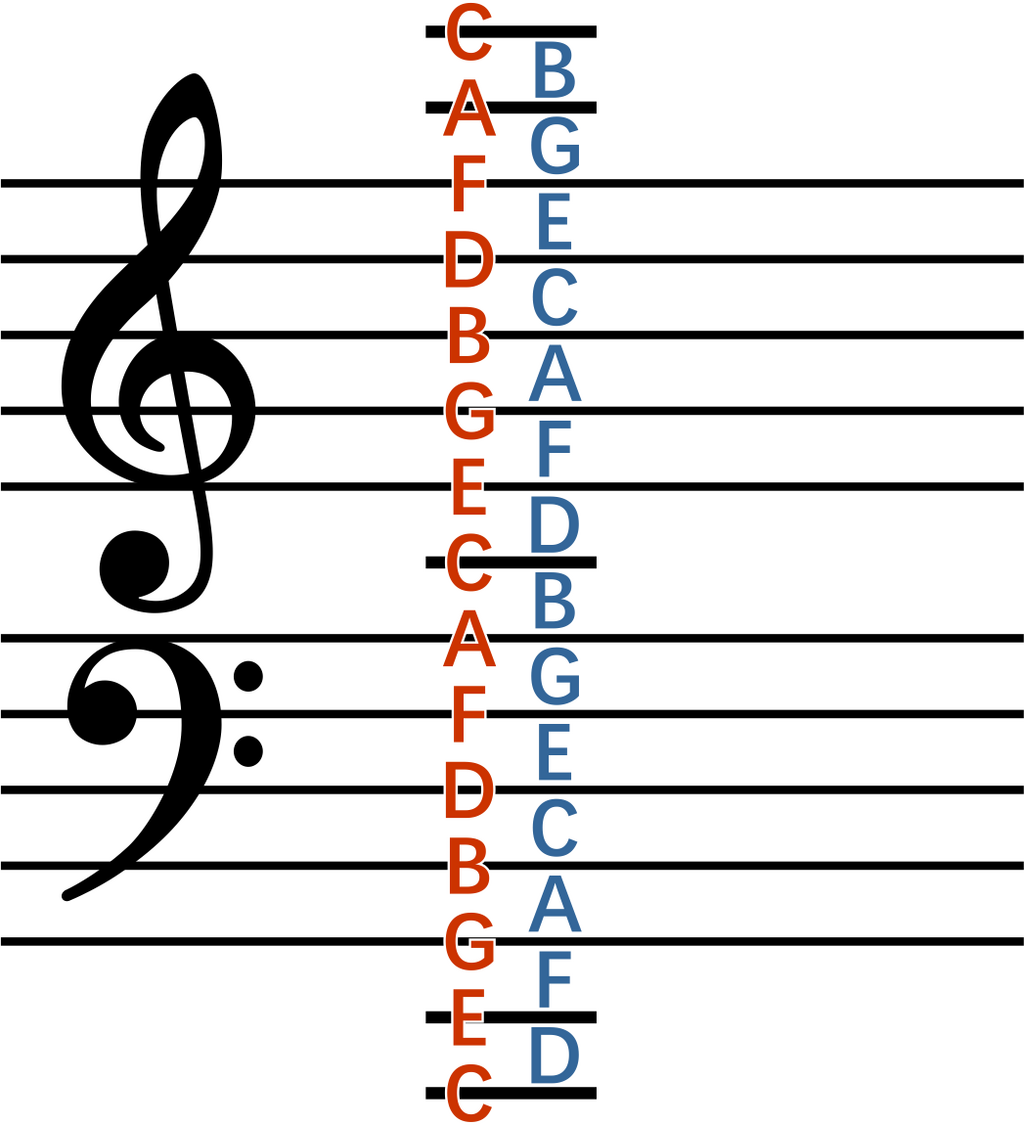
To know which A, B, or C to play, we use a system of five lines and four spaces called the staff. Each line and space represents a specific pitch. The higher a note is placed on the staff, the higher its pitch.
Concentrate on the way the rise and fall of the melody is reflected in the higher or lower position of the note heads on the staff.
But the staff alone isn't enough. We need a reference point. That's where clefs come in. A clef is a symbol at the beginning of the staff that assigns a specific pitch to one of the lines. The two most common clefs are the treble clef and the bass clef.
The treble clef, or G-clef, curls around the second line from the bottom, marking that line as the note G. It's generally used for higher-pitched instruments and voices, like a flute, a violin, or the right hand on the piano.
The bass clef, or F-clef, has two dots surrounding the fourth line from the bottom, marking that line as F. It's used for lower-pitched instruments, like a cello, a bass guitar, or the left hand on the piano.
Notes and Rests
While pitch tells us which note to play, duration tells us how long to hold it. We show duration using different types of notes. Each note type has a value that is half of the one before it.
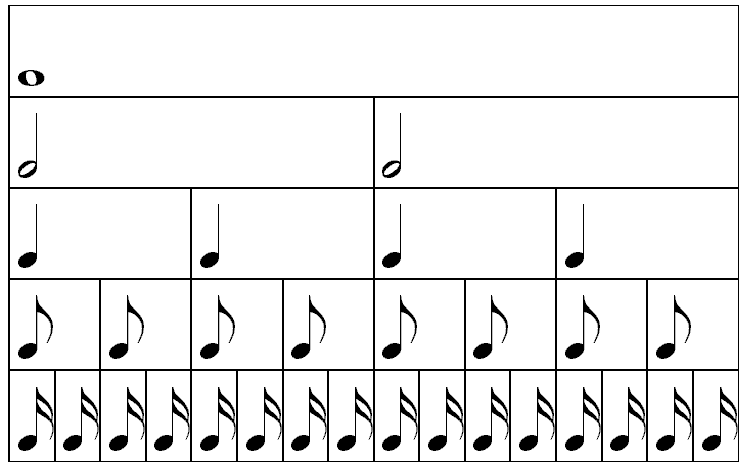
A whole note is the longest basic note value. A half note is half the duration of a whole note. A quarter note is half of a half note, and so on with eighth notes and sixteenth notes.
Music isn't just about sound; it's also about silence. These silences are called rests, and they have durations that correspond to the note values.
| Note Value | Corresponds To | Rest Symbol |
|---|---|---|
| Whole Note | Whole Rest | — (below a line) |
| Half Note | Half Rest | — (above a line) |
| Quarter Note | Quarter Rest | { |
| Eighth Note | Eighth Rest | } |
| Sixteenth Note | Sixteenth Rest | {: |
Building Rhythms
By combining different note values and rests, we create rhythm. Rhythm is the pattern of sounds and silences in time. Let's look at a simple rhythm in 4/4 time, which means there are four beats in every measure and a quarter note gets one beat.
In this example:
- Beat 1 is split into two eighth notes.
- Beat 2 is a single quarter note.
- Beat 3 is a quarter rest (silence).
- Beat 4 is a single quarter note.
Reading music is about decoding these two elements—pitch and rhythm—at the same time. With these fundamentals, you can start to understand the language written on a page of sheet music.
Ready to test your knowledge?
What letter comes after G in the musical alphabet?
A standard musical staff is made up of ___ lines and ___ spaces.
Understanding these basic building blocks is the first step to reading, writing, and performing music.