Foundations of Music Theory
Musical Notation
The Musical Alphabet
Music uses a simple alphabet of just seven letters: A, B, C, D, E, F, and G. That's it. Once you get to G, the alphabet starts over again with A, representing a higher-pitched version of the same note. This repeating cycle of seven letters is the foundation for all melodies and harmonies.
Think of the musical alphabet like the days of the week. After Sunday, you just start over again with Monday.
The Staff and Clefs
To know which of the seven letters to play, we place notes on a staff. The staff is a set of five horizontal lines and four spaces. Each line and each space represents a specific pitch.
But how do we know which line is which note? That's where clefs come in. A clef is a symbol at the beginning of the staff that assigns a specific note to a specific line, setting the context for all the other notes.
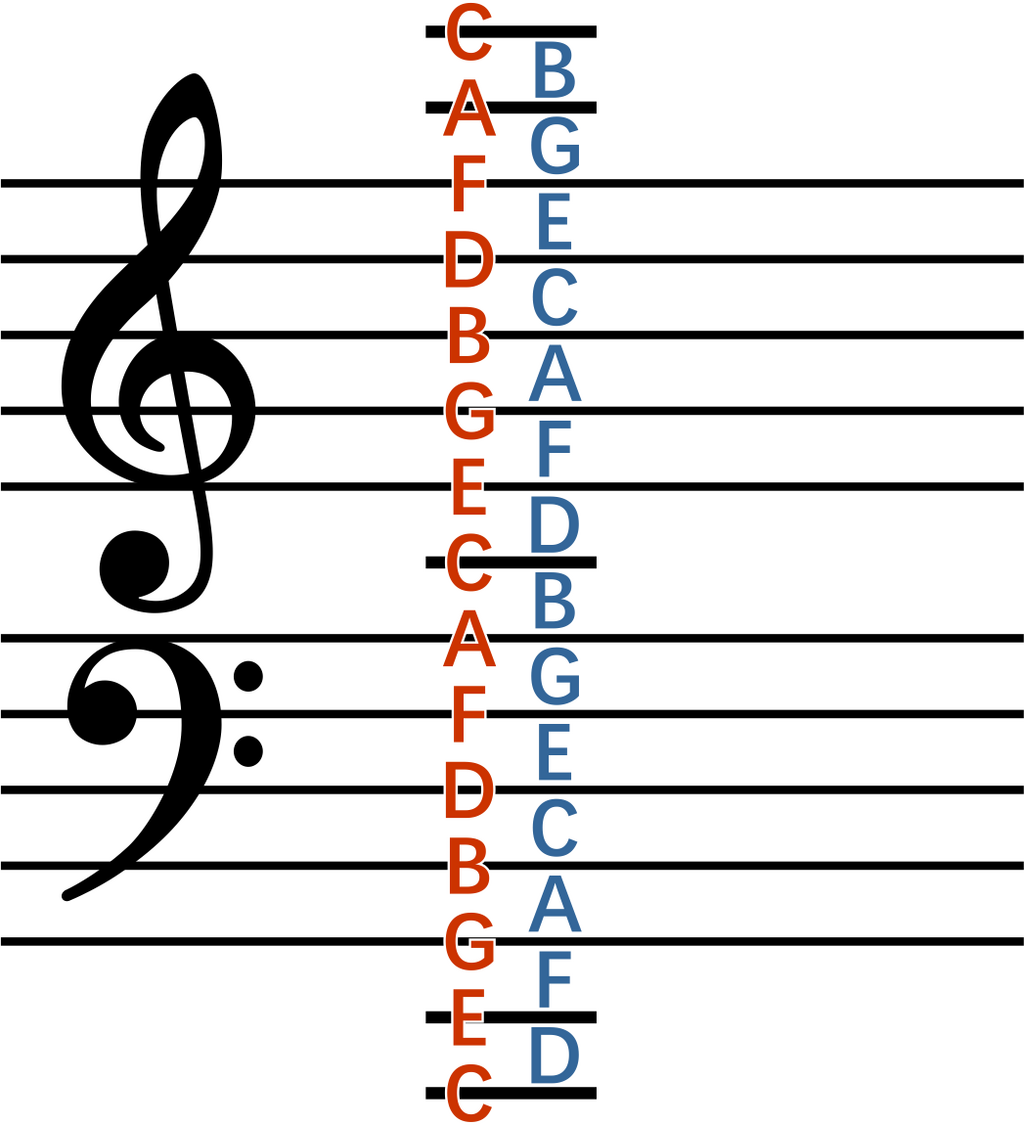
The two most common clefs are the treble and bass clefs.
The Treble Clef, also known as the G-clef, curls around the second line from the bottom. This line becomes the note G. Instruments with higher pitches, like the flute, violin, or a singer's soprano voice, use the treble clef. A common mnemonic for the notes on the lines is Every Good Boy Does Fine, and for the spaces, F-A-C-E.
The Bass Clef, or F-clef, has two dots that surround the fourth line from the bottom, making that line the note F. Instruments with lower pitches, like the cello, bass guitar, or a baritone voice, use the bass clef. You can remember the line notes with Good Boys Do Fine Always and the space notes with All Cows Eat Grass.
Note Values and Rests
Pitch tells us how high or low a note is, but music also needs rhythm. Note values tell us how long to hold a note. Each type of note has a specific duration.
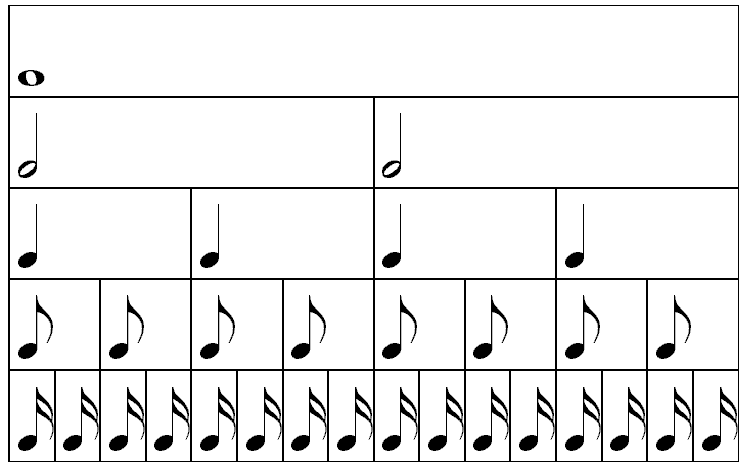
The basic unit is the whole note. From there, we divide by two:
- A half note is half the duration of a whole note.
- A quarter note is half the duration of a half note (or a quarter of a whole note).
- An eighth note is half of a quarter note.
- A sixteenth note is half of an eighth note.
Music isn't just about sound; it's also about silence. A rest is a symbol that indicates a period of silence with a specific duration, corresponding to the note values.
| Note | Rest | Duration |
|---|---|---|
| Whole Note | Whole Rest | 4 beats* |
| Half Note | Half Rest | 2 beats* |
| Quarter Note | Quarter Rest | 1 beat* |
| Eighth Note | Eighth Rest | 1/2 beat* |
| Sixteenth Note | Sixteenth Rest | 1/4 beat* |
*Durations shown are for a 4/4 time signature.
Time Signatures
A time signature appears at the beginning of a piece of music, right after the clef. It looks like a fraction and tells us two things: how many beats are in each measure (a small segment of music) and what kind of note gets one beat.
So, a time signature of 4/4 (four-four time) means there are four beats per measure, and the quarter note gets one beat. This is the most common time signature in popular music. A measure in 4/4 time could be filled with one whole note, two half notes, four quarter notes, or any combination that adds up to four beats.
What is the primary function of a clef at the beginning of a musical staff?
Which of the following correctly orders note values from longest duration to shortest?