Foundations of Modern Singing
Breath Control and Posture
The Engine of Your Voice
Think of your voice like a car. The engine provides the power. For a singer, that engine is your breath. Without a steady, controlled stream of air, your voice will sputter and stall. The key to powerful, consistent singing isn't just about having big lungs; it's about using the air you have efficiently. This all starts with the diaphragm.
diaphragm
noun
A large, dome-shaped muscle located at the base of the lungs that is the primary muscle used in respiration.
Most people, when asked to take a deep breath, puff out their chest and raise their shoulders. This is called shallow or clavicular breathing. It’s inefficient and creates tension in your neck and throat, which is the last thing you want when singing.
Singers use a technique called diaphragmatic breathing. When you inhale, your diaphragm contracts and flattens, pulling downward. This creates a vacuum in your chest that draws air into your lungs. Your belly, not your chest, should expand outward. When you exhale, the diaphragm relaxes, pushing air out of the lungs in a controlled stream.
To get a feel for this, lie on your back and place a book on your stomach. Breathe in through your nose, focusing on making the book rise. As you exhale slowly through your mouth, let the book gently fall. Your chest should barely move. This is the sensation you want to replicate when you're standing and singing.
Stand Tall, Sing Strong
Your posture is the framework that supports your breath. If you’re slouched, your diaphragm can't move freely, and your lungs don't have enough space to expand. Good posture aligns your body so the breathing mechanism can work without obstruction.
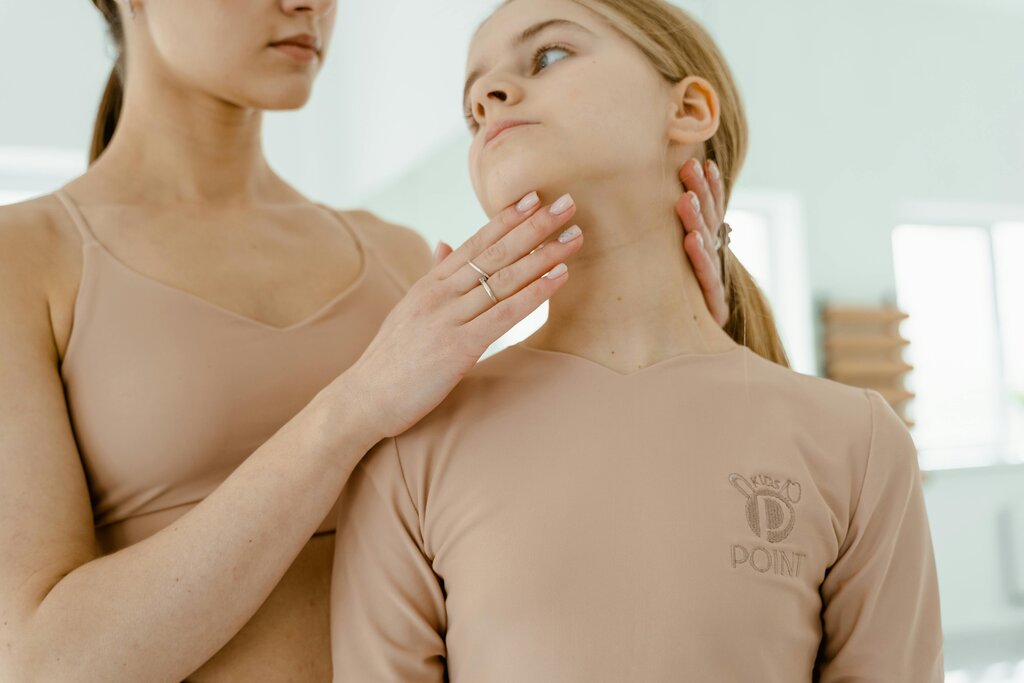
Here’s how to find the ideal singing posture:
- Feet: Stand with your feet shoulder-width apart, with one foot slightly in front of the other. This creates a stable, balanced base. Your weight should be distributed evenly.
- Knees: Keep your knees slightly bent, not locked. This prevents you from becoming rigid and allows for subtle movement.
- Hips and Spine: Align your hips directly over your ankles. Your spine should be long and straight, but not stiff. Imagine a string pulling the top of your head gently toward the ceiling.
- Chest and Shoulders: Your chest should be comfortably high, but not pushed out artificially. Your shoulders should be relaxed, rolled back, and down. Avoid any tension in your neck or shoulders.
- Head: Your chin should be level with the floor, with your head balanced on top of your spine.
Good posture should feel energized and relaxed at the same time. It’s a state of readiness, not tension.
Putting It into Practice
Now let's combine breath and posture with some simple exercises. The goal is to make deep, controlled breathing feel natural.
The Hissing Exercise This exercise builds your ability to control your exhale, which is crucial for sustaining notes.
- Stand in your aligned singing posture.
- Take a deep, diaphragmatic breath for a count of four.
- Instead of just letting the air out, exhale on a sustained "sssss" sound, like a hissing snake.
- Try to make the hiss as steady and consistent as possible. Time yourself. Your goal is to make the exhale last longer and longer over time, without the sound wavering or sputtering out at the end.
Breathing is the foundation of singing, so having the right breathing technique allows for greater control over one’s singing capabilities.
The Puffing Exercise This helps develop control over short bursts of air.
- Take another deep, diaphragmatic breath.
- Exhale in a series of short, sharp puffs of air, as if you're blowing out candles. Use the sounds "shh" or "ff."
- Focus on engaging your abdominal muscles to push each puff out. Your stomach should pulse inward with each sound. Try to get as many puffs as you can from a single breath, keeping each one distinct and energetic.
Practicing these exercises for a few minutes every day will build muscle memory. Soon, you won't have to think about breathing or standing correctly; it will become the automatic foundation for every note you sing.
Ready to check your understanding?
What is the primary muscle singers engage for powerful and controlled breathing?
When a singer takes a correct diaphragmatic breath, what is the most noticeable physical movement?
Mastering these fundamentals is the first major step toward unlocking your voice's full potential.