Foundations of Martial Systems and Philosophy
Comparative Biomechanics
Generating Force from the Ground Up
A powerful strike doesn't start in the fist or the foot. It starts from the ground. Striking arts like Muay Thai are masterclasses in generating explosive force by treating the body as a connected system. This system is often called a —a sequence of movements that transfers energy from one body part to the next, gaining momentum along the way.
Think of a Muay Thai roundhouse kick. The fighter pivots on their standing foot, driving force up from the floor. The hips rotate powerfully, followed by the torso, the shoulder, and finally the kicking leg whips around. Each segment adds to the velocity, culminating in a devastating impact. The goal is force concentration: delivering the maximum amount of energy to the smallest possible point on the opponent's body. This is why a well-thrown elbow or a precise shin kick can be so effective.
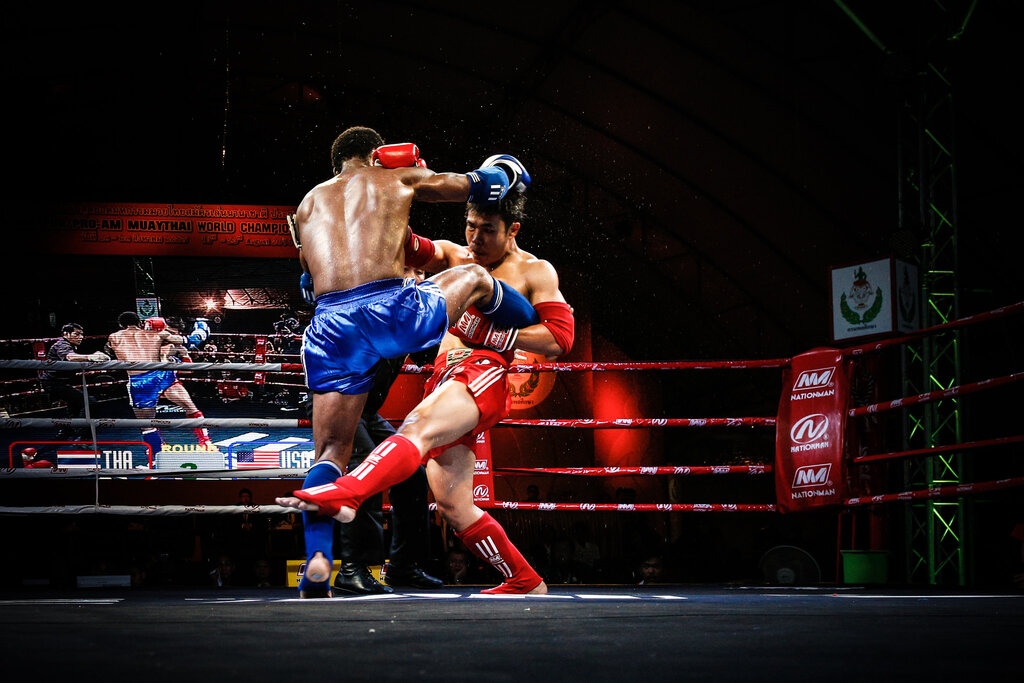
In striking, the body acts like a whip. Power is generated from a stable base and amplified through a sequence of rotations to create high-velocity impact.
The Physics of Leverage
Grappling disciplines, like Brazilian Jiu-Jitsu (BJJ), operate on a completely different physical principle. Instead of generating their own impact force, grapplers manipulate the force and structure of their opponent. The core concept is leverage, which allows a smaller, weaker person to control someone much larger. The legendary grandmaster built his family's art around this very idea.
In grappling, limbs become levers and joints become fulcrums. Consider an armbar. The attacker uses their hips as a fulcrum under the opponent's elbow joint. By controlling the wrist and shoulder, they can apply a small amount of pressure to the lever (the forearm), creating immense, irresistible force on the joint. This isn't about strength versus strength; it's about geometry. Rather than concentrating force for a single impact, grappling distributes control across the opponent's body to set up a submission.
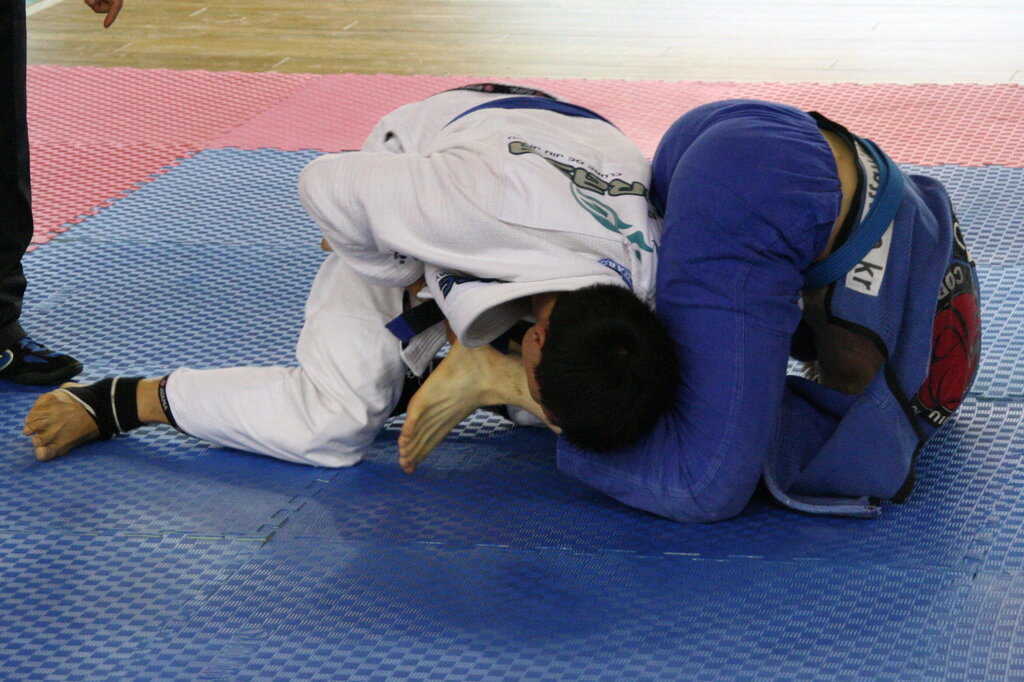
Controlling the Center
Every physical object has a center of gravity—a theoretical point where its entire weight is concentrated. In humans, it's typically around the hips. Maintaining control of your own while disrupting your opponent's is the fundamental goal of grappling.
A takedown is simply a matter of moving an opponent's center of gravity outside their base of support—the area beneath their feet. If their hips are pushed past their heels, they fall backward. If their weight is pulled forward over their toes, they fall forward. Striking arts also depend on a stable center of gravity, but for power generation. A boxer who is off-balance cannot punch with force. A grappler, however, actively seeks to unbalance their opponent, turning their stability into a weakness.
So, while a striker focuses on creating a kinetic chain to deliver force, a grappler works to break their opponent's chain, dismantling their posture and balance one piece at a time.
To better understand these differences, let's look at how they apply force.
| Principle | Striking (e.g., Muay Thai) | Grappling (e.g., BJJ) |
|---|---|---|
| Force Application | Concentration of kinetic energy | Manipulation of levers and fulcrums |
| Primary Goal | Deliver high-impact force to a small area | Distribute control to disrupt balance |
| Use of Energy | Generate explosive power from the ground up | Redirect opponent's weight and momentum |
| Center of Gravity | Maintained for stability and power | Disrupted to achieve takedowns and control |
Neither approach is inherently superior; they are simply different applications of physics optimized for different situations. A powerful kick can end a fight in an instant, but a well-applied choke works just as effectively, regardless of the opponent's toughness. The evolution of martial arts has shown that a blend of both striking and grappling principles creates the most well-rounded practitioner.
Ready to test your understanding of these physical principles?
What is the primary physical principle a grappler, like a Brazilian Jiu-Jitsu practitioner, uses to control a larger opponent?
According to the text, a powerful strike in an art like Muay Thai begins by generating force from what source?
Understanding these mechanical differences is key to appreciating the strategy and technique behind every martial art.