Foundations of Martial Arts
Biomechanical Power Generation
The Body as a Whip
Power in striking isn't just about arm strength. It's about sequence and timing. Think of your body as a bullwhip. The handle moves first, but the real power and speed are unleashed at the very tip. This is the essence of the in martial arts: a sequence of movements that transfers energy from the ground, up through your body, and into your target.
Each strike begins not with the limb that hits, but with your connection to the floor. By pushing off the ground, you generate a ground reaction force. This is Newton's Third Law in action: for every action, there is an equal and opposite reaction. You push down and away from your target, and the ground pushes back, initiating the first link in the power-generating chain. This initial force is then multiplied as it travels up through your body.
The Engine of Rotation
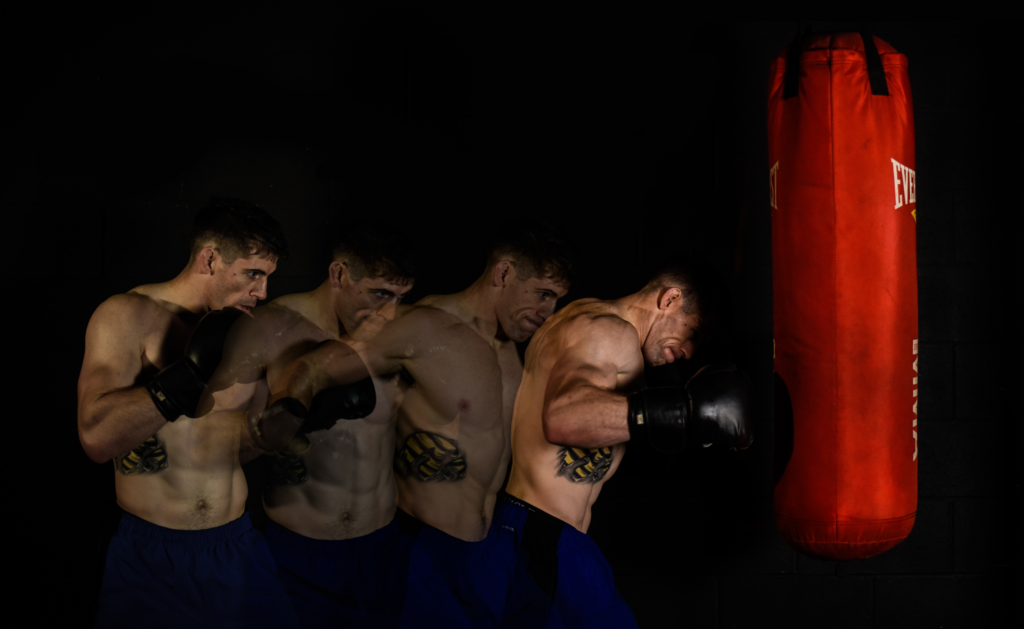
That initial ground force is useless without an engine to convert it into striking power. That engine is your core, specifically the rotation of your hips and torso. By pivoting on the ball of your foot and driving your hip forward, you create —a twisting force that accelerates your entire upper body. This is where true power comes from. A punch that uses only the arm is a push; a punch that starts with hip rotation is a knockout blow.
This rotation must be timed correctly. The hip turns just before the torso, the torso before the shoulder, and so on. Each segment adds its own velocity to the chain, culminating in maximum speed at the point of impact. It’s a cascade of acceleration.
Styles of Power
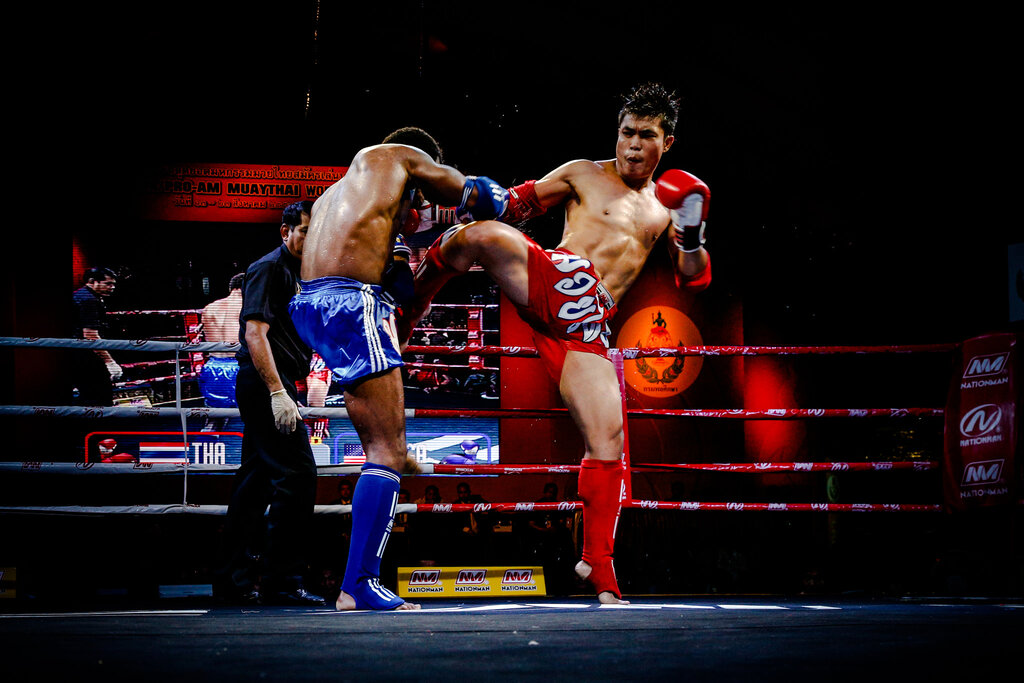
Different martial arts harness these principles in unique ways. A Muay Thai roundhouse kick is a perfect example of prioritizing rotational power. The practitioner pivots on their standing leg and swings their entire body into the kick, using their kicking leg like a baseball bat. The goal is to transfer the full mass of the body into the target. There is little retraction; the power flows completely through.
Conversely, many Karate styles emphasize snap and speed. A reverse punch (Gyaku-zuki) or a snap kick (Mae-geri) focuses on rapid acceleration and immediate retraction. While it also uses hip rotation, the power generation is more linear and piston-like. The emphasis is on reaching the target with maximum velocity and then recoiling to prepare for the next movement. It's less about transferring total body weight and more about a sharp, penetrating impact.
The final element is understanding the difference between your lead and rear hand. Your rear hand (the one further from the target in your stance) naturally has more power. It has a longer path to travel, allowing the kinetic chain more time to build and transfer momentum from the ground up through your core rotation. It's your power shot, your cross.
Your lead hand (jab) is closer to the target. It has less distance to generate power but is significantly faster. Its role is often to set up the rear hand, to gauge distance, or to disrupt an opponent. While a lead hook can generate significant rotational power, the straight jab relies more on explosive extension and shoulder mechanics than full hip rotation.
| Hand | Primary Advantage | Power Source | Role |
|---|---|---|---|
| Rear | Power | Full kinetic chain, long rotational path | Knockout, heavy damage |
| Lead | Speed | Shoulder extension, shorter rotational path | Setup, range finding |
By understanding these biomechanics, you can move beyond simply mimicking movements. You can analyze your own technique, identify inefficiencies, and intentionally train to make every strike more powerful and effective.
What is the primary source of power in an effective strike, according to the concept of the kinetic chain?
In the context of striking, what is 'rotational torque'?