Foundations of Jewish Halakha
Introduction to Halakha
The Path of Jewish Law
In Judaism, daily life is a walk with God, guided by a comprehensive legal and ethical framework. This system is known as Halakha.
Halakha
noun
The collective body of Jewish religious laws, including biblical laws and later talmudic and rabbinic legislation, customs, and traditions.
The word itself comes from the Hebrew root verb halakh, meaning “to walk” or “to go.” Halakha, then, is literally “the way to walk.” It provides a path for nearly every aspect of life, from major lifecycle events and holiday observances to everyday matters like eating, working, and interacting with others. It's less a list of restrictive rules and more a complete approach to living a life of religious and ethical meaning.
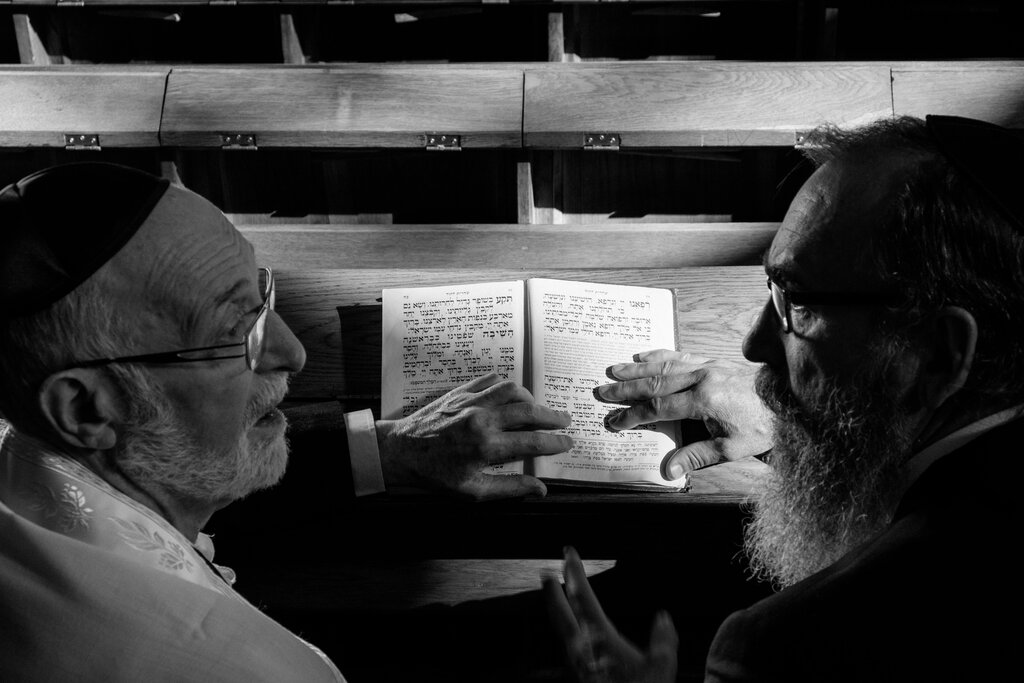
Law and Lore
The vast body of rabbinic literature isn’t all law. It contains another, equally important component: Aggadah. While Halakha focuses on the practical and legal aspects of Jewish life, Aggadah deals with the non-legalistic side, including stories, folklore, ethical teachings, and philosophy.
Halakha tells you what to do and how to do it. Aggadah explores why you should do it, providing the context, values, and inspiration behind the law. One is the skeleton, the other is the spirit. Both are essential to the body of Jewish tradition.
| Halakha (The Law) | Aggadah (The Lore) | |
|---|---|---|
| Content | Commandments, statutes, ordinances | Stories, parables, ethical maxims |
| Purpose | To prescribe behavior and ritual | To inspire, teach values, explain |
| Nature | Binding, authoritative | Non-binding, illustrative |
From Sinai to the Study Hall
The roots of Halakha are in the Torah, the first five books of the Hebrew Bible. According to tradition, these books contain 613 commandments that form the basis of all Jewish law. But these written laws, the Torah Shebikhtav, often lack detail. They might command Jews to rest on the Sabbath, for example, but they don't specify what constitutes “rest” or “work.”
To answer these questions, an accompanying tradition of interpretation and clarification, known as the Oral Torah, or Torah Shebe'al Peh, developed. This oral tradition was passed down through generations of scholars and teachers. It explains how to apply the broad principles of the Written Torah to the practical realities of daily life.
After the destruction of the Second Temple in 70 CE, Jewish leaders feared that this vast body of oral knowledge could be lost. They began the monumental project of writing it down, leading to the creation of the foundational texts of rabbinic Judaism.
This leads us to two central texts: the Mishnah and the Talmud.
The Mishnah: Compiled around 200 CE by Rabbi Judah the Prince, the Mishnah is the first major written collection of the Oral Torah. It's a concise, organized work of Jewish law, divided into six major sections, or “orders,” covering topics from agriculture to holidays to civil law. It presents legal opinions and debates without much narrative, serving as a foundational law code.
The Talmud: The Mishnah, however, was so compact that it raised new questions. Over the next three centuries, rabbis in the Land of Israel and Babylonia studied the Mishnah, analyzing it line by line. Their extensive commentaries, debates, stories, and arguments were compiled into the Gemara. The Mishnah and the Gemara together form the Talmud.
There are two versions of the Talmud: the Jerusalem Talmud and the more comprehensive and widely-studied Babylonian Talmud. It is the central text of rabbinic Judaism, a sprawling record of the debates that continue to shape Halakha to this day.
What is the literal meaning of the Hebrew word "Halakha"?
Which statement best describes the relationship between Halakha and Aggadah?
Halakha is a dynamic tradition. It's not a static set of ancient rules but a living, evolving conversation that has continued for thousands of years, guiding the path of Jewish life.