Foundations of International Trade
Introduction to International Trade
What Is International Trade?
At its heart, international trade is just like any other kind of trade: it's about buying and selling. The only difference is that the buyer and seller are in different countries. This simple exchange of goods and services across borders is what knits the global economy together, moving everything from the coffee beans for your morning brew to the microchips in your phone around the world.
Import
verb
To bring goods or services into a country from abroad for sale.
Think of importing as bringing products in to your home country. If a French bakery buys vanilla from Madagascar, it's importing that vanilla.
Export
verb
To send goods or services to another country for sale.
Exporting is the opposite, sending products out. When that same French bakery sells its croissants to a cafe in Germany, it's exporting them. The two actions are two sides of the same coin. One country's import is always another country's export.
Why Countries Trade
No country can produce everything its people need or want. Some countries have abundant natural resources, like oil or lumber. Others have highly skilled workforces or advanced technology. Trade allows countries to focus on what they do best and buy the rest from others. This concept is called specialization.
When countries specialize, they become more efficient. This leads to lower costs, which often means lower prices for consumers. It also means we get access to a much wider variety of products than would ever be possible if we only consumed what we made at home.
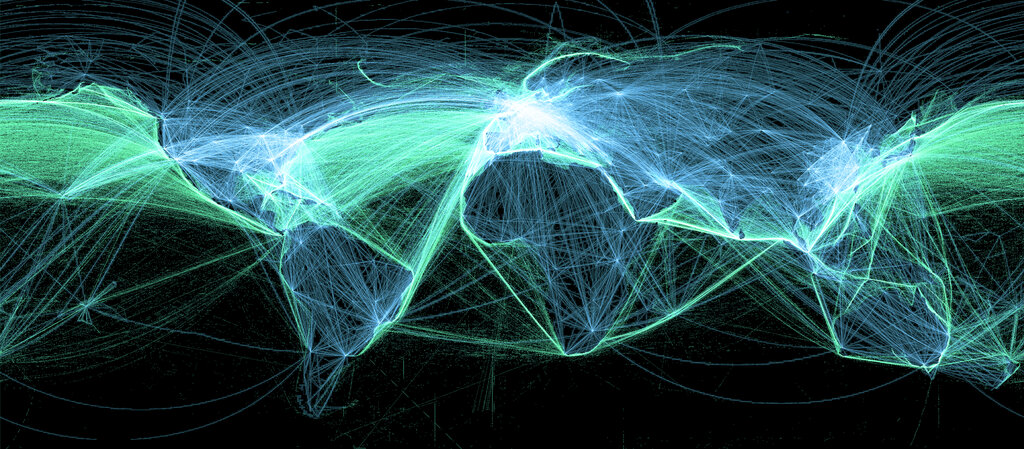
Economists have a few theories to explain the benefits of this system. One is absolute advantage, where a country can produce a good more efficiently than any other country. A more powerful idea is comparative advantage. This theory states that even if one country can produce everything more efficiently than another, it's still better for both to specialize and trade.
A country has a comparative advantage if it can produce a good at a lower opportunity cost—meaning it gives up less to produce that good compared to other goods. By focusing on producing items where its comparative advantage is greatest, a country can trade for other goods and end up with more of everything. It's a win-win.
Specialization and trade allow countries to consume beyond their own production possibilities, leading to greater overall wealth and a higher standard of living.
The Players and Problems
The key players in this global marketplace are importers and exporters.
An importer is a person or firm that buys goods from other countries to resell in their domestic market. They are experts at navigating customs, finding reliable foreign suppliers, and understanding local demand.
A key challenge for importers is dealing with tariffs—taxes on imported goods—and quotas, which are limits on the quantity of a good that can be imported.
An exporter sells domestically-produced goods to foreign markets. They focus on marketing their products abroad, managing international shipping, and handling foreign payments. Their success depends on understanding different cultures and navigating the regulations of other countries.
Of course, global trade isn't without its hurdles. Beyond finding buyers and sellers, businesses must navigate a complex landscape of challenges.
| Challenge | Description |
|---|---|
| Logistics | Arranging complex international shipping, insurance, and warehousing. |
| Trade Barriers | Dealing with tariffs (taxes) and non-tariff barriers like quotas or regulations. |
| Currency Risk | Managing fluctuations in exchange rates that can affect prices and profits. |
| Cultural Differences | Adapting marketing and business practices to different languages and customs. |
| Payment Issues | Ensuring secure and timely payment across different banking systems and borders. |
Successfully managing these challenges is what separates a thriving import/export business from one that struggles.
Ready to check your understanding?
A company in Brazil that produces coffee and sells it to cafes in Japan is engaging in what activity?
The principle that countries should focus on producing goods where they have a lower opportunity cost is known as:
Understanding these core ideas provides a solid foundation for exploring the more detailed aspects of how global commerce works.