Foundations of International Political Economy
Introduction to International Political Economy
Politics Meets Economics
Why do some countries have so much wealth while others have so little? Who makes the rules for global trade? How does a financial crisis in one country send ripples across the entire world? These are the kinds of questions that International Political Economy (IPE) tries to answer.
International Political Economy
noun
The study of how politics and economics interact on a global scale, focusing on the relationship between states (politics) and markets (economics).
At its core, IPE is about the constant tug-of-war between power and wealth. It recognizes that you can't really understand global economics without looking at politics, and you can't understand international politics without considering the economic forces at play. The two are completely intertwined. Think of it as a lens that helps us see the connections between governments, corporations, international organizations, and everyday people.
A Brief History
The ideas behind IPE are not new. For centuries, thinkers have debated the relationship between state power and economic activity. In the 17th and 18th centuries, the dominant view was mercantilism, where countries tried to hoard gold and silver by maximizing exports and minimizing imports. The goal was to make the state rich and powerful, often at the expense of others.
Then came a major shift with thinkers like Adam Smith, who argued for free markets with minimal government interference. This classical liberal view powered the industrial revolution and the first wave of globalization in the 19th century. But this interconnected world fell apart in the early 20th century with World War I and the Great Depression.
After World War II, leaders from the Allied nations met at Bretton Woods, New Hampshire, to build a new global economic system. They created institutions like the International Monetary Fund (IMF) and the World Bank to promote stability and prevent the kind of economic chaos that had led to war. This marked the beginning of modern IPE. The field really came into its own in the 1970s, when events like the collapse of the Bretton Woods system and the oil crisis made it clear that politics and economics were inseparable.
Three Ways to See the World
To make sense of the complex global system, IPE scholars use different theoretical frameworks. Think of these as different pairs of glasses, each highlighting different aspects of the world. While there are many variations, most fall into one of three main traditions.
| Framework | Key Actors | Main Idea | View of Economy |
|---|---|---|---|
| Liberalism | Individuals, Firms, States | Cooperation and free markets create wealth for everyone (positive-sum). | A sphere of mutual benefit. |
| Realism | States | States compete for power and security (zero-sum). | An arena for state competition. |
| Marxism | Social Classes, Capitalists | The global system is inherently unequal and exploitative. | A site of class struggle. |
A liberal perspective focuses on how cooperation and institutions like the World Trade Organization (WTO) can create a “positive-sum game,” where everyone benefits from free trade and open markets. A realist (sometimes called nationalist or mercantilist) sees the world as a competitive arena where states use their economic power to advance their own national interests. For them, it's a “zero-sum game” – one country's gain is another's loss. Finally, a Marxist or structuralist perspective argues that the global economy is built on a foundation of inequality, where powerful core countries exploit weaker peripheral ones.
Why IPE Matters
Studying IPE helps us understand the underlying forces that shape our world. It reveals how political decisions affect global wealth distribution and why some nations and groups have more power than others. It connects the choices you make as a consumer to global supply chains, labor practices in other countries, and international trade disputes.
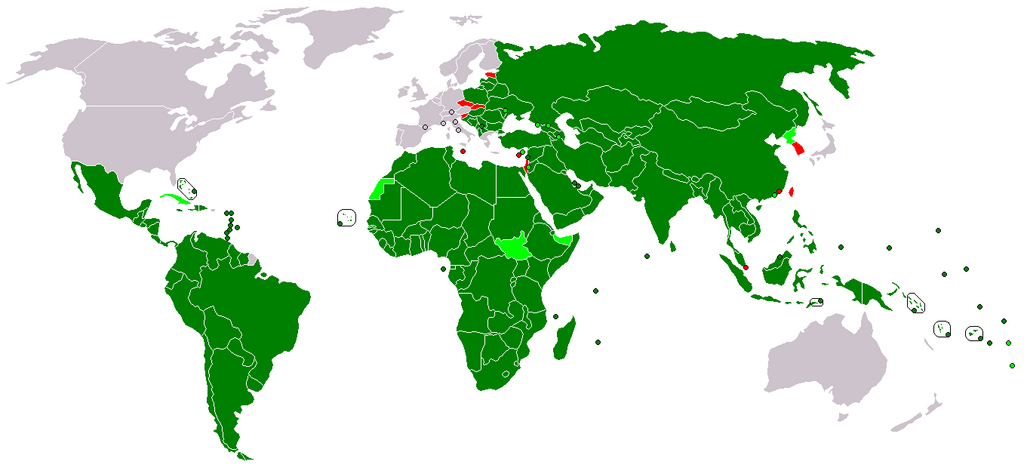
Whether it's understanding the politics behind climate change agreements, the causes of a global financial crisis, or the debate over foreign aid, IPE provides the tools to look beyond the headlines. It encourages us to ask critical questions about who benefits from the global economy and who sets the rules of the game.
What is the central focus of International Political Economy (IPE)?
The economic philosophy that dominated the 17th and 18th centuries, which focused on maximizing a state's wealth through exports and accumulating precious metals, is known as: