Foundations of Instructional Design
Introduction to Instructional Design
What Is Instructional Design?
Think about the best thing you ever learned. Maybe it was a specific skill, like riding a bike, or a complex idea that finally clicked. Chances are, it didn't happen by accident. Someone, perhaps a teacher, a parent, or even the author of a book, structured that information in a way that made sense to you.
That's the heart of instructional design. It’s the art and science of creating learning experiences that are effective, engaging, and help people achieve specific goals. It's not just about presenting information; it's about architecting a path for learners to follow, ensuring they not only receive knowledge but can also apply it.
Instructional design is the process of planning, structuring, and creating learning experiences so people actually learn and take action, not just consume information.
The main purpose is to close a knowledge or skill gap. Whether it’s training a new employee on company software or teaching a student about photosynthesis, an instructional designer figures out where the learner is now, where they need to be, and the most efficient way to get them there.
Core Principles
Instructional design isn't a random process. It's guided by a few core principles that ensure the final product actually works.
It's Learner-Centered. Everything begins and ends with the learner. Who are they? What do they already know? What are their motivations and challenges? An experience designed for a group of expert surgeons will look very different from one designed for high school students, even if the topic is similar. The design must respect the learner's existing knowledge and context.
It's Goal-Oriented. You wouldn't start a road trip without a destination. Similarly, every learning experience needs clear, specific goals called learning objectives. These objectives state exactly what the learner should be able to do after completing the instruction. For example, instead of a vague goal like "understand bicycle maintenance," a good learning objective would be "demonstrate how to patch a flat tire."
Every piece of content, every activity, and every assessment must directly support these objectives. If it doesn't help the learner achieve a specific goal, it doesn't belong.
It's a Systematic Process. Instructional designers follow a structured process to ensure nothing is left to chance. One of the most common frameworks is the ADDIE model.
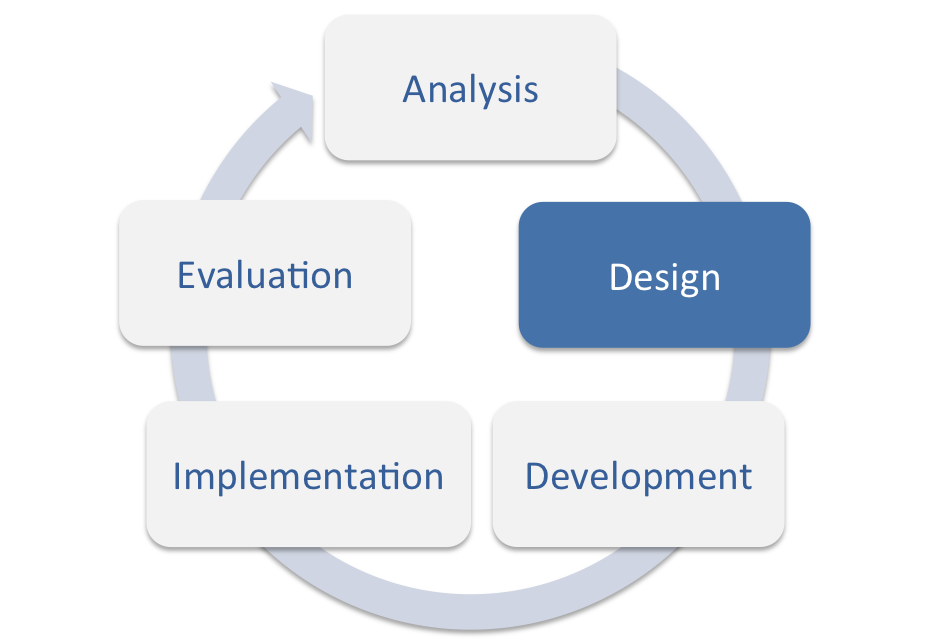
ADDIE stands for:
- Analysis: Figuring out the learner's needs, the goals, and any constraints.
- Design: Creating a blueprint for the instruction, including learning objectives, assessments, and content structure.
- Development: Building the actual materials, like writing text, recording videos, or creating interactive exercises.
- Implementation: Delivering the instruction to the learners.
- Evaluation: Assessing whether the instruction was successful and gathering feedback for improvements. This feeds back into the analysis phase, making it a continuous cycle.
The Designer's Role
An instructional designer wears many hats. They are part detective, part architect, and part creator. Their responsibilities flow through the entire design process.
First, they act as an analyst, interviewing experts and potential learners to uncover the real needs and goals. They diagnose the problem the instruction is meant to solve.
Next, they become an architect, drafting the blueprint for the learning experience. They decide on the best instructional strategies, sequence the content logically, and plan how to assess learning.
Then, as a creator, they develop the materials. This might involve writing scripts, designing graphics, building quizzes, or structuring online modules. Finally, they are an evaluator, collecting data to see if the learning objectives were met and looking for ways to make the experience even better next time.
In essence, an instructional designer is a bridge between the person who has the knowledge (the subject matter expert) and the person who needs it (the learner). They ensure the journey across that bridge is smooth, clear, and leads to a real destination.
Ready to check your understanding? Let's see what you've learned.
What is the primary purpose of instructional design?
Which of the following is the BEST example of a specific, goal-oriented learning objective?
By understanding these fundamentals, you can begin to see the hidden architecture behind any well-designed course, workshop, or tutorial.