Foundations of Indian Music Therapy
Introduction to Indian Classical Music
The Roots of Indian Music
Indian classical music is one of the oldest musical traditions in the world. Its origins trace back thousands of years to sacred texts like the Vedas, particularly the Samaveda, which set religious hymns to melodies. This deep connection to spirituality has shaped its evolution, viewing music not just as entertainment, but as a path to deeper consciousness.
Over centuries, this single tradition branched into two distinct styles. In the north, influenced by Persian and Islamic cultures, Hindustani music developed. In the south, largely untouched by these influences, Carnatic music flourished. While they sound different and have their own unique characteristics, both systems are built on the same foundational pillars.
Indian classical music is broadly categorized into two major traditions: Hindustani Music of North India and Carnatic Music of South India.
Raga: The Soul of Melody
The core of Indian classical music is the raga. It's often translated as 'scale' or 'mode', but it's much more than that. A raga is a melodic framework that provides the building blocks for improvisation and composition. Each raga is like a musical personality with its own set of rules and a distinct mood.
Raga
noun
A melodic framework in Indian classical music for improvisation and composition, characterized by a specific set of notes, typical order of notes, and characteristic musical phrases.
Every raga uses a specific selection of notes from the twelve available in an octave. But what truly defines it is the way those notes are used. Each raga has a prescribed way of ascending () and descending () the scale, and certain notes are emphasized while others are used sparingly. There are also signature phrases () that instantly identify the raga.
Crucially, ragas are deeply tied to emotions, or rasas. They are also associated with specific times of day or seasons. For example, Raga Todi is traditionally performed in the morning to evoke a mood of gentle sadness, while Raga Yaman is an evening raga that feels majestic and peaceful.
A raga is not just a collection of notes; it's a blueprint for creating a specific atmosphere and emotional state.
Tala: The Pulse of Rhythm
If raga provides the melody, tala provides the rhythm. It's the rhythmic framework that organizes the music in time. Unlike a simple beat in Western music, a tala is a repeating cycle of beats, called matras.
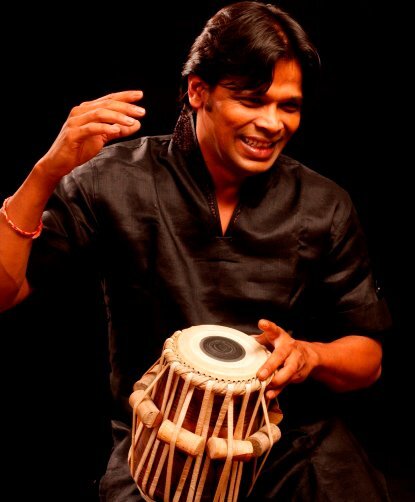
These cycles can be short, with just a few beats, or very long and complex. Each cycle is divided into smaller sections, marked by claps () or waves of the hand (). This structure provides a roadmap for the musicians, allowing them to improvise freely while staying locked into the same rhythmic pattern.
One of the most common talas in Hindustani music is Tintal, a cycle of 16 beats. It's divided into four sections of four beats each.
| Vibhag (Section) | Matras (Beats) | Structure | Marker |
|---|---|---|---|
| 1 | 1, 2, 3, 4 | Dha Dhin Dhin Dha | Taali (clap) |
| 2 | 5, 6, 7, 8 | Dha Dhin Dhin Dha | Taali (clap) |
| 3 | 9, 10, 11, 12 | Na Tin Tin Ta | Khali (wave) |
| 4 | 13, 14, 15, 16 | Ta Dhin Dhin Dha | Taali (clap) |
The first beat of the cycle, called the sam, is the point of arrival and resolution, where both the melodic and rhythmic improvisations often meet. The interplay between the raga's melodic freedom and the tala's strict structure is what gives Indian classical music its dynamic and captivating quality.
Now that you understand the basic building blocks of raga and tala, you can start to appreciate the intricate beauty of this ancient art form.
What is the primary role of a raga in Indian classical music?
The development of two distinct styles, Hindustani and Carnatic music, was primarily due to which historical factor?