Foundations of Human Psychology
Introduction to Psychology
What is Psychology?
Psychology is the scientific study of the mind and behavior. It explores the complex inner workings of our thoughts and feelings, and how those translate into our actions. It's a field that asks big questions: Why do we act the way we do? How do we learn, remember, and make decisions? What makes each of us unique?
psychology
noun
The scientific study of the mind and behavior, which includes the study of conscious and unconscious phenomena, as well as feeling and thought.
Everything we do is connected to psychology. It’s at play when a marketer designs an ad to catch your eye, when a teacher develops a new way to help students learn, and when you try to break a bad habit. The scope is vast, covering everything from the firing of a single brain cell to the group dynamics of an entire nation.
Psychology isn't just about mental health and therapy. It’s also about memory, social influence, child development, and the design of better tools and workplaces.
A Quick Trip Through Time
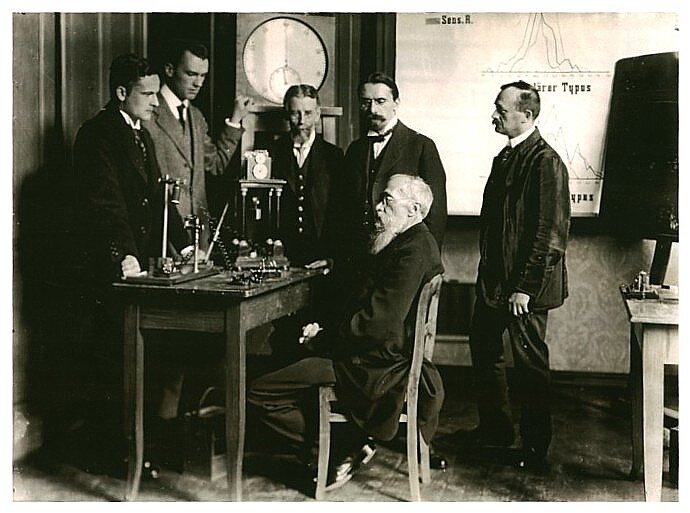
For centuries, questions about the mind were explored by philosophers. But psychology as a distinct science is relatively young. The turning point came in 1879, when Wilhelm Wundt opened the first psychology laboratory in Leipzig, Germany. Wundt was interested in breaking down mental processes into their most basic components, a school of thought called structuralism.
Across the Atlantic, American psychologist William James had a different idea. Influenced by Darwin's theories, James was more interested in the purpose of consciousness and behavior. He wanted to know how the mind helps us adapt to our environment. This approach, known as functionalism, shifted the focus from the structure of the mind to what it does.
Around the same time, Sigmund Freud in Vienna was developing his own theories. He proposed that our unconscious mind—a reservoir of feelings, thoughts, and memories outside of our awareness—powerfully influences our behavior. His school of thought, psychoanalysis, revolutionized how people thought about the mind and mental illness.
Different Ways to See the Mind
As psychology grew, different perspectives emerged, each offering a unique lens through which to understand human experience. These aren't competing theories fighting to be the "one true answer," but rather complementary viewpoints that together provide a more complete picture.
| Perspective | Main Focus | Key Ideas |
|---|---|---|
| Behavioral | Observable behavior | Behavior is learned through conditioning (rewards and punishments). The mind is a "black box" that can't be studied directly. |
| Cognitive | Mental processes | Focuses on thinking, memory, perception, and problem-solving. Uses the computer as a metaphor for the mind. |
| Humanistic | Human potential | Emphasizes free will, personal growth, and the drive for self-actualization. Believes people are inherently good. |
The behavioral perspective, championed by figures like B.F. Skinner, argued that psychology should only study what can be seen and measured: behavior. It suggests that our actions are shaped by our environment.
The cognitive perspective emerged later, shifting the focus back to the mind. Cognitive psychologists study internal processes like how we store memories or solve puzzles. They see the mind as an active information processor.
Finally, the humanistic perspective, with leaders like Abraham Maslow and Carl Rogers, offered a more optimistic view. It stressed the importance of individual experience and our innate potential for growth.
How Psychologists Know What They Know
Psychology is a science, which means it relies on systematic methods to test ideas and build knowledge. Psychologists don't just rely on intuition; they collect and analyze data. Here are a few common research methods.
Experiments are the gold standard for determining cause and effect. A researcher manipulates one variable (the independent variable) to see how it affects another (the dependent variable). For example, a psychologist might give one group of students a new memory technique and a control group no technique to see if it improves test scores.
Observations involve watching and recording behavior in a natural setting. A developmental psychologist might observe children on a playground to understand how they form friendships. This method is great for seeing behavior as it truly is, without interference.
Surveys use questionnaires or interviews to gather information from a large number of people. This is an efficient way to collect data on attitudes, beliefs, or self-reported behaviors. The key to a good survey is getting a representative sample of the population you want to study.
Regardless of the method, ethical guidelines are paramount. Psychologists must ensure the well-being and dignity of their participants. This includes getting informed consent, protecting participants from harm, and maintaining confidentiality.
Now that you've been introduced to the core concepts, let's test your understanding.
Which of the following best defines psychology?
A psychologist who is interested in how the mind helps people adapt to their environment is most likely following which school of thought?
This quick introduction has laid the groundwork for what psychology is, where it came from, and how it operates. It's a dynamic field that continues to evolve as we learn more about the complexities of the human mind.